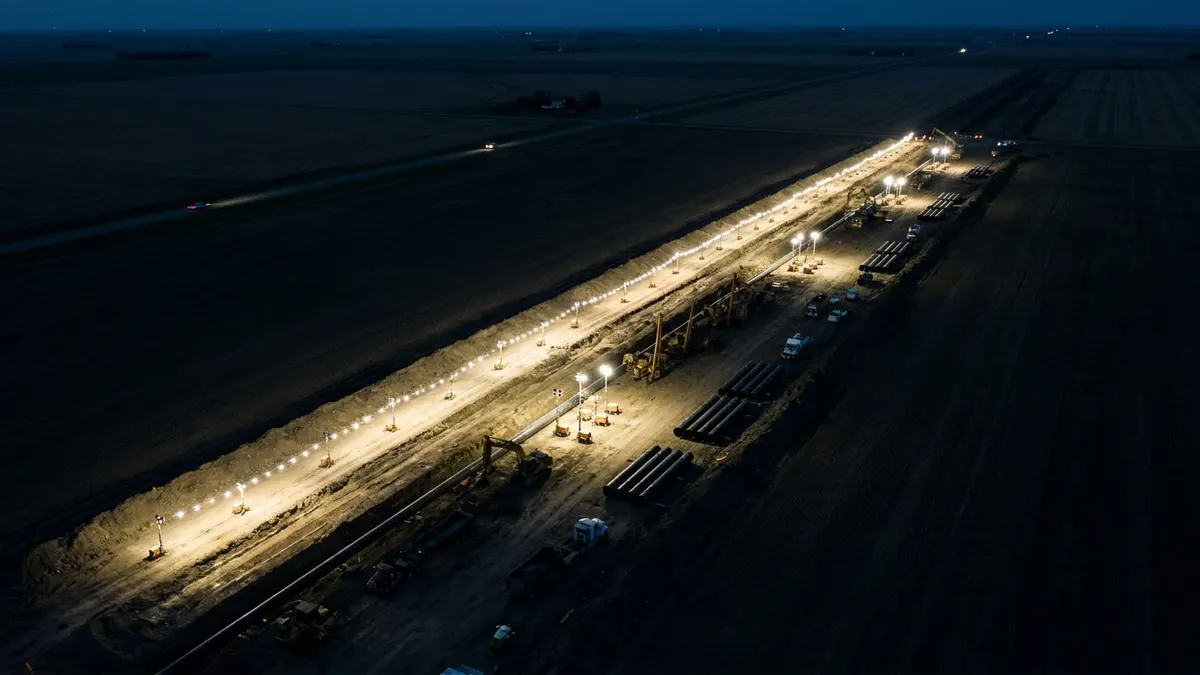
ATCO's $2.9B Yellowhead Pipeline Moves Toward Construction as Regulator Decision Nears
According to Pipeline Technology Journal, ATCO is awaiting final regulatory approval from the Alberta Utilities Commission for its $2.9 billion Yellowhead natural gas pipeline, with a decision expected within the next few months and construction potentially starting as early as September 2026.
Project Details and Timeline
The Yellowhead pipeline will run 235 kilometers, using a 36-inch-diameter steel pipe to carry more than 1.1 billion cubic feet of natural gas daily. The route originates at a new compression site in Peers, Alberta, travels parallel to Highway 16, then cuts north of Spruce Grove and St. Albert before terminating at Fort Saskatchewan in the Industrial Heartland near Edmonton.
ATCO submitted its final application to the Alberta Utilities Commission in November 2025. The company adjusted the route in early 2025 to follow existing infrastructure corridors after community opposition, including a 1,000-signature petition from affected landowners. ATCO has since finalized 90% of its land agreements, with remaining holdouts subject to the Land and Property Rights Tribunal process. The pipeline crosses 61 roads and directly affects 400 landowners.
Construction is slated for completion in November 2027, with environmental reclamation to follow. Officials estimate the project will generate 2,000 construction jobs and 12,000 downstream jobs between 2026 and 2030, eventually contributing $3.9 billion annually to Alberta’s GDP.
What It Means for Subcontractors
- ATCO expects to select a general contractor within the month, meaning procurement packages for pipeline, compression, and facility work could be issued soon. Western Canadian subcontractors should position themselves now.
- The new compression site in Peers represents a discrete scope of work. Compression installation contractors and mechanical subcontractors in Alberta should monitor tender activity closely.
- With 90% of land agreements finalized and a September construction start targeted, project timelines are real. Subcontractors who can mobilize quickly will have an advantage in the bidding process.
- The 235-kilometer route crossing 61 roads signals significant civil, directional drilling, and road-bore work. Horizontal directional drilling and civil crews should flag this project immediately.
- If approval is delayed, the September start window could slip. Subcontractors should plan for schedule flexibility when pricing and committing resources.