Army Corps Launches $2B, 10-Year Microgrid Contract — How Field Service Companies Can Get In
According to Engineering News-Record, the U.S. Army Corps of Engineers has awarded a 10-year, $2 billion multiple-award contract to 14 firms to compete for energy resilience and infrastructure projects at military installations across the country. The awards, disclosed in an April 17 Department of Defense contract notice, cover firm-fixed-price design-build and design-bid-build construction services running through April 16, 2036. For field service companies in electrical, power systems, and energy infrastructure, this is one of the most durable federal demand signals to emerge in years.
Background
The contract sits under the Energy Resilience and Conservation Investment Program, known as ERCIP, a Defense-Wide military construction account that funds projects aimed at improving energy resilience, security, and efficiency while supporting mission assurance, according to Engineering News-Record. Work locations and funding are determined at the task-order level, meaning the $2 billion ceiling will be allocated incrementally over the decade as individual projects are scoped and competed.
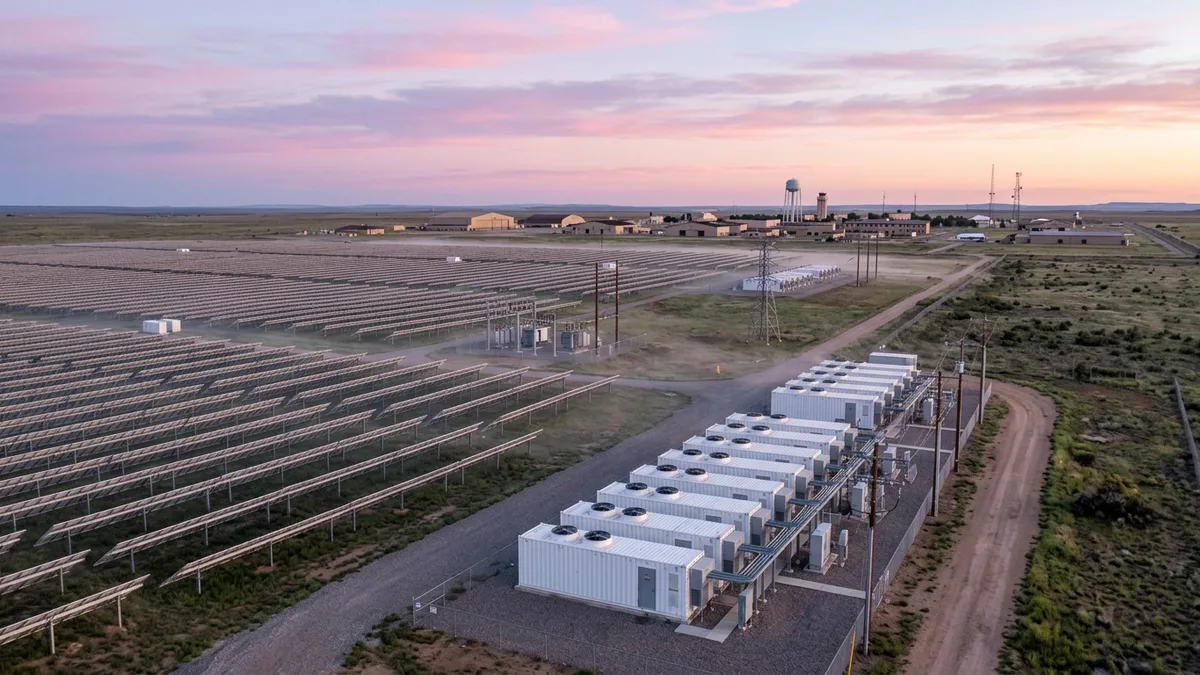
The Corps received 30 bids for the procurement before selecting 14 awardees. Named firms include several of the largest players in federal design-build construction: Hensel Phelps Construction Co., Tutor Perini Corp., CDM Constructors Inc., Parsons Government Services Inc., and Honeywell International Inc., among others. Projects will span microgrids, energy storage, backup generation, and on-base electrical upgrades, consistent with the Pentagon’s broader push to harden installation infrastructure against grid instability, cyber risk, and climate exposure.
ERCIP projects move to construction through a multi-stage validation process that screens for technical feasibility, lifecycle cost performance, and overall project definition, according to a Huntsville Center Energy Division fact sheet cited by Engineering News-Record. The Corps’ Huntsville Center manages the program.
Analysis
A $2 billion multiple-award vehicle structured over 10 years is not just a big contract. It is a procurement architecture designed to sustain a continuous pipeline of work. Because individual projects are funded and competed at the task-order level, the awarded primes will be returning to the market repeatedly over the next decade to staff, equip, and execute discrete scopes. That creates an extended runway of subcontracting opportunities that a single large contract award typically does not.
The underlying driver here is mission readiness. The Pentagon has concluded that dependence on commercial power grids represents an operational vulnerability, and ERCIP is the funding mechanism for addressing it base by base. That logic does not go away with a change of administration or a budget cycle. Installation energy resilience has been a bipartisan priority for years, and with 14 primes holding positions on this vehicle, the federal government has built in competition to keep costs controlled while maintaining consistent program momentum.
The technology mix is also worth noting. Microgrids, battery storage, backup generation, and electrical distribution upgrades are not niche specialties. They sit squarely in the wheelhouse of the electrical, civil, and mechanical contractors who already operate in the energy and industrial infrastructure space. Companies that have done commercial or oil and gas power infrastructure work have directly transferable capabilities. The gap is typically not technical. It is procedural: federal contracting compliance, Davis-Bacon wage requirements, security clearance familiarity, and the documentation discipline that military construction demands.
With 14 primes on a single vehicle, there will also be competitive pressure among those firms to assemble strong subcontractor teams. Primes that can demonstrate established regional subcontractor relationships during task-order competitions have an advantage. That creates real leverage for field service companies that invest now in building relationships with the named awardees.
What It Means for Subcontractors
-
Identify your target primes now. The 14 awardees named in the contract are your entry points. Hensel Phelps, Tutor Perini, CDM Constructors, Parsons, and Honeywell are among the firms holding positions on this vehicle. Research each firm’s federal construction division and make contact with their subcontractor development or procurement teams before task orders start flowing.
-
Understand the ERCIP project cycle. Projects go through a multi-stage validation process before reaching construction. That means there is lead time between program funding and boots on the ground. Use that window to pre-qualify, get bonding in order, and ensure your prevailing wage documentation is current.
-
Davis-Bacon compliance is non-negotiable. Military construction work carries federal wage requirements. If your company has not worked on Davis-Bacon projects before, get your payroll systems and certified payroll reporting processes in place before you pursue work, not after you win it.
-
Electrical and power system specialists are well-positioned. Microgrid integration, battery storage installation, backup generation, and distribution upgrades are the core scopes described under this contract. If that matches your capabilities, this program is a direct fit.
-
Think regionally, not nationally. Work locations will be set at the task-order level. Track which military installations are in your operating radius and focus your prime outreach accordingly. A firm that can credibly serve Nellis Air Force Base or Fort Cavazos has a stronger pitch than one promising national coverage it cannot actually deliver.
-
A decade of runway matters. This contract runs to April 2036. Unlike a one-time project bid, positioning on this vehicle is an investment with multi-year returns. The time spent building relationships with primes and understanding the ERCIP process now could pay off across multiple task orders over the life of the contract.