Army Corps Grants Dakota Access Easement, Opening Door to Long-Term Pipeline Operations
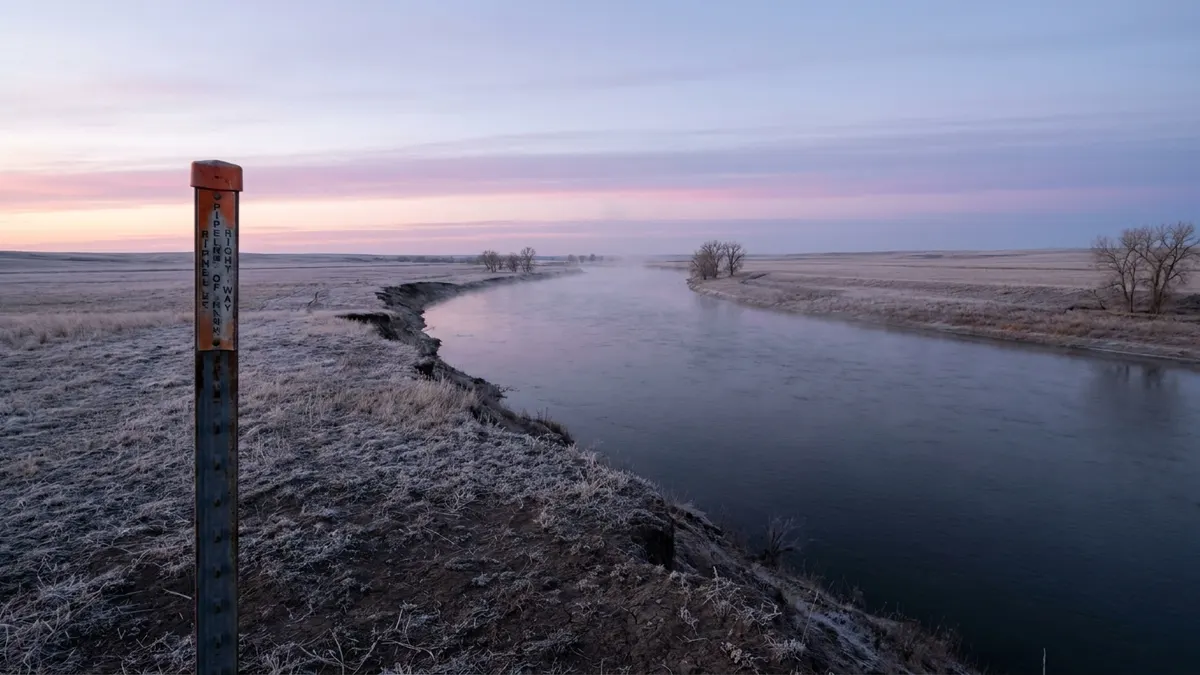
According to Pipeline Technology Journal, the U.S. Army Corps of Engineers has approved a permanent easement allowing the Dakota Access Pipeline to continue operating its crossing beneath Lake Oahe on the Missouri River, ending years of regulatory uncertainty for the $3.8 billion project.
Market Impact
The decision comes with new operating conditions attached, including enhanced leak detection systems, expanded groundwater monitoring, and mandatory third-party safety evaluations. Those requirements represent direct workstreams for inspection and environmental services contractors operating in the Dakotas.
The pipeline has moved crude since 2017, transporting roughly 540,000 barrels per day from North Dakota’s Bakken region to Illinois, a volume the Army Corps noted accounts for about 4% of total U.S. daily oil production. Assistant Secretary of the Army for Civil Works Adam Telle said the Corps is “decisively putting years of delays to rest.” Pipeline developer Energy Transfer welcomed the ruling, calling the infrastructure critical to national energy security. Standing Rock Sioux Tribe officials criticized the decision and pledged to continue fighting the project in federal court, meaning legal uncertainty is not fully resolved.
A separate expansion proposal from Energy Transfer and Enbridge could add another 250,000 barrels per day of Canadian crude to the Dakota Access system, potentially increasing throughput and the scope of future work.
What It Means for Subcontractors
- The mandated third-party safety evaluations and enhanced leak detection requirements create near-term contract opportunities for inspection, integrity management, and environmental monitoring firms in the Bakken and broader Dakotas region.
- Ongoing litigation from the Standing Rock Sioux Tribe means subcontractors should track legal developments closely, as court rulings could still affect operational timelines or scope.
- The proposed capacity expansion connecting additional Canadian crude to the system could mean a significant increase in future maintenance, pigging, and integrity work if the project moves forward.
- Subcontractors serving Energy Transfer or its contractors should ensure compliance documentation is current, as the new easement conditions impose stricter regulatory oversight on all pipeline operations at the Lake Oahe crossing.