Army Awards $2.2B for Nuclear Microreactors at Five U.S. Bases
The U.S. Army has awarded up to $2.2 billion combined to five companies to design, build and operate nuclear microreactors on five military installations, under a program called Project Janus meant to shield bases from commercial grid failures, Federal News Network reports.
The pairings are Antares Nuclear at Fort Bragg, North Carolina; BWXT Advanced Technologies at Fort Campbell, Kentucky; General Atomics Electromagnetic Systems at Fort Hood, Texas; Radiant Industries at Fort Benning, Georgia; and Westinghouse Government Services at Fort Drum, New York. The contracts, issued as other transaction agreements in partnership with the Defense Innovation Unit, pay each company as it hits program milestones, with Radiant separately disclosing an agreement worth up to $750 million.
Jeff Waksman, the Army’s principal deputy assistant secretary for installations, energy and environment, told reporters the sites were chosen on security, mission need and seismic risk, and that nuclear power is a “natural game-changer” as demand grows from drones and energy weapons. Each company owns and operates its reactor, with the Army providing technical oversight; the arrangement is modeled on NASA’s early industry partnerships for space programs.
Every contractor is racing a hard deadline: at least one reactor operational by the end of September 2028, set by a presidential executive order last year. General Atomics said its Fort Hood design scales from 5 to 20 megawatts; Radiant plans to deploy 15 reactors for the Army by 2030 on top of an earlier Buckley Space Force Base deal. Officials acknowledged some contractors could fail, but said the program is meant to seed a broader U.S. commercial microreactor industry as well as harden military energy supply.
What It Means for Subcontractors
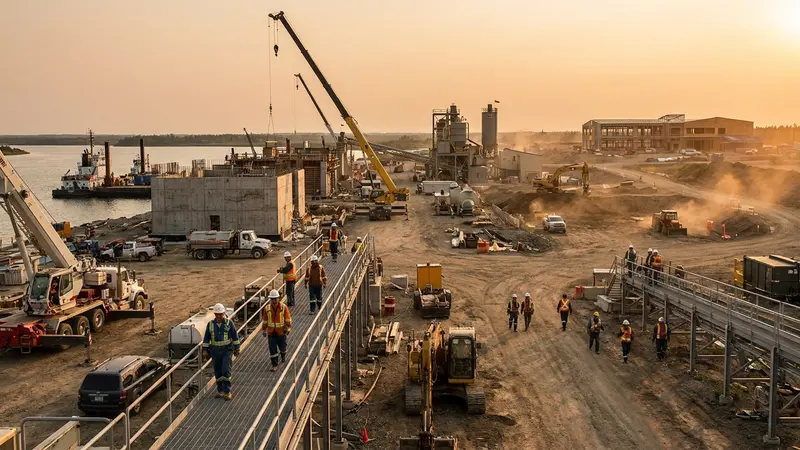
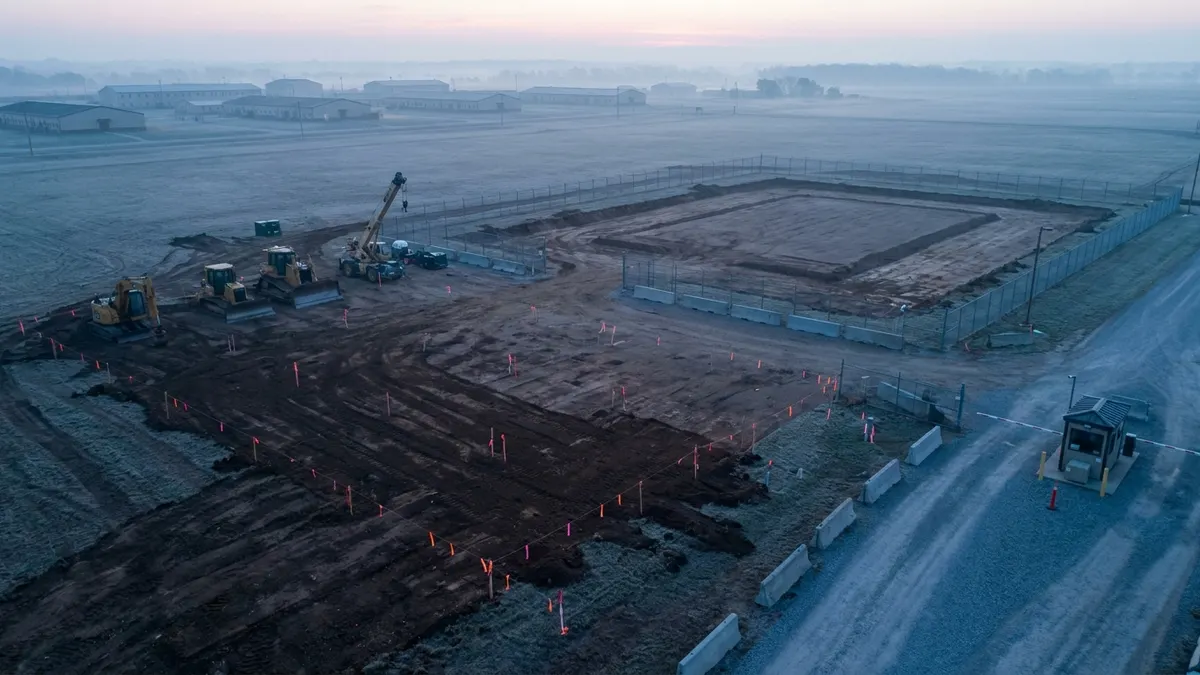
- Five separate base sites means five separate construction programs running in parallel starting now through 2028: expect early civil, foundation and site-prep packages at Fort Bragg, Fort Campbell, Fort Hood, Fort Benning and Fort Drum well ahead of reactor delivery.
- Nuclear-adjacent construction carries specialized safety, security clearance and QA/QC requirements; subs without nuclear or DOE-facility experience should look at the civil/site-prep and balance-of-plant scope rather than reactor-adjacent work directly.
- The aggressive 2028 first-power deadline signals fast-tracked procurement — contractors capable of compressed schedules and federal contracting compliance (DIU other transaction agreements) have an edge bidding into the prime contractors’ subcontractor pools.
- Community engagement and town halls are planned at each site; local subs with existing base access and security clearances are best positioned for early scope before broader bid packages open.