Alberta's 10-Year Oil Sands Royalty Cut Targets New Projects
A 2% royalty on gross revenue for the first five years is the centerpiece of Alberta’s new bid to get oil sands projects built again. A Reuters report via BOE Report says the 10-year regime applies only to new developments and to expansions of existing projects of at least 5,000 bpd. It is meant to lift output enough to fill a proposed crude pipeline to Canada’s west coast.
For field contractors, the key point is sequence. Companies can start submitting projects for the new rate in 2027. Sanction decisions come after that, and construction and maintenance packages come after sanction. Nothing in the source puts a date on any of those later steps.
Background
Reuters reports that Alberta announced the regime on a Friday and that it will not touch existing production. The terms are:
- Eligible projects pay 2% of gross revenues for the first five years.
- The rate rises by one percentage point each year after that, reaching 6% in years nine and 10.
- After 10 years, the project reverts to Alberta’s existing framework.
- Eligibility covers brand-new developments and expansions of existing projects with at least 5,000 bpd of capacity.
The existing framework charges between 1% and 9% until project costs are recovered, then 25% to 40% of net revenue. Officials told Reuters the savings will vary by project, so the province has not published a single figure for what a typical project would save.
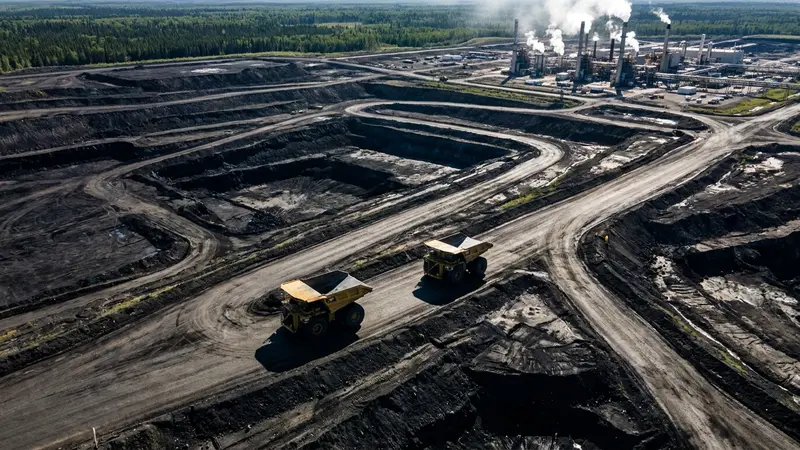
The report also describes the investment gap the province wants to close. Suncor’s Fort Hills, the last major new oil sands project, started operating in 2018. Since then, companies have focused on smaller expansions of existing projects and have avoided major new capital commitments, the kind that drive job creation. Prime Minister Mark Carney has cut the tax rate on new capital investment and pledged to back Alberta’s proposed west-coast crude pipeline, according to the report.
Analysis
The structure rewards speed. By my arithmetic from the published schedule (2%, 2%, 2%, 2%, 2%, 3%, 4%, 5%, 6%, 6%), the average rate over the 10 years is 3.4% of gross revenue. That is not directly comparable to the old regime, which shifts from a gross-based charge to a net-revenue charge after payout. But the shape matters: the lowest rates come in the early years, when a project is most exposed to its capital costs. A project that reaches first oil sooner gets more of its 10-year window at the cheapest rates. That gives sponsors a reason to compress schedules, which tends to mean earlier contractor mobilization and tighter construction windows.
The 5,000 bpd floor points toward brownfield work first. At 5,000 bpd, a project produces about 1.8 million barrels a year (5,000 x 365). That is far smaller than a greenfield mine-scale development. Because the threshold explicitly covers expansions of existing projects, I expect the first projects to be additions at sites that already have infrastructure and workforce camps. This is my inference, not something the source states. The source does say that since Fort Hills, companies have favored smaller expansions. The new regime makes that same type of project cheaper to pursue.
The pipeline is the demand signal, but it is not yet a project. Reuters describes the pipeline as “proposed” and says Carney has pledged backing. The report gives no route, cost, capacity or in-service date. Producers will weigh any sanction decision against whether takeaway capacity is actually coming, so pipeline progress could affect how quickly projects move. Treat the royalty regime and the pipeline as two linked uncertainties, not one confirmed program.
No operators are named. The source does not identify any company planning to file under the new rate. The only operator named is Suncor, and only as the owner of the last major project. Anyone claiming a confirmed project list at this point is going beyond what has been published.
The bid-stage trigger is the 2027 filing window. The first public marker will be companies submitting projects for consideration for the new rate, which begins in 2027. A filing is not a sanction, and a sanction is not a contract award. The sequence runs from filing to sanction decision to engineering and procurement to subcontract packages. Field-level work such as civil, piling, mechanical and electrical typically comes at the end of that chain, so the real hiring surge is likely well beyond the 2027 filing date.
What It Means for Subcontractors
- Mark 2027 as the first trigger. Companies can start submitting projects for the new royalty rate in 2027. A published filing or sanction announcement from an Alberta oil sands operator is the earliest credible signal that EPC or subcontract packages are coming. Until then, no public package list exists.
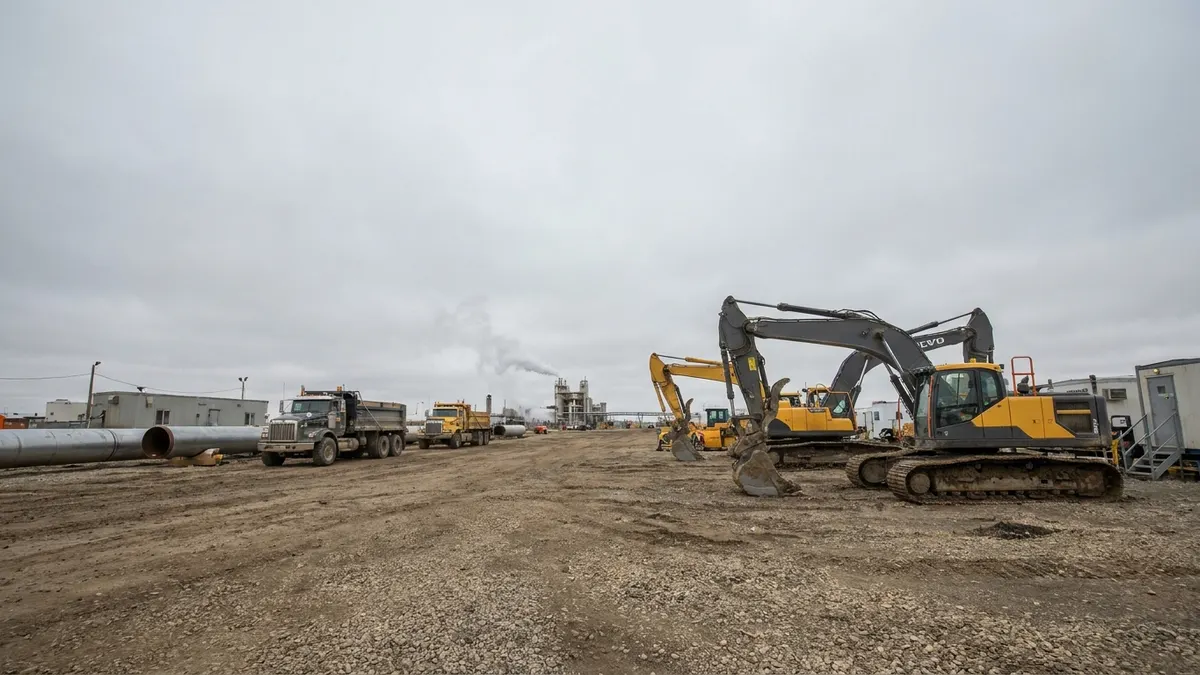
- Target brownfield expansion trades first. Expansions of at least 5,000 bpd qualify. Civil and earthworks, pipefitting, mechanical, E&I and scaffolding and insulation contractors with existing site access at operating oil sands facilities are best placed to benefit from expansion-scale work. This follows from the eligibility rules and the post-2018 pattern of smaller expansions that Reuters describes.
- Plan for compressed schedules. The royalty ramps from 2% to 6% over the term, so sponsors gain from early production. Contractors should be ready to show crew availability, camp capacity and equipment readiness during bidding, because schedule certainty may count for more than usual.
- Do not book revenue against the pipeline yet. The west-coast pipeline is described only as proposed. Without a route, cost or in-service date in the public record, it supports medium-term pipeline and facility planning, not firm backlog assumptions.
- Track the royalty’s 10-year clock. Projects revert to the existing framework after 10 years, so the incentive favors long-lead, early-start work. Maintenance and turnaround contractors should expect the real run of operations activity to follow startup of any new capacity, not precede it.
- Verify before reacting. The source gives no project names, locations beyond Fort Hills’ history, or capital figures. Use operator investor disclosures and any Alberta government project approvals in 2027 as the confirmation points before adding crews or equipment.