$27 Million Bridge Replacement Kicks Off on US-75 in Tulsa
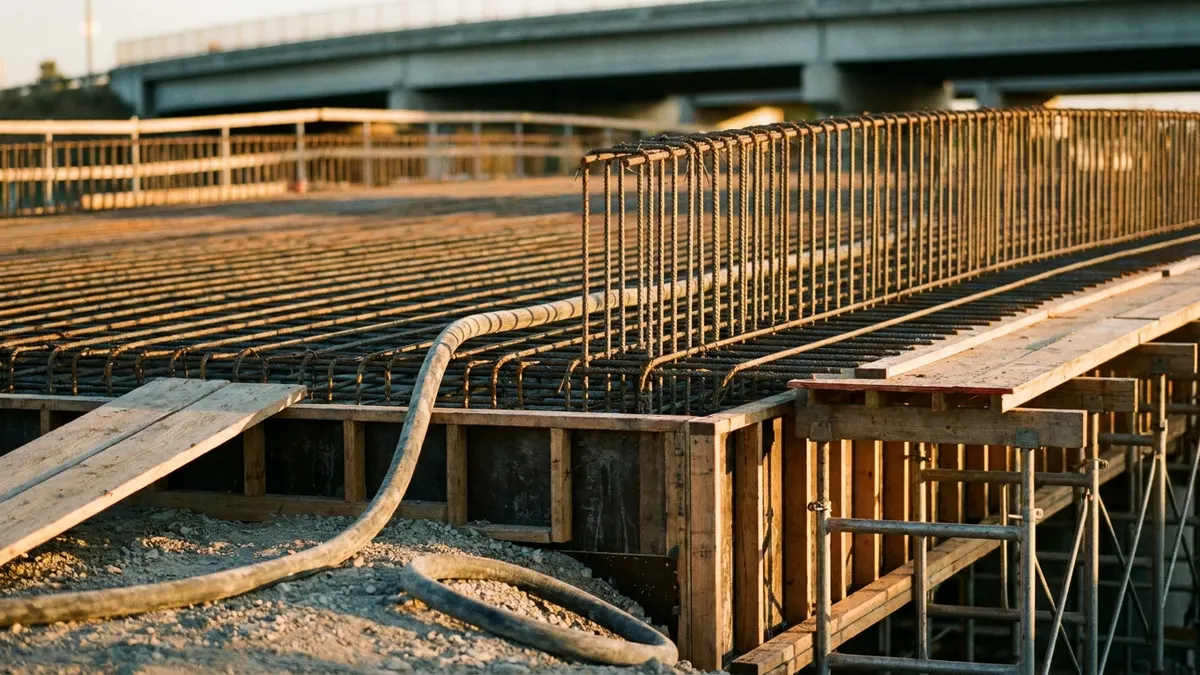
According to Oklahoma Energy Today, a nearly $27 million bridge replacement project on US-75 at 81st Street in Tulsa got underway Monday, launching what will be a more than year-long construction effort on one of the city’s major highway interchanges.
Background
The Oklahoma Transportation Commission awarded the contract to Sherwood Construction Co. Inc. in February 2026, according to Oklahoma Energy Today. The project will replace both the northbound and southbound US-75 bridges over 81st Street with modern, wider structures. Below the highway, 81st Street itself will be widened, and the interchange will be converted to a diverging diamond configuration. In a diverging diamond interchange, traffic on the crossing street temporarily shifts to the left side of the road between the highway ramps, a design intended to improve safety and reduce congestion.
During construction, two lanes of traffic will be maintained in each direction on US-75 during peak travel times, though drivers should expect narrowed lanes and a reduced speed limit through the work zone. Oklahoma Energy Today notes that two other active work zones are located near this project, adding to the complexity for commuters and commercial drivers in the area. Completion is expected by the end of 2027, weather permitting.
Analysis
A $27 million bridge replacement project of this scope is a meaningful piece of infrastructure work for the Tulsa market. The diverging diamond interchange conversion is a detail worth noting. This design has been gaining traction across the US over the past decade because it reduces conflict points for traffic, but it also creates a more technically complex construction environment. Staging, signage, and traffic control all require careful coordination when a road temporarily runs on the “wrong” side. That raises the skill and planning bar for everyone on site.
The timeline is also notable. A project running from mid-2026 through end of 2027 means sustained activity over multiple construction seasons, which is favorable for subcontractors looking for stable workloads rather than short-burst contracts. Multi-season bridge projects typically require multiple specialized trades, including concrete and structural steel crews, earthwork and grading contractors, drainage and utilities subcontractors, traffic control specialists, and pavement and striping crews.
The presence of two additional nearby work zones adds a layer of logistical pressure. Coordinating deliveries, equipment staging, and workforce movement through an already-congested corridor will require subcontractors to be more deliberate about scheduling and communication with the general contractor.
At the $27 million level, this is a mid-sized public infrastructure project. Sherwood Construction Co. is the prime contractor, meaning subcontract opportunities will flow through them. For firms not already in contact with Sherwood, now is the time to reach out, since early subcontract awards typically happen well before visible field activity ramps up.
What It Means for Subcontractors
- Contact the GC early. Sherwood Construction Co. Inc. holds the prime contract. Subcontractors in concrete, structural work, earthmoving, utilities, drainage, traffic control, and paving should reach out now if they haven’t already. Subcontract scopes are often assigned before the public sees much activity on site.
- Plan for a complex traffic environment. The diverging diamond conversion and two nearby work zones mean this site will have more moving parts than a standard bridge replacement. Traffic control subcontractors especially should expect a demanding setup.
- Multi-season work is a stabilizer. A project running through end of 2027 offers sustained revenue potential. For smaller firms, locking in a scope here could anchor the schedule for the next year-plus.
- Work zone compliance matters. With a reduced speed limit and narrowed lanes in place, OSHA work zone standards and Oklahoma DOT requirements will be in active effect throughout the project. Subcontractors should ensure crews are current on work zone safety training before mobilizing.
- Watch the weather clause. The completion date is weather-dependent. Build schedule flexibility into any subcontract negotiations to account for potential extensions.