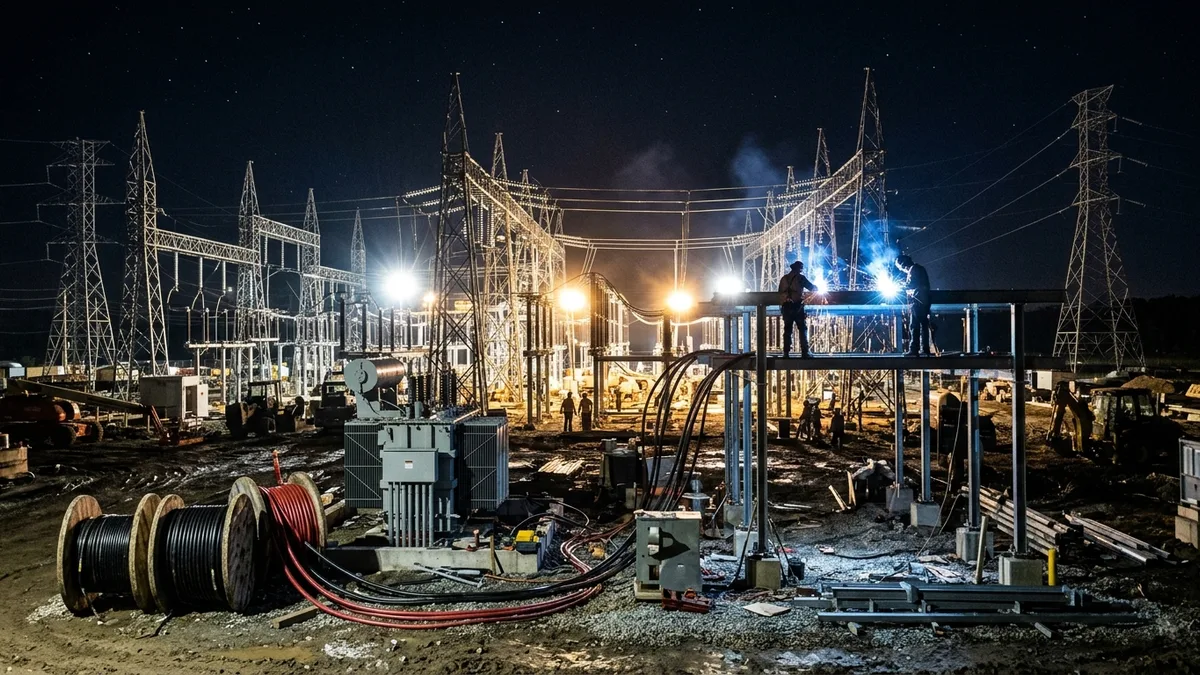
WSP's Power Generation Business Now One-Third of U.S. Revenue After TRC Deal
According to Construction Dive, WSP Global CEO Alexandre L’Heureux told investors during the company’s Q1 2026 earnings call that power generation projects now account for approximately one-third of WSP’s U.S. revenues, with demand driven largely by the surge in AI data center construction.
Power Sector Consolidation Accelerates
WSP’s power business got a significant boost from its December acquisition of power infrastructure firm TRC, which L’Heureux described as “strategic and timely.” The deal has positioned WSP as a dominant engineering and consulting player in the power sector, with L’Heureux saying the company’s “power and energy service offering is now second to none.”
The growth comes as data center developers and municipalities wrestle with grid capacity constraints, which Construction Dive notes are among the leading causes of data center project delays. WSP’s expanding footprint in power generation puts it squarely in the middle of that conversation between asset owners and the grid.
On the M&A front, L’Heureux acknowledged WSP has deployed approximately $6 billion to $7 billion Canadian dollars ($4.4 billion to $5.1 billion USD) over the past two years, including acquisitions of life sciences consulting firm Lexica in June 2025 and U.K.-based engineering consultancy Ricardo in October 2025. He indicated the pipeline remains active despite being at the high end of the company’s leverage range.
What It Means for Subcontractors
- WSP now holds significant design and engineering relationships across power generation and data center projects in the U.S. Field service companies working in those sectors should understand that WSP is increasingly the firm writing the specs and managing project oversight upstream.
- TRC’s integration into WSP means subcontractors who previously worked with TRC on power infrastructure projects may find themselves operating within a larger, more structured procurement environment with different approval chains.
- The data center and grid buildout is creating real, near-term field work volume. Subcontractors in electrical, civil, and environmental services should be positioning themselves on WSP-affiliated project teams now, before contract rosters are locked in.
- WSP’s AI push, including its Nature Vista environmental platform, signals that environmental compliance and reporting on WSP-managed projects may increasingly run through automated systems. Subs should expect more data and documentation requirements tied to environmental workflows.