Vancouver's $200M Cambie Street Bridge Retrofit Opens Door for Heavy Civil Subcontractors
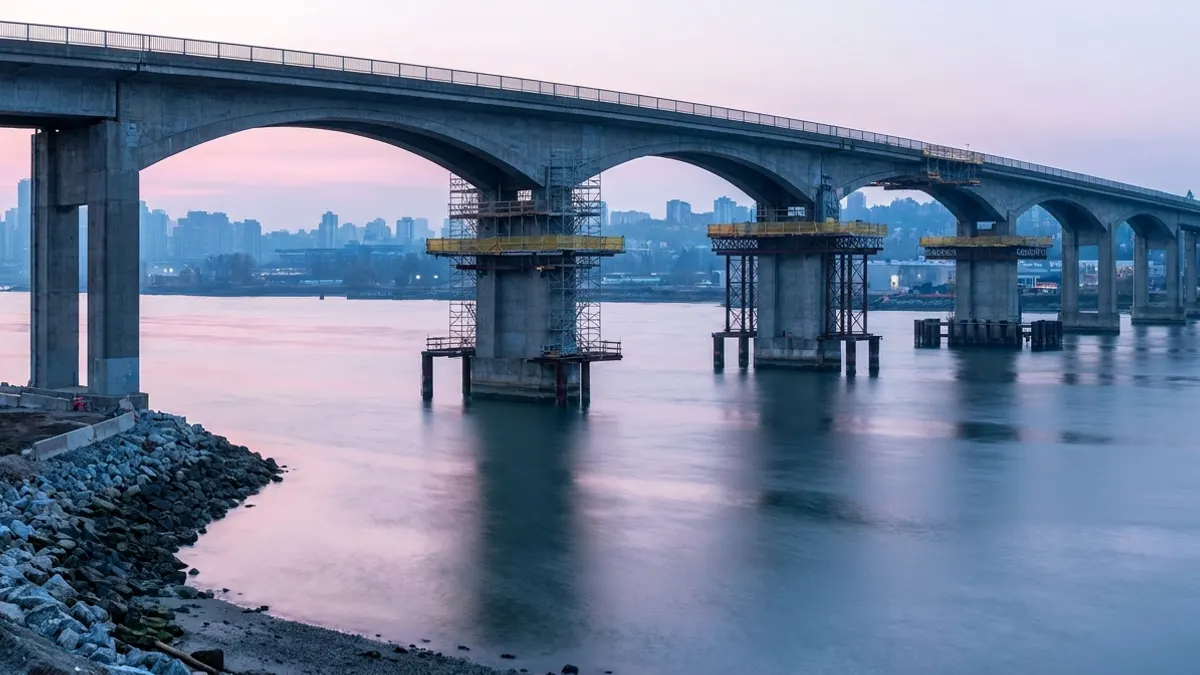
According to On-Site Magazine, the federal government, the City of Vancouver, and TransLink have committed more than $200 million to seismic retrofit and rehabilitation of the Cambie Street Bridge, one of the region’s busiest transportation links. The project was announced May 21.
Multi-Phase Scope Creates Broad Contract Opportunities
The bridge, originally built in 1965, carries more than 13 million vehicle crossings annually and serves as a key component of TransLink’s Major Road Network. The retrofit will bring the structure up to current seismic standards while improving emergency preparedness and climate resilience.
Planned work includes seismic isolation bearings at all 65 bridge piers, expansion joint modifications, seismic upgrades to bridge supports, and soil anchor installation to reinforce foundations. The project also incorporates a pilot seawall design at the bridge’s north end to test approaches for protecting infrastructure against sea-level rise and coastal flooding, along with broader transportation and shoreline naturalization improvements.
Funding is split across three partners: the federal government is contributing $84.4 million through the Disaster Mitigation and Adaptation Fund, TransLink is providing $37 million, and the City of Vancouver is covering the remainder.
What It Means for Subcontractors
- Specialty structural work is front and center. Seismic bearing installation, soil anchoring, and foundation reinforcement across 65 piers represent significant specialty subcontract scope. Firms with experience in geotechnical, structural steel, or bridge rehabilitation work should monitor procurement activity closely.
- Multi-phase delivery extends the opportunity window. The project is structured across multiple phases, meaning contract packages will likely be released over time rather than all at once. Subcontractors who miss the first phase may have entry points in later ones.
- This project reflects a broader trend. According to On-Site Magazine, governments across Canada are increasingly prioritizing seismic upgrades, climate adaptation, and critical asset renewal. Heavy civil subs who build capability in resilience-focused work now are positioning for a growing procurement pipeline.
- Climate adaptation adds scope beyond structural work. The pilot seawall design component suggests that resilience projects are expanding beyond traditional rehabilitation work to include coastal protection and naturalization measures, creating opportunities for environmental and marine contractors as well.