Toronto's $63.7M Bridge Rehab Offers a Blueprint for Congested-Corridor Bidding
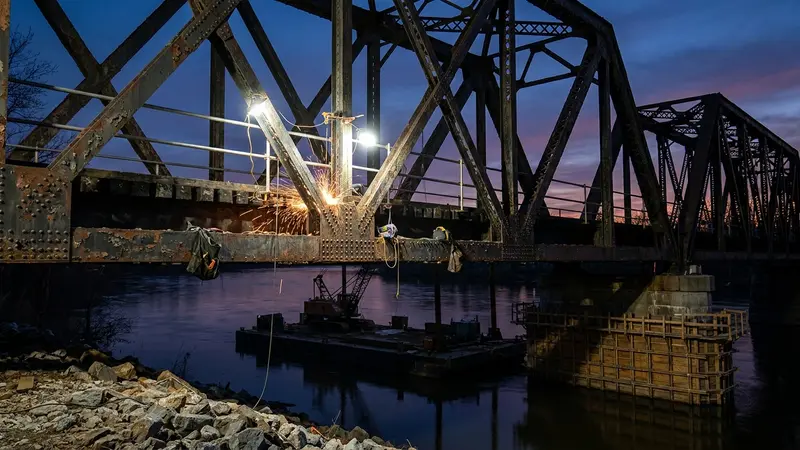
A $63.7 million bridge rehabilitation project in downtown Toronto is turning into a case study for how heavy-civil subcontractors can win and execute work in some of the most congested urban corridors in the country. Daily Commercial News reports that the City of Toronto’s rehabilitation of four aging bridges, the Eastern Avenue Bridge, the Richmond Street East Bridge, the Adelaide Street East Bridge and the Don Valley Parkway off ramp, has leaned heavily on sequencing discipline and specialized equipment to keep traffic moving through a corridor that carries thousands of vehicles a day.
Background
The four bridges, all built in 1963 and last rehabilitated in 1992, span a combined 1.5 kilometers in Toronto’s east end, according to Daily Commercial News. The project, part of the city’s State of Good Repair initiative, has been underway since 2024 and is scheduled to wrap in early 2027. Soncin Construction is the general contractor handling a lengthy scope that includes expansion joint replacement, deck overhang and parapet wall reconstruction, structural jacking, bearing replacement, waterproofing and concrete demolition. Stantec is the consultant.
Toronto chief engineer Jennifer Graham Harkness told Daily Commercial News the city conducted extensive long-range planning before construction began, given the proximity of the four structures to each other, unrelated nearby construction, and the volume of daily traffic. That planning included close coordination with Metrolinx, Waterfront Toronto and private developers to avoid conflicts.
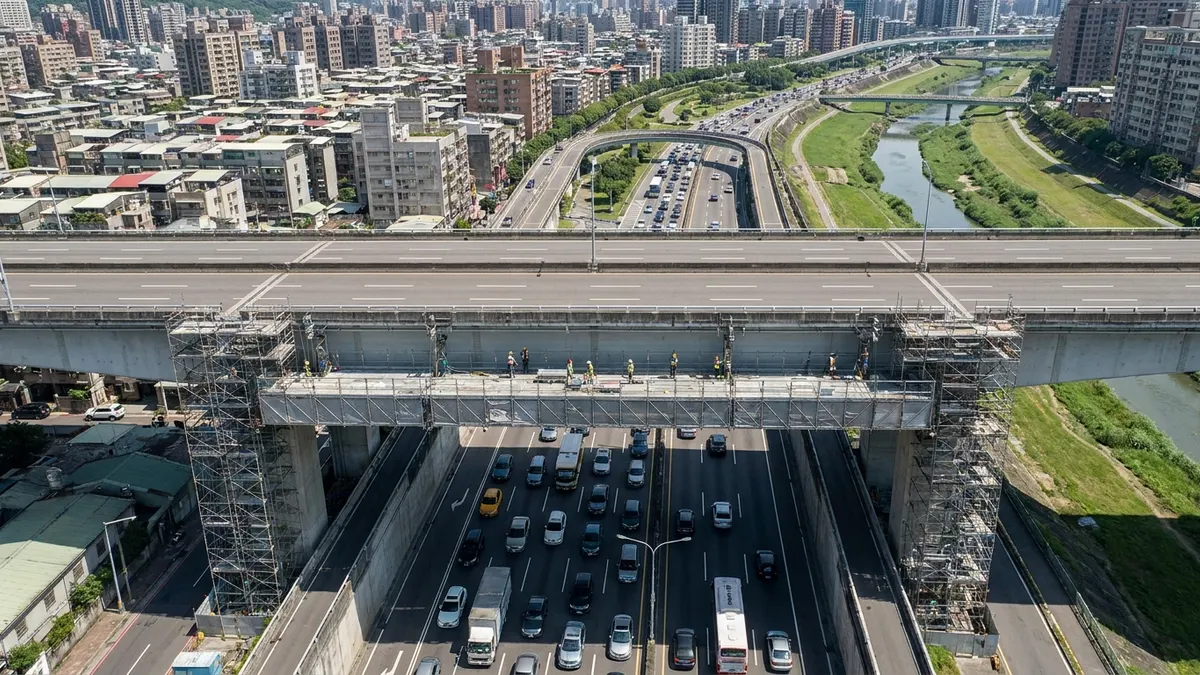
One specific tactic stood out: Harrison Muir Inc. used a Rapid Deployment Unit system to sandblast and coat structural steel on the undersides of the bridges without closing lanes on the Don Valley Parkway, one of the city’s busiest north-south corridors. The enclosed access system let crews work safely over live traffic, according to the report.
The city also compressed its timeline on the Don Valley Parkway off ramp to finish ahead of the FIFA games held at Toronto Stadium (BMO Field), even though the site sits several kilometers from the stadium. Graham Harkness said the original plan had crews working through the games, but the city decided shortly after construction started in 2024 to accelerate and fully close the off ramp rather than do sporadic work. That closure ran from fall 2025 to this past spring.
Analysis
The most transferable lesson here isn’t the dollar figure or the bridge count, it’s the sequencing logic. Rather than juggling partial closures across four structures simultaneously, the city and its contractor picked a full closure window on the highest-impact asset (the Don Valley Parkway off ramp), pushed hard through it with extended shifts, and treated everything else as background work that could tolerate a slower cadence. Graham Harkness’s own words, “we wanted to get in there, get it done and then get out,” describe a closure strategy that trades short-term community pain for a shorter overall disruption window. That’s a calculation any sub bidding lane-closure-heavy work in a dense downtown should understand and be ready to price into a schedule.
The shift structure is also worth noting. Crews worked two extended shifts covering roughly 20 hours within a 24-hour cycle, with 80 overnight shifts used specifically to expedite the off-ramp closure. Weekend work was layered in selectively, with regular Saturday daytime shifts and targeted Friday and Sunday night operations depending on what the work required that week. That’s not blanket round-the-clock work, it’s a scheduling model calibrated to specific trade needs at specific points in the project. Subs who can demonstrate they’ve priced and staffed for that kind of variable-shift model, rather than a flat extended-hours rate, are going to look more credible in a proposal for similar corridor work.
The Rapid Deployment Unit detail matters too. Enclosed access systems that let crews sandblast and coat steel over live traffic aren’t cheap to mobilize, but they eliminate the need for lane closures on a route as heavily traveled as the Don Valley Parkway. For a coatings or structural steel sub, owning or having reliable access to that kind of containment system is a differentiator in any bid where the client has made clear that traffic flow is as much a deliverable as the finished structure.
Finally, the multi-crew staffing model, three to five specialized crews on site at any given time covering structural jacking, bearing replacement, steel coating, electrical, paving, waterproofing, concrete work, rebar, traffic control and finishing trades like railings, shows how many discrete subcontract packages a single urban bridge rehab program can generate. That’s relevant for smaller specialty subs who might not have a shot at the GC role but can compete for a defined slice of scope.
What It Means for Subcontractors
- Structural steel coating subs should evaluate whether they have or can lease enclosed access/containment systems like the Rapid Deployment Unit used by Harrison Muir Inc.; that capability was the difference between closing a major highway and coating over live traffic on the Don Valley Parkway.
- Traffic control and scheduling subs bidding similar urban corridor work should be prepared to staff variable shift patterns, not flat overtime: this project used 20-hour shift cycles, 80 overnight shifts during the Don Valley Parkway off-ramp closure, and selective Friday/Sunday night and Saturday daytime work depending on trade needs.
- Concrete demolition, rebar, waterproofing, paving and electrical subs should note the multi-crew model here, three to five specialized crews on site concurrently, as a sign that city bridge rehab programs of this scale typically break out into discrete trade packages rather than one bundled scope.
- GCs and subs pricing full-closure detours (like the fall 2025 to spring 2026 Don Valley Parkway off-ramp closure) should factor in coordination costs with adjacent stakeholders; this project required active coordination with Metrolinx, Waterfront Toronto and private developers to avoid schedule conflicts.
- The project is scheduled to finish in early 2027, with undercoating and remaining work continuing into late 2026 per Daily Commercial News; subs eyeing lessons-learned or follow-on maintenance work on these four structures should check back with the City of Toronto’s State of Good Repair program office as that closeout phase progresses.