SpaceX Plans $74B Supercompute Build in Texas and Arizona
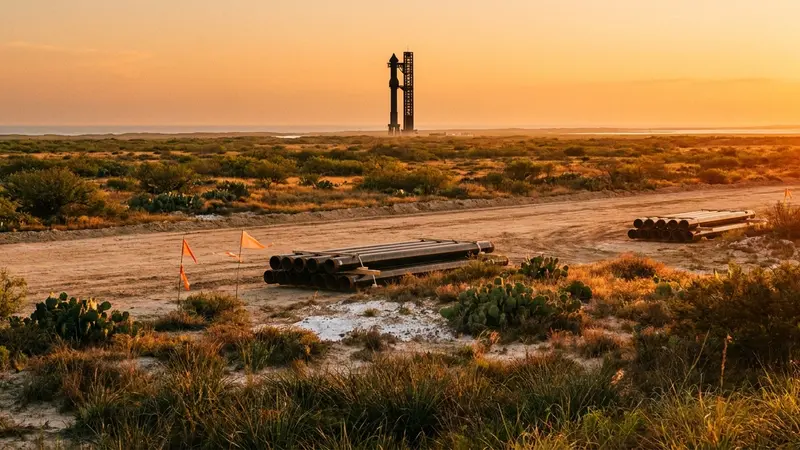
Roughly $50 billion of SpaceX’s new $74 billion supercompute plan sits in Cochise County, Arizona, a site that does not yet have local approval. A Reuters report carried by BOE Report says the company will put the other $24 billion into its Starbase site in Texas. For field contractors, the money is split unevenly and the two campuses are at different points in their path to construction.
Background
SpaceX said Thursday that it plans to invest more than $74 billion in two supercomputing campuses, according to the Reuters report. The company’s statement puts about $24 billion at Starbase and roughly $50 billion in Arizona.
The Arizona campus needs approval from Cochise County. SpaceX says it would create about 5,500 construction jobs and 1,000 permanent jobs. The Starbase facility would generate its own electricity instead of drawing from the public grid. Earlier this week, the company said it was planning a gas-fired power plant and a supercompute facility at Starbase.
That is the full extent of the source’s detail. It gives no schedule, no megawatt figures, no contractor names, and no permit status for Starbase beyond the earlier gas plant announcement.
Analysis
The Arizona campus is the bigger prize, and the less certain one. About two-thirds of the total ($50 billion of $74 billion) is in Arizona, and that campus is the one that still needs local sign-off. Texas has the smaller dollar figure but the clearer on-site power story. Contractors chasing this work should treat the two campuses as separate pursuits on separate clocks.
The jobs number gives a rough sense of scale. The source ties 5,500 construction jobs to the Arizona campus only. Spread across $50 billion, that is about $9 million of total investment per construction job. SpaceX has not said how much of the $50 billion is construction versus equipment, so that ratio is a scale marker, not a labor budget. A large share of a supercompute campus budget typically goes to computing hardware, which is not field scope. Even so, a 5,500-person construction workforce would make this one of the larger single-site labor demands in the Southwest if it proceeds as described.
Self-generation at Starbase shifts the scope toward the contractor. Because Starbase would produce its own electricity rather than use the public grid, the on-site power plant becomes part of the project itself. In practice, that would likely mean the work usually handled by a utility, such as generation, fuel supply and electrical distribution, falls inside the owner’s project. The source confirms a gas-fired plant is planned but gives no capacity, turbine count or fuel supply arrangement. Those details will decide how much of the work is mechanical and pipeline versus electrical.
The Arizona power and water picture is not in the source. The report does not say how the Arizona campus would be powered or cooled, or where its water would come from. Those are open questions, and they typically drive both permitting and the size of civil and utility packages. Contractors should not assume Arizona mirrors the Starbase self-generation model.
Approval is the first gate. Cochise County’s approval is the one named regulatory step in the source. Until that happens, Arizona package sizes and start dates are speculation. A $50 billion headline with no approved site plan does not support hiring decisions or equipment purchases.
What It Means for Subcontractors
- Texas power plant work (Starbase): The $24 billion Starbase campus includes a gas-fired plant that SpaceX announced earlier this week. Mechanical, pipefitting, electrical and civil contractors with power generation experience are the natural fit. The source gives no EPC award, so the first sign of work will be an owner or EPC contractor release. Have crews, safety statistics and equipment lists ready for that call.
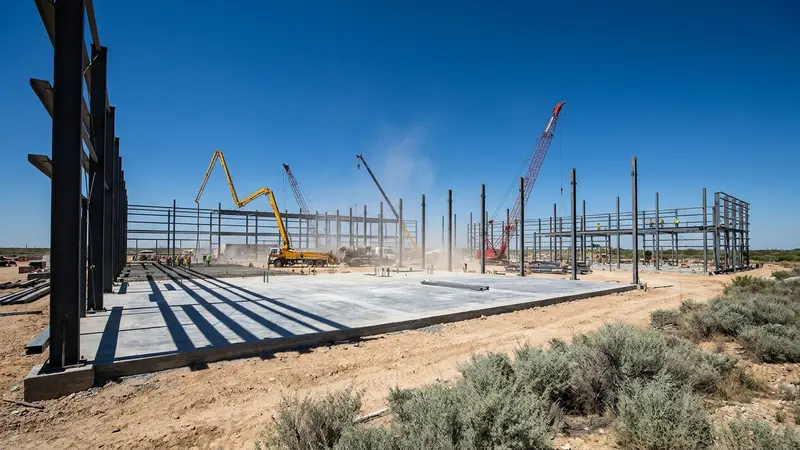
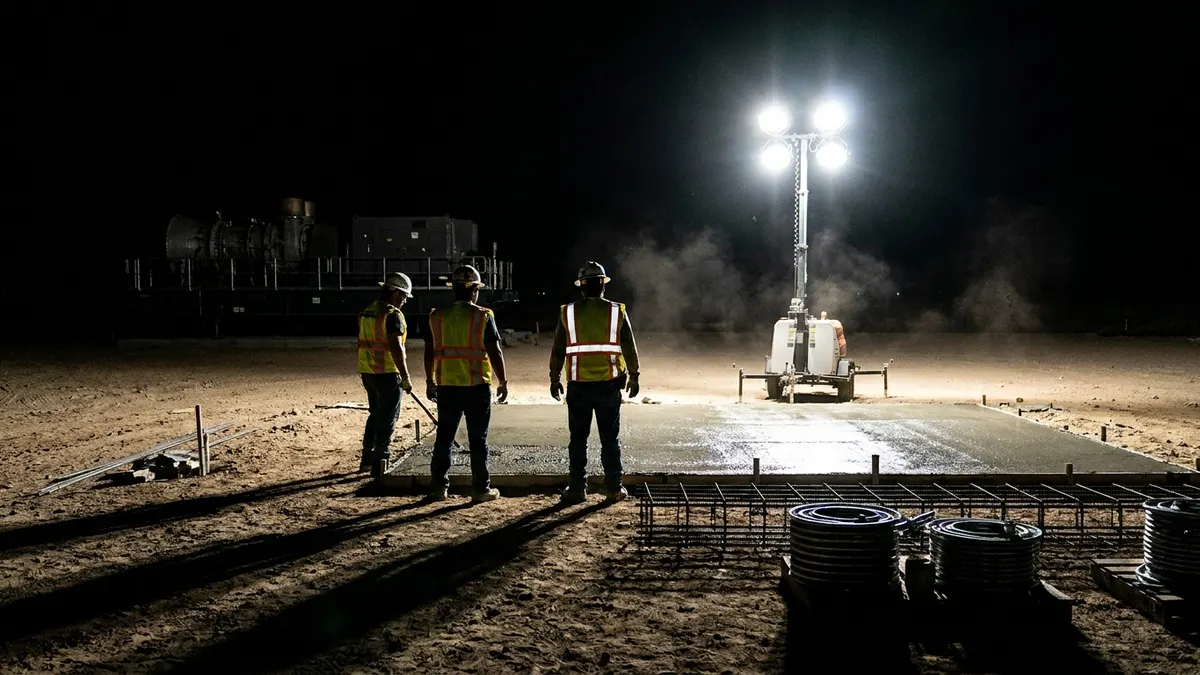
- Arizona civil and site prep: If approved, the $50 billion Cochise County campus would create about 5,500 construction jobs, according to S. Earthwork, paving, utilities, concrete and structural steel contractors in southern Arizona should look at the county’s approval process as the earliest public signal. No bid dates or package sizes are public yet.
- Labor-heavy trades should plan for competition: A 5,500-person site would draw craft labor from a wide area. Electrical, pipefitting and heavy equipment operator employers should assume wage and availability pressure in the region if the project is approved. Start retention and housing conversations now rather than after an award.
- Texas electrical and controls: On-site generation means switchgear, protection and controls, and distribution inside the project boundary. E&I contractors on the Texas Gulf Coast with existing gas power plant credentials should position themselves now with whichever EPC SpaceX selects.
- Gas supply and pipeline work: A gas-fired plant at Starbase needs fuel. The source does not describe the supply arrangement. Pipeline, HDD and gas measurement contractors in South Texas should expect a lateral or interconnect scope, but this is an inference, not something SpaceX has confirmed.
- Don’t plan around the $74 billion as if it were all field scope: Roughly $9 million of investment per Arizona construction job leaves room for large non-construction spending, such as computing equipment. Size any bid pursuit on the packages that actually get released, not on the headline total.