Skanska-Stacy Witbeck JV Lands $1.9B LA Metro Light Rail Contract in Van Nuys
A joint venture between Skanska and Stacy Witbeck has locked in a $1.9 billion contract to build a 6.7-mile light rail line through Van Nuys, California, a deal that Construction Dive reports will keep the two companies working in Southern California’s San Fernando Valley through the end of the decade.
Background
The Los Angeles County Metropolitan Transportation Authority signed the contract for the East San Fernando Valley Light Rail Transit Project, according to Construction Dive. Skanska’s share of the work is $957 million, roughly splitting the deal evenly with Alameda, California-based Stacy Witbeck. Including preconstruction, the total contract value climbs to $2.4 billion, per a release from Stacy Witbeck cited in the report.
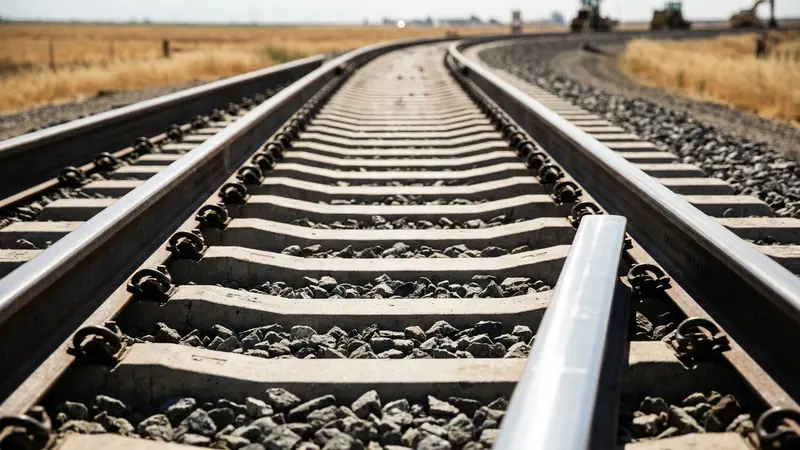
The scope covers 6.7 miles of at-grade light rail along Van Nuys Boulevard, an 11-station buildout with shade structures and utility improvements, and a 26-acre rail and maintenance facility. The line will connect to LA Metro’s existing G-Line bus route. Construction has already started, with completion targeted for December 2031, Construction Dive reported.
This isn’t new territory for either firm. Skanska, together with Traylor and Shea, wrapped up the $2.2 billion Los Angeles D Line Subway Extension in May after a decade of tunneling through seismically active ground, work that involved managing dangerous gas pockets and unearthing ice age fossils, according to Construction Dive. Stacy Witbeck brings its own rail resume, including the SMART Commuter Rail station project in Petaluma, California, completed in 2025 with 6 miles of adjacent pedestrian pathway.
Analysis
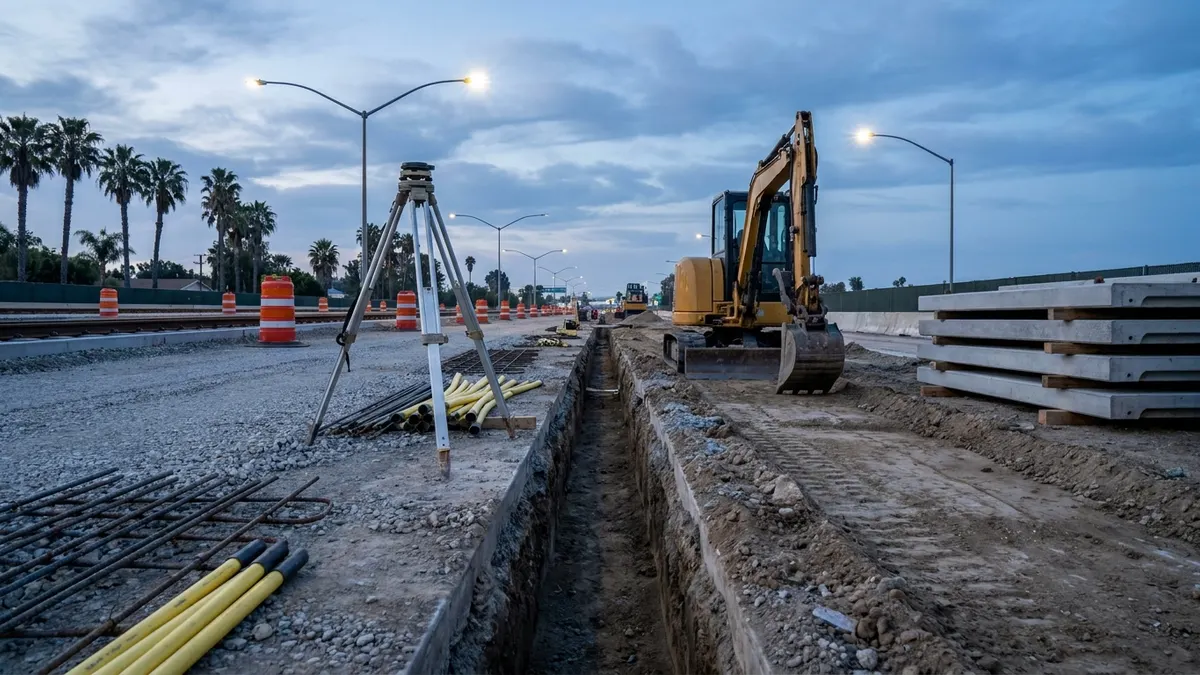
The at-grade design here is the detail subcontractors should key in on. Unlike the D Line’s deep tunneling, this is a surface-level build running along an active urban boulevard, which means the bulk of early work will be utility relocation, roadway reconstruction, and grading rather than underground excavation. Stacy Witbeck’s project manager, Eric Meisgeier, said in the company’s release that the job “requires getting every detail right, from utility coordination through revenue service, across some of the most active urban corridors in Los Angeles.” That’s a signal that the JV is anticipating a heavy utility-coordination phase before track and station work ramps up, exactly the kind of phase where local civil and utility subcontractors get pulled in.
A $2.4 billion total contract value spread over roughly five years of active construction (work started this year, with completion set for December 2031) represents a large, sustained volume of subcontracted packages. Split between two firms with a track record of using regional subcontractors on heavy civil rail jobs, this project is structured less like a single mega-award and more like a pipeline of smaller packages: roadway and drainage, utility relocation, trackwork, station construction, and the maintenance facility buildout.
The 26-acre rail and maintenance facility is worth watching separately from the line itself. Facilities like this typically require their own set of trades, structural, electrical, mechanical, and equipment installation, that run on a different schedule than the linear trackwork along Van Nuys Boulevard. Contractors positioned for vertical construction, not just linear civil work, have a second entry point into this project beyond the corridor itself.
Because both JV partners have deep rail histories in the LA market (Skanska on the D Line, Stacy Witbeck on SMART), expect them to lean on subcontractor relationships already established in prior projects, but the scale of this contract, comparable to the D Line’s dollar value, suggests they’ll need to expand their bench beyond existing relationships to staff the job.
What It Means for Subcontractors
- Utility relocation and E&I crews should expect early-phase demand along the Van Nuys Boulevard corridor, since Stacy Witbeck’s own project manager flagged utility coordination as a top priority before trackwork begins.
- Grading, drainage, and civil subcontractors have a multi-year window (construction is underway now through December 2031) to pursue packages tied to the 6.7-mile at-grade alignment.
- Trackwork and rail installation specialists should track bid packages tied to the corridor buildout as the utility and grading phases wind down, given the project’s at-grade design differs from tunneling-heavy jobs like the D Line.
- Structural, mechanical, and electrical contractors should look separately at the 26-acre rail and maintenance facility, a vertical-construction scope distinct from the linear trackwork.
- Firms with prior LA Metro or Skanska/Stacy Witbeck experience (such as subcontractors from the D Line extension or SMART Commuter Rail projects) are well-positioned given both JV partners’ pattern of reusing regional rail subcontractors.
- Station-package contractors should watch for procurement on the 11 planned stations, which include shade structures and utility improvements as part of the scope.