PJM Study Gates SoftBank's 10-GW Ohio Data Center, 765-kV Build
A roughly 10-GW AI data center complex on federal land in Pike County, Ohio, now has a grid study vehicle: 10.2 GW of new gas-fired generation, three AEP Ohio 765-kV transmission lines, and a PJM study agreement filed Tuesday at the Federal Energy Regulatory Commission. Utility Dive reported the filing details on Oct. 14, 2026. The study does not authorize construction, which matters for anyone trying to time a bid.
Background
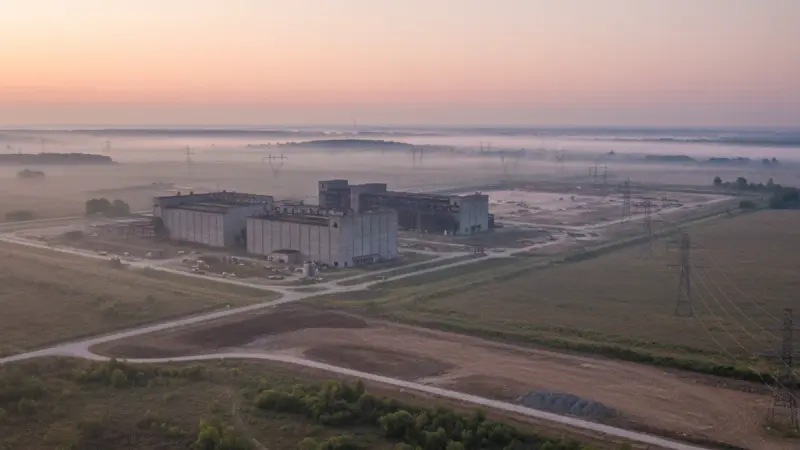
The project, called “Flagship,” was announced by the White House in mid-February as part of a $550 billion trade deal with Japan, Utility Dive reports. It includes an estimated $33 billion for 9.2 GW of gas-fired generation. Most of it would sit at the Department of Energy’s Portsmouth Gaseous Diffusion Plant, a former uranium enrichment facility. Some generation would be built about 30 miles away, according to PJM.
An AEP Ohio data center tariff will serve an initial 800-MW phase. The PJM study agreement covers an additional 9.6 GW of load and 10.2 GW of new gas generation to be built by SB Energy, a SoftBank company, in phases through 2032. AEP Ohio plans three 765-kV lines and related infrastructure.
PJM is using its “state agreement approach,” which lets a state ask the grid operator to study projects tied to state policy. SB Energy says it will pay for the generation and transmission built to serve the data centers. Per PJM, its payment obligations apply regardless of how much power the complex uses, and excess generation and transmission capacity would be made available to the grid.
Analysis
The study is a gate, not a green light. PJM said the studies will test whether AEP Ohio’s identified transmission is sufficient and whether more is needed. They will not select transmission projects or designated entities, set cost allocations, or grant transmission service or interconnection rights. The Public Utilities Commission of Ohio (PUCO) and FERC still have to resolve cost allocation and recovery. PJM is developing a cost allocation method for any “state agreement public policy projects” PUCO sponsors, in parallel with the studies.
So the sequence is: FERC accepts the agreement, PJM finishes its integrated load and generation study, Ohio decides whether to proceed, and PUCO and FERC settle cost questions. Only after that do owners firm up scopes. The source gives no study completion date, no FERC comment deadline and no in-service dates for the transmission. The only hard dates are the Sept. 25, 2026 execution date, which PJM wants made the retroactive effective date, and 2032 as the end of the generation phasing. We won’t guess at windows between them.
What the filing implies for scopes (our inference, not stated by the source). The source names three 765-kV lines and “related infrastructure.” It does not give mileage, structure counts, substation counts or routes. Reasonable scope categories include:
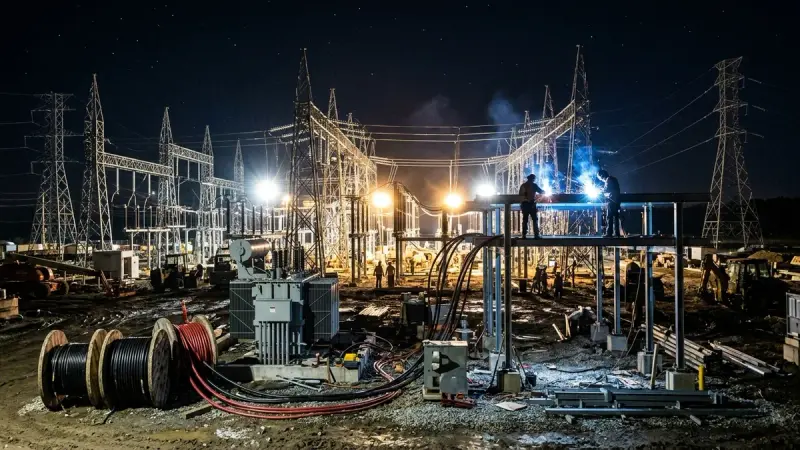
- 765-kV structures and foundations for three lines, plus right-of-way clearing and access.
- Substation work at the load and generation ends, including civil, grounding, controls and electrical.
- Generation island work for 10.2 GW of gas units, split between the Portsmouth site and the location about 30 miles away.
- Site civil on a former enrichment facility, where access and environmental requirements may differ from a greenfield pad (the source does not say).
- Gas supply laterals. The source does not mention fuel supply, so any pipeline scope is our inference from the gas generation alone.
A number mismatch to note. The DOE-linked announcement cites 9.2 GW of gas generation, while the PJM study covers 10.2 GW. The source does not reconcile them. Package sizing should wait for the scope that survives the study.
Cost risk looks lower than usual, but not zero. SB Energy’s commitment to pay for delivery infrastructure and network upgrades, regardless of consumption, supports the funding case. Still, the cost allocation mechanisms remain subject to future PUCO and FERC proceedings, per PJM. The Utility Dive piece also points readers to a separate Oct. 12 story headlined “FERC rejects most of PJM’s large load interconnection plan.” The source article does not explain how that ruling affects this agreement.
What It Means for Subcontractors
- Transmission civil and line crews: Three 765-kV lines are the confirmed AEP Ohio scope. No EPC award, route or structure count is public, so there are no packages to price. The state-level decision to proceed comes after PJM’s study and is the stage to track.
- Substation and electrical trades: “Related infrastructure” is the only substation reference. Expect packages after PJM confirms whether AEP Ohio’s identified facilities are sufficient or more are needed, which the study is designed to answer.
- Gas generation trades (mechanical, piping, E&I): The 10.2 GW build is phased through 2032 and is SB Energy’s to fund. That points to multiple generation phases rather than one award. Target SB Energy and its affiliates for pre-qualification, not PJM or AEP Ohio.
- Site civil in Pike County: The first phase is 800 MW under an AEP Ohio data center tariff, the earliest-defined load block. Site civil firms near Portsmouth should know the facility is DOE-owned federal land, and should expect owner requirements tied to that status (our inference).
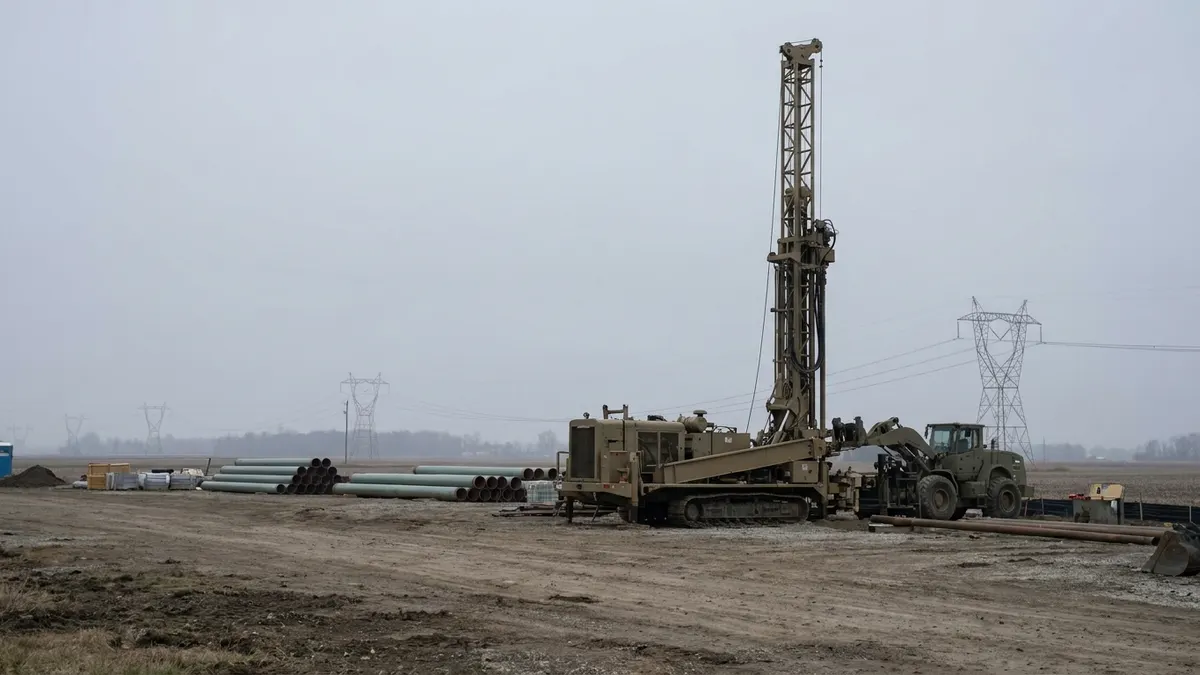
- Pipeline and HDD contractors: The source does not mention gas supply. Treat lateral work as unconfirmed until SB Energy or a pipeline sponsor files something.
- Bid-timing dates to use: Sept. 25, 2026 (study agreement execution, with retroactive effectiveness requested) and 2032 (end of generation phasing). Anyone quoting earlier firm start dates is working from information the filing does not contain.