Permian Producers Are Sitting on High Prices Instead of Drilling More
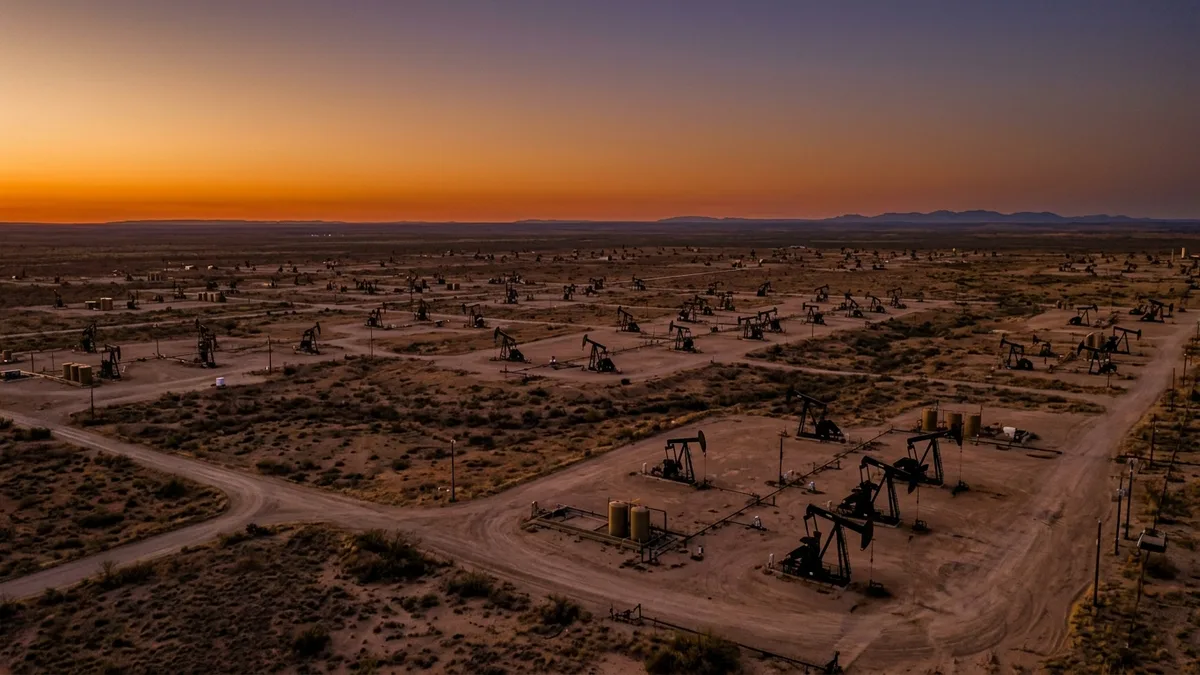
According to Marketplace, Permian Basin oil producers are resisting the traditional impulse to ramp up drilling even as prices remain attractive, a shift that has significant implications for the field services companies and subcontractors who depend on upstream activity to fill their schedules.
The pattern contradicts the old playbook, where higher prices automatically meant more rigs, more completions crews, and more subcontractor work. That relationship has broken down, and the field services sector needs to pay attention.
Background
For most of the shale era, the Permian Basin operated on a simple cycle: prices rise, producers drill, service companies get busy. That cycle drove massive growth in the Midland and Delaware sub-basins throughout the 2010s, making West Texas the most active drilling region in the world.
But the post-2020 environment changed the rules. Coming out of the COVID-19 price collapse, public producers faced intense pressure from investors to prioritize free cash flow and shareholder returns over production growth. That capital discipline message stuck, and according to Marketplace, it’s still driving operator behavior even as prices give producers financial room to expand.
The Permian rig count, while still the highest of any US basin, has not surged in response to price signals the way it would have a decade ago. Operators are running fewer rigs relative to their cash flow capacity, focusing instead on returning money to shareholders through dividends and buybacks rather than funding aggressive new drilling programs.
Private operators have historically been the wildcard, less beholden to Wall Street and quicker to respond to price signals. But even private Permian producers appear more cautious than in previous cycles, constrained by tighter access to capital and the lessons of prior boom-and-bust cycles that left many overleveraged.
Analysis
The restraint coming out of the Permian is not a sign of a sick industry. It’s a sign of a mature one, and that distinction matters for how subcontractors should plan.
In a maturing capital discipline environment, operators are optimizing rather than expanding. They’re drilling their best remaining locations, completing wells more efficiently, and sweating existing infrastructure harder before committing to new builds. That means activity isn’t collapsing, but it also isn’t going to spike the way it did in 2014 or 2021-2022, even if prices cooperate.
For field services companies, this creates a more predictable but also more competitive environment. Demand for pressure pumping, flowback, production testing, and midstream tie-in work will stay relatively steady rather than surging, and that limits the pricing power that service companies briefly recovered in the 2022 boom. Day rates and contract terms that improved sharply two years ago have come under renewed pressure as operators push back, knowing the drilling frenzy isn’t coming back the way it once did.
There’s also a geographic implication. With producers being selective, work is concentrating on the highest-quality acreage in the core of the Midland and Delaware basins. Subcontractors positioned in the Permian core are in better shape than those serving peripheral or emerging plays that producers are quick to cut when budgets tighten.
The broader context beyond the Permian is worth noting. Similar capital discipline is playing out in the Bakken and the DJ Basin, suggesting this isn’t a Permian-specific story. Producers across US shale have broadly told investors they won’t chase prices with the drill bit. Until that message changes, field services demand growth will lag what price charts alone would suggest.
One additional factor is cost. Service costs remain elevated relative to pre-2020 levels, and operators are acutely aware of their well economics. If producers aren’t convinced that higher prices offset higher service costs and generate acceptable returns at the margin, they simply won’t sanction new wells. That makes the service sector’s own pricing strategy a factor in how much work gets authorized.
What It Means for Subcontractors
- Don’t plan for a volume surge. Bid pipelines and crew plans should reflect steady-state Permian activity, not a boom. Operators have the money to drill more but are choosing not to, and that’s unlikely to reverse quickly.
- Focus on efficiency and reliability. In a discipline-driven market, operators reward subcontractors who reduce non-productive time and hit schedule targets. That’s what wins repeat work and preferred vendor status.
- Watch private operator activity closely. Privates remain more price-responsive than public E&Ps. Subcontractors with strong relationships among private Permian operators may see better volume than those primarily serving the majors and large independents.
- Core acreage positioning matters. If your operations are concentrated in the proven core of the Midland or Delaware basins, you’re better insulated than competitors spread across marginal plays.
- Renegotiation pressure is real. Expect operators to push for better contract terms as they optimize costs. Have a clear understanding of your own cost floor before those conversations start.