ONEOK's $2.5 Billion Construction Push Opens Doors for Pipeline and Processing Contractors
According to Oklahoma Energy Today, ONEOK is in the middle of one of its most active construction cycles in recent memory, with at least five major capital projects underway across its 60,000-mile pipeline network spanning multiple states. The Oklahoma-based midstream giant is deploying billions of dollars into new pipelines, processing plants, and export infrastructure, with completion dates ranging from mid-2026 through early 2028. For subcontractors working in pipeline construction, civil work, mechanical installation, and facilities maintenance, this spending wave represents a concrete opportunity pipeline.
Background
ONEOK’s expansion push is detailed in the company’s annual report, which outlines projects driven by what leadership describes as growing energy demand across the nation. The company operates across four natural gas business divisions and has made several major acquisitions in recent years, including the $941 million Delaware Basin joint venture acquisition completed in 2025. That deal added Permian Basin exposure and appears to have accelerated the company’s capital deployment strategy.
The projects are geographically diverse. In Colorado, ONEOK is building a 230-mile, 16-inch diameter pipeline from Scott City, Kansas to Denver International Airport, designed to increase refined products supply from the Mid-Continent and Gulf Coast to the Denver metro area. The company is also upgrading pump stations along its existing refined products pipeline system. Completion is targeted for mid-2026.
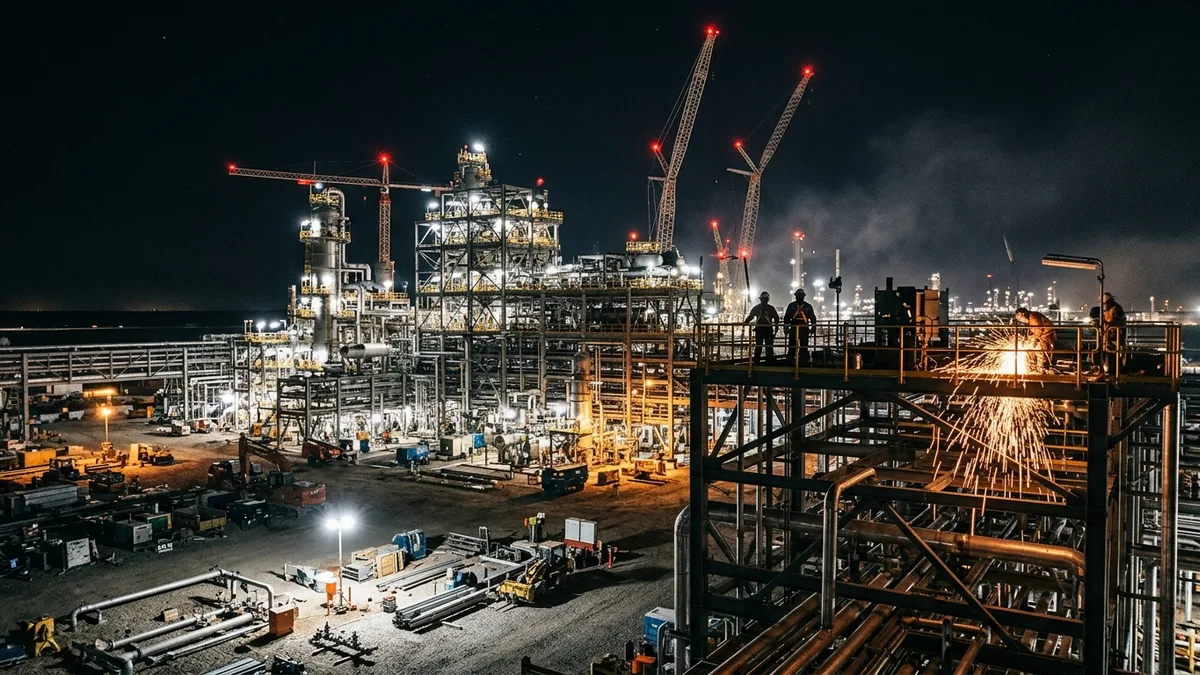
In northern Oklahoma, the company continues rebuilding the Medford NGL fractionator, a 210,000-barrel-per-day natural gas liquids plant that was destroyed in a July 2022 explosion and fire. The rebuild, originally estimated at $385 million, is progressing in phases, with the first phase expected to wrap up later this year and a second phase targeted for the first quarter of 2027.
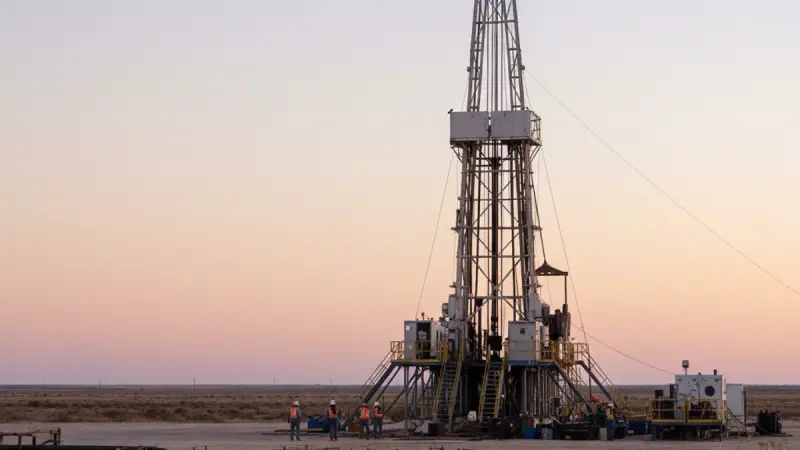
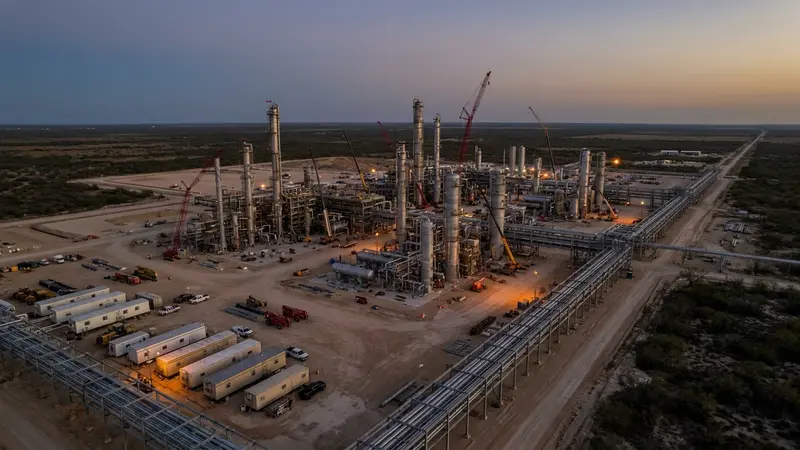
In the Permian Basin, ONEOK is constructing the Bighorn natural gas processing plant, with a processing capacity of 300 MMcf/d and the capability to handle high-carbon-dioxide natural gas. The company has pegged the Bighorn plant, including a carbon dioxide treater, at approximately $365 million, with completion expected in mid-2027. The project is backed by acreage dedications and long-term fee-based contracts. The company is also relocating a 150 MMcf/d processing plant from North Texas to the Permian Basin, and expanding two existing Permian operations to add an incremental 110 MMcf/d of capacity, both expected to complete in the third quarter of 2026.
On the Gulf Coast, ONEOK is constructing a $1 billion LPG export terminal in Texas City, Texas, along with a new 24-inch pipeline connecting its Mont Belvieu storage hub to the new terminal. That project is not expected to come online until early 2028.
Analysis
Taken together, these projects represent a concentrated and geographically spread capital program that cuts across nearly every discipline in the midstream construction space. ONEOK is simultaneously building new-build pipelines, rebuilding damaged processing infrastructure, relocating existing equipment, expanding throughput at operating plants, and constructing a major marine export terminal. That kind of parallel activity across multiple states and business lines is unusual even for a company of ONEOK’s size, and it signals a management team that is confident in long-term demand fundamentals.
The demand thesis is not hard to understand. Power generation load from data centers and industrial reshoring is driving natural gas demand in ways that weren’t fully priced in just a few years ago. The Permian Basin continues to grow production, and associated gas handling remains a bottleneck that processors like ONEOK are racing to address. The Denver market expansion, with its direct connection to Denver International Airport, also reflects a bet on sustained refined products demand in a region that has historically been supply-constrained.
The Medford rebuild is worth watching closely. Four years after the explosion, ONEOK is still working through reconstruction, which underscores how complex and costly it is to restore a large-scale fractionation facility. The phased approach, splitting completion across 2026 and Q1 2027, suggests the company is managing both construction risk and capital timing carefully.
The Texas City LPG terminal is the longest-dated and most capital-intensive single project on the list at $1 billion. LPG export infrastructure on the Gulf Coast is a competitive space, with several operators expanding capacity to capture growing demand from Asia and Latin America. A 2028 completion date means subcontractors bidding on that work are likely already engaged or will be in the near term.
ONEOK’s Natural Gas Gathering and Processing segment saw earnings growth in 2025, driven by a full year of contributions from the EnLink acquisition and higher volumes in the Mid-Continent and Rocky Mountain regions. That financial strength provides the company with the balance sheet to continue executing on this program even if commodity prices soften.
What It Means for Subcontractors
- Pipeline construction and right-of-way work is active now. The 230-mile Scott City-to-Denver pipeline is targeting mid-2026 completion, meaning crews should already be mobilized. Subcontractors with experience in refined products pipeline construction in Kansas and Colorado should be monitoring this project closely for any remaining subcontract packages.
- Permian Basin mechanical and processing contractors have multiple concurrent opportunities. The Bighorn plant build, the plant relocation from North Texas, and the two capacity expansions at existing facilities all involve different scopes and potentially different prime contractors, meaning there are multiple entry points for specialized trades.
- Industrial construction in the Gulf Coast needs to be on your radar for Texas City. A $1 billion terminal project of that scale will involve extensive civil, structural, mechanical, piping, and electrical subcontracting through 2027 and into 2028. If you’re not already in conversations with ONEOK’s engineering and construction procurement team, start now.
- NGL and fractionation specialists in Oklahoma should track the Medford rebuild. The second phase is scheduled for Q1 2027, and fractionation facility reconstruction requires a specific skill set. Contractors with prior NGL plant experience and an established safety record in Oklahoma are well positioned.
- OSHA compliance and safety prequalification will be non-negotiable on all of these projects. ONEOK operates under extensive federal and state regulatory oversight, and subcontractors should expect rigorous vetting on safety records, incident rates, and compliance documentation before being awarded any scope. If your OSHA 300 logs, EMR, and safety programs are not current and audit-ready, address that before pursuing these opportunities.