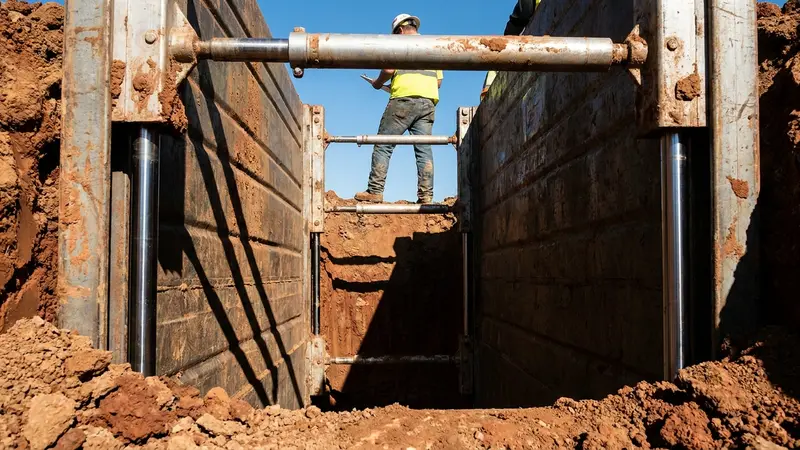
Michigan Trench Collapses Spur MIOSHA Push on Hazard Checks
With 21 workplace fatalities reported to the Michigan Occupational Safety and Health Administration (MIOSHA) so far in 2026, the agency is urging employers and workers to take proactive steps to identify hazards, communicate safety concerns and stop work when conditions become unsafe, ISHN reports.
Market Impact
The push comes after three trench collapses in Michigan within a two-day period, including one that resulted in a worker’s death on July 1. MIOSHA says the incidents underscore the importance of reassessing hazards as conditions change and using available safety resources to prevent serious injuries and fatalities.
“Every workplace death is a tragedy, and recent incidents are a reminder that conditions can change quickly,” MIOSHA Director Bart Pickelman said in a statement. “Employers must make hazard recognition part of every job, provide workers with the training and protections they need and create a culture where employees are empowered to speak up and stop work when something is unsafe.”
The warning follows a grim 2025: MIOSHA reported 46 work-related fatalities that year, the highest since 2006. Struck-by incidents, including workers hit by vehicles, falling trees, machinery components and construction equipment, were the leading cause, accounting for 24 of the 46 deaths.
MIOSHA is encouraging employers to assess hazards before work begins and reassess them as conditions change, provide task-specific training, maintain clear communication among workers, supervisors and contractors, and stop work when required protections are not in place. The agency also points employers to its no-cost Consultation Education and Training (CET) program for hazard assistance and training resources.
What It Means for Subcontractors
- Excavation, utility and pipeline crews should treat this as a trigger to formally re-verify shoring, sloping and benching plans and confirm a documented competent person is on site before work resumes on any open trench.
- Firms working trenching or excavation scopes in Michigan should expect heightened MIOSHA inspection activity in the near term, particularly on active trench and confined-space sites.
- Supervisors should reinforce stop-work authority for crew members, since MIOSHA is explicitly framing worker empowerment to halt unsafe conditions as a compliance expectation, not just a best practice.
- Contractors without a current, documented hazard-assessment process should consider MIOSHA’s free CET consultation service before facing a citation, especially given the agency’s record 2025 fatality count and its continued elevated pace in 2026.