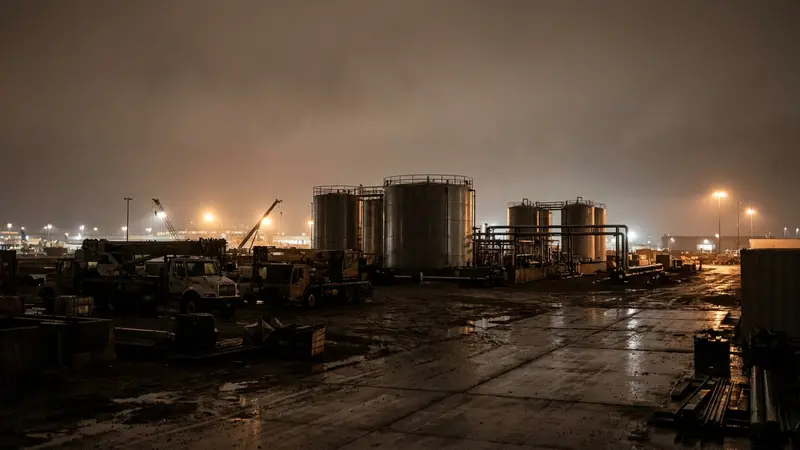
Granite Wins $52M Final Tucson Airfield Package, Field Work Starts 2028
Granite Construction now holds a $52 million construction manager at risk (CMAR) contract for the last phase of Tucson Airport Authority’s $400 million-plus airfield program. Major field work starts in the third quarter of 2028, ENR reports.
Market Impact
CMAR2 is the final project in the Airfield Safety Enhancement (ASE) Program at Tucson International Airport. WSP USA is program manager. Granite’s scope covers modifying taxiways and connector taxiways to current commercial aviation safety standards, plus relocating and upgrading FAA navigational aids. With the Nov. 4 announcement, Granite has completed or been awarded every ASE package.
Preconstruction began in September 2026. It covers design coordination, field investigations, utility verification, phasing, procurement and guaranteed maximum price (GMP) package development. The toughest airside work is timed around a planned closure of Runway 12-30, with completion set for 2029.
Granite will self-supply materials from its nearby Swan Facility: more than 80,000 tons of FAA-specification aggregate and roughly 50,000 tons of FAA-specification asphalt. Granite area manager Zach Thompson says the plant’s proximity gives the company direct control over production, quality and delivery.
The site is a shared airfield used by commercial airlines, general aviation and the Arizona Air National Guard’s 162nd Wing F-16s. Thompson says the biggest remaining technical hurdle is verifying and coordinating active underground drainage, electrical, lighting and communications networks alongside navigational aids that must keep serving flights.
What It Means for Subcontractors
This quarter
- Little paving scope is left to bid. Roughly 130,000 tons of aggregate and asphalt (80,000 plus 50,000) is planned from Granite’s own Swan Facility. Outside haulers and material suppliers should expect limited openings.
- Utility and systems trades have the best entry point. Thompson names underground drainage, electrical, lighting and communications verification as the key risk. Our read, not the source’s: those scopes are the likeliest to need specialty subs. Locating, potholing, electrical, and instrumentation firms should introduce themselves to Granite’s Tucson area office now.
- Timing matters. Procurement and GMP package development are underway in preconstruction. The source gives no bid dates or package list. Ask Granite’s Tucson office when trade packages will be priced, since GMP pricing is typically built from sub quotes (our inference).
Position for later
- Night work is the pricing risk. Thompson says each closure window must fit access-point clearance, setup, construction, inspection, foreign-object debris sweeps and reopening with virtually zero margin. Crews that can run tight nighttime shifts should build that into quotes.
- Plan for a 2028 mobilization. Field work begins in Q3 2028 and Runway 12-30 closure work leads to the 2029 completion. Firms eyeing airside work should line up security-badging and FAA-spec experience well before then.
- Earlier packages show the playbook. Granite phased work to match multiple federal and local grants and used FAA pavement modeling and drainage redesigns to save time and money. Subs that bring constructability ideas during preconstruction fit that approach.