Fuel Cells Are Becoming a Serious Power Option for AI Data Centers
According to OilPrice.com, the rapid growth of AI infrastructure is creating significant new demand for on-site fuel cell power generation, as data center operators struggle to secure reliable grid power fast enough to keep up with expansion plans.
Background
The core problem is straightforward: building new grid capacity takes years, and AI data centers need power now. Traditional utility connections involve permitting, transmission upgrades, and interconnection queues that can stretch well beyond a year. Fuel cells, which can be deployed on-site and fed by natural gas or hydrogen, offer a faster path to reliable, high-density power without waiting on the grid.
OilPrice.com reports that this dynamic is pushing fuel cell adoption into a new growth phase, with the AI buildout acting as a catalyst for a market that had previously scaled slowly.
Analysis
The story here isn’t just about fuel cells as a technology. It’s about where power infrastructure investment is headed, and what that means for the contractors and service companies that build, commission, and maintain it.
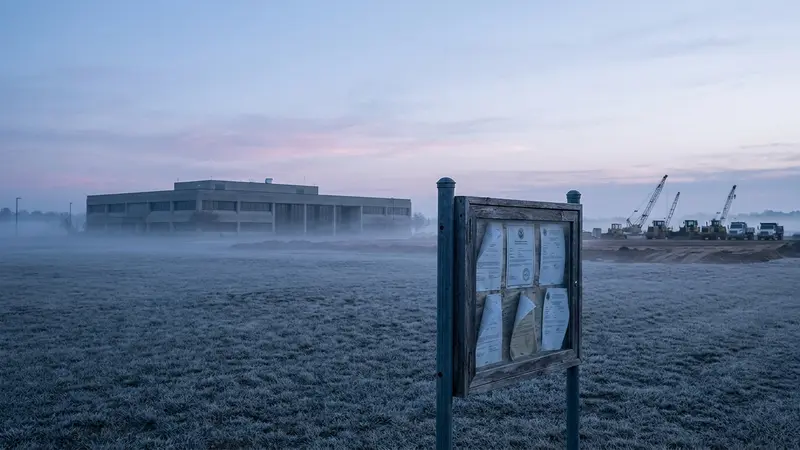
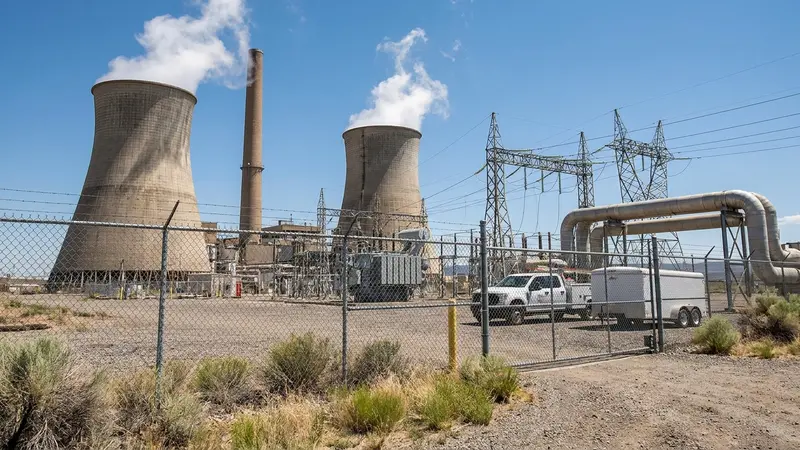
Data centers have historically been utility customers. They plugged into the grid and paid the bill. That model is breaking down. Grid operators in high-demand regions are telling large customers to wait years for sufficient interconnection capacity. That wait is unacceptable for hyperscalers and AI companies racing to deploy compute. The result is a shift toward distributed, on-site generation, and fuel cells are one of the most practical options for that use case.
Fuel cells are well-suited to data center requirements because they produce power with high reliability, generate relatively low noise and emissions compared to diesel generators, and can be scaled in modular configurations. They also run on natural gas, which means they plug into existing gas distribution infrastructure rather than requiring entirely new fuel supply chains.
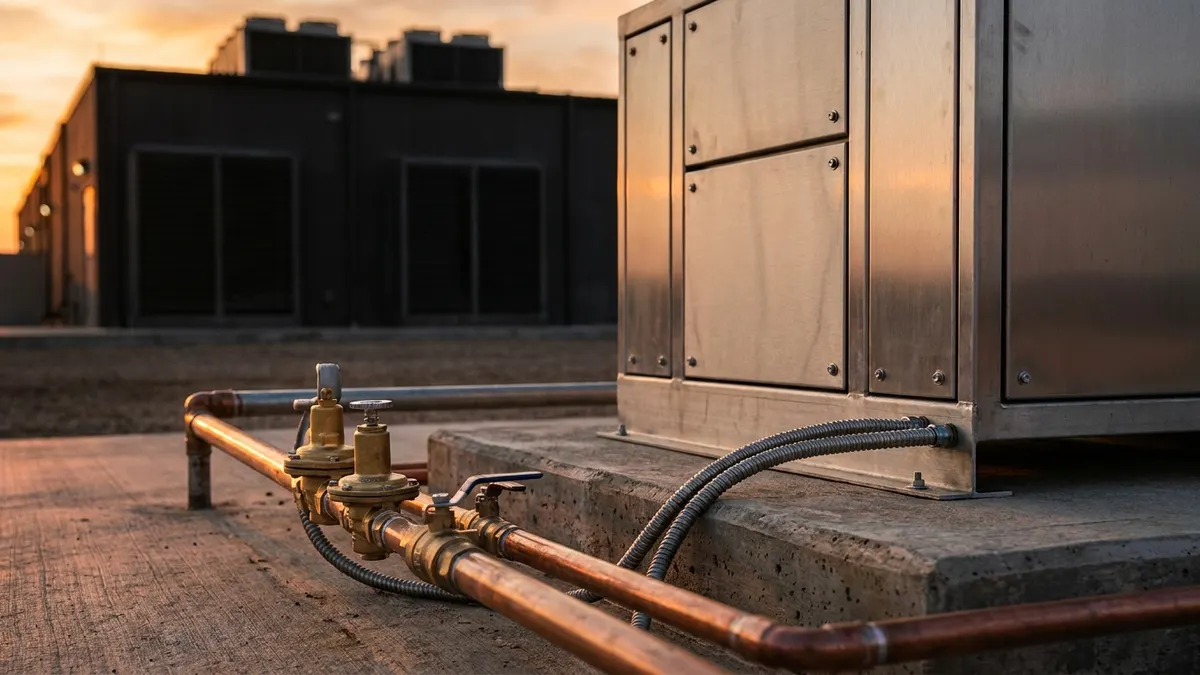
That last point matters for field service contractors. The natural gas supply side of this equation, including pipeline hookups, metering, pressure regulation, and on-site gas handling, is work that falls squarely within the scope of experienced gas infrastructure contractors. This isn’t exotic new technology requiring specialized expertise from scratch. For contractors already working in gas distribution, industrial power, or generator maintenance, fuel cell installations represent an adjacent market with familiar fundamentals.
The maintenance picture is also significant. Fuel cells require ongoing service, including stack monitoring, fuel system maintenance, cooling system upkeep, and periodic component replacement. Unlike a utility connection, which largely disappears from a site contractor’s scope after commissioning, on-site generation assets create long-term service relationships. For field service companies looking to build recurring revenue, that’s a meaningful shift in how data center work is structured.
The scale of the AI infrastructure buildout amplifies all of this. If major technology companies are committing to large deployments of on-site fuel cells, the aggregate demand for installation and maintenance labor will be substantial. Contractors who establish competency and track record in this space early will be better positioned as the market grows.
There’s also a geographic dimension. AI data centers are concentrated in specific markets, including northern Virginia, the Dallas-Fort Worth area, Phoenix, and the Pacific Northwest, among others. Subcontractors operating in or near those markets are closest to where this work is materializing. But as power constraints push data center development into secondary markets, the geographic spread of fuel cell installation work is likely to widen.
What It Means for Subcontractors
- Natural gas contractors already working in industrial or commercial power should pay attention to fuel cell installations as a direct adjacency. The gas supply and hookup work is familiar territory.
- Electrical and mechanical contractors with data center experience should assess whether fuel cell commissioning and maintenance falls within their existing licensing and capability.
- Fuel cell deployments create long-term service contracts, not just one-time builds. Companies that get in early on installation are better positioned to secure ongoing maintenance agreements.
- The power constraint problem affecting data centers is unlikely to resolve quickly. Grid interconnection queues in high-demand markets remain a structural bottleneck, which supports sustained demand for on-site generation alternatives.
- Contractors in major data center markets, particularly Texas, Arizona, and the Mid-Atlantic, should be tracking which technology providers are winning fuel cell contracts with hyperscalers and positioning accordingly.
- This is still an emerging segment. Contractors who invest in training and certifications related to fuel cell systems now will have a competitive advantage as the market scales.