Early Heat Wave Exposes Acclimatization Gap on Construction Sites
According to Engineering News-Record, a heat wave pushing heat index values near 100°F across parts of the Northeast and Mid-Atlantic is prompting contractors to adjust schedules, increase rest breaks, and double down on worker acclimatization programs as one of the season’s first major heat events moves through the eastern U.S.
The Acclimatization Gap Is the Real Risk
The concern isn’t peak summer heat, it’s the suddenness of this early spike. Brad Sant, senior vice president of safety and education at the American Road and Transportation Builders Association, told ENR that abrupt early-season temperature changes don’t allow for natural acclimatization. “The real challenge comes when a heat wave strikes suddenly and the workers are not properly acclimatized,” Sant said. “That necessitates extra steps to allow work crews to be mentally and physically prepared to work in high temperatures.”
Workers build heat tolerance gradually over time. When temperatures spike before that process has occurred, the injury risk climbs sharply, even at temperatures that would be routine in August.
The stakes are significant. According to CPWR, the Center for Construction Research and Training, construction workers accounted for half of all occupational heat-related fatalities in recent data, despite representing a much smaller share of the overall U.S. workforce. The pattern holds across regions, including the Gulf Coast and Southwest, where early summer heat is a recurring and serious hazard for field crews.
What It Means for Subcontractors
- Early-season heat events are statistically more dangerous than midsummer heat because field crews haven’t built thermal tolerance yet. Don’t wait for peak temperatures to activate your heat safety protocols.
- Formal acclimatization programs, gradually increasing heat exposure over seven to 14 days for new and returning workers, are your first line of defense at the start of each summer season.
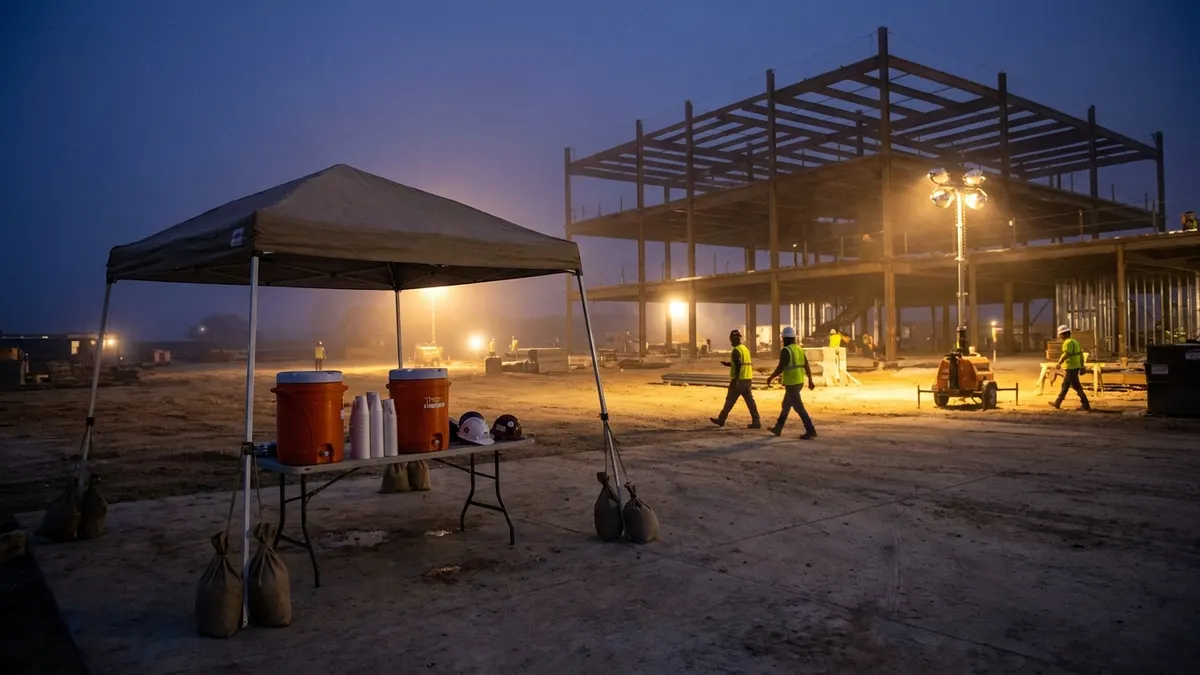
- Schedule adjustments, shade canopies, hydration stations, and mandatory break intervals aren’t just good practice. With construction workers accounting for a disproportionate share of all occupational heat fatalities, OSHA scrutiny on heat safety is high and getting higher.
- Supervisors should treat an early heat wave as a trigger event, not a routine condition. Workers who performed fine last August may not yet be ready for a 100°F heat index in June.