DTE Seeks Bids for 150 MW of Michigan Solar, Due Jan. 19
DTE Energy is taking bids on up to 150 MW of new Michigan solar, with proposals due Jan. 19, 2027 and commercial operation required by June 30, 2030, Solar Power World reports.
Market Impact
DTE says the projects will create construction jobs and cut its exposure to fuel price swings, since solar needs no fuel. The company also says the work will bring investment and tax revenue to local communities.
The procurement follows a settlement agreement in Michigan Public Service Commission Case No. U-21662, approved May 15, 2025. Projects must be in Michigan and connect to either the MISO transmission system or DTE’s distribution system. DTE expects to execute contracts in the second or third quarter of 2027. Bidders can register and get details through PowerAdvocate.
The source does not name sites, counties, an EPC, or a developer. It also does not say whether DTE will own the projects or buy their output, or how the 150 MW will be split. Some projects could be small distribution-connected arrays rather than a single large site, but that is our read, not the source’s.
For longer-range context, DTE’s 2026 Integrated Resource Plan calls for an additional 15 GW of renewable energy by 2042. The 150 MW is a small first step against that figure. The source does not say how much of the 15 GW will be solar.
What It Means for Subcontractors
Before the Jan. 19, 2027 bid deadline:
- Contact likely bidders now. Solar developers and EPCs have roughly eight weeks to price this. Civil, pile-driving, and electrical subs who want to be in a bid should send unit pricing and capacity to developers active in Michigan before proposals go in. After Jan. 19, the scopes are tied to submitted numbers.
- Check PowerAdvocate. The source names it as the registration route for bidders. Ask DTE’s procurement team whether subcontractors or suppliers can register or be listed, rather than assuming access.
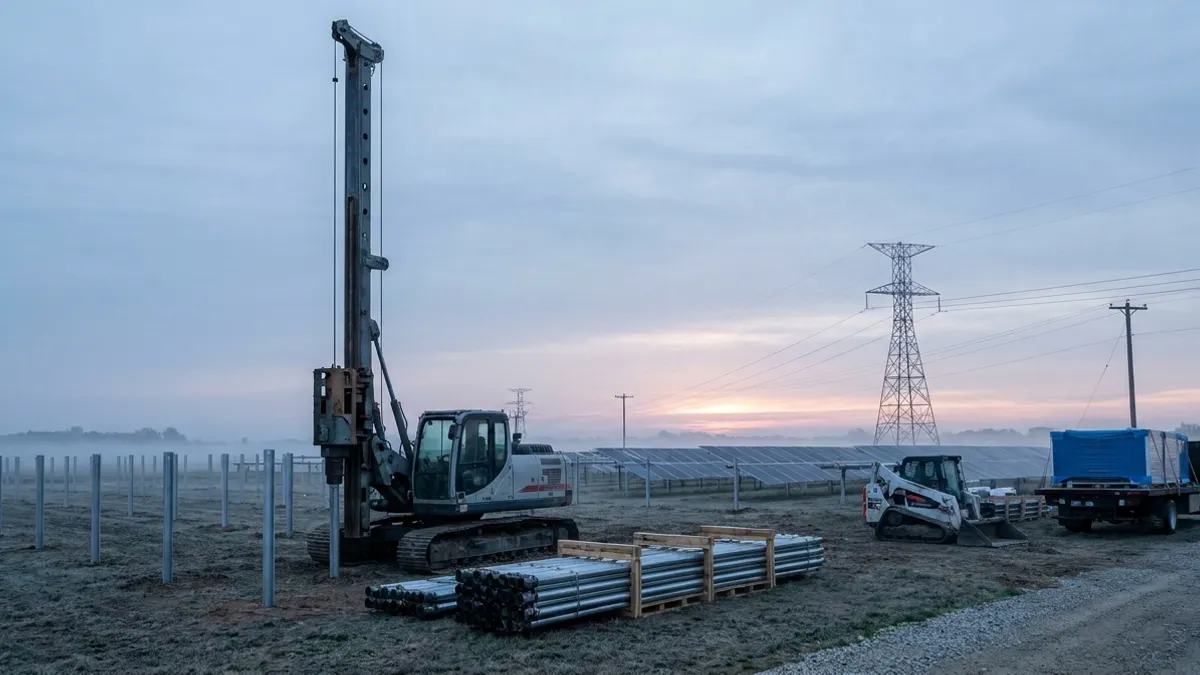
- Prepare scope-specific pricing. Bidders will need numbers for site prep and grading, pile installation, racking, DC collection, and interconnection. A 150 MW ceiling could mean several sites, and interconnection scope will differ between MISO transmission and DTE distribution connections.
Later-stage positioning (2027 and beyond):
- Watch the Q2 or Q3 2027 contract awards. Once DTE executes contracts, the awarded developers or EPCs will likely name themselves in filings or announcements, and that is when subcontract packages should open. Sites and schedules should become clear then. Build your outreach list now, but expect little to bid before then.
- Plan for a 2028 to 2030 construction window. With contracts expected in mid-2027 and a June 30, 2030 operation deadline, field work likely falls in that range (our inference, not stated by the source). Electrical and interconnection crews should check how that overlaps with other utility work.
- Treat the 15 GW by 2042 figure as a long-term signal only. The source gives no annual build schedule. It suggests continued Michigan renewable procurement, but it is not a near-term bid pipeline.