Data Center Construction Claims Are Surging — Here's What the Loss Data Shows
According to Engineering News-Record, a new report from Zurich Resilience Solutions draws on more than 500 data center projects insured over the past five years to identify the risk patterns that are driving costly losses across the construction boom. The findings are relevant to every contractor and subcontractor working in this space: the claims are real, they are growing, and the exposures are more complex than a typical commercial build.
Background
Zurich’s Data Center Risks Right Now report pulls from the company’s risk engineering, underwriting, and claims teams to paint a field-tested picture of where data center projects go wrong. According to Engineering News-Record, severe weather events, including tornadoes, and hot works-related fires have been among the leading loss drivers in Zurich’s Builders Risk portfolio for data centers. Equipment failures round out the top concerns, and the report notes these failures can be amplified by the scale and sensitivity of data center infrastructure.
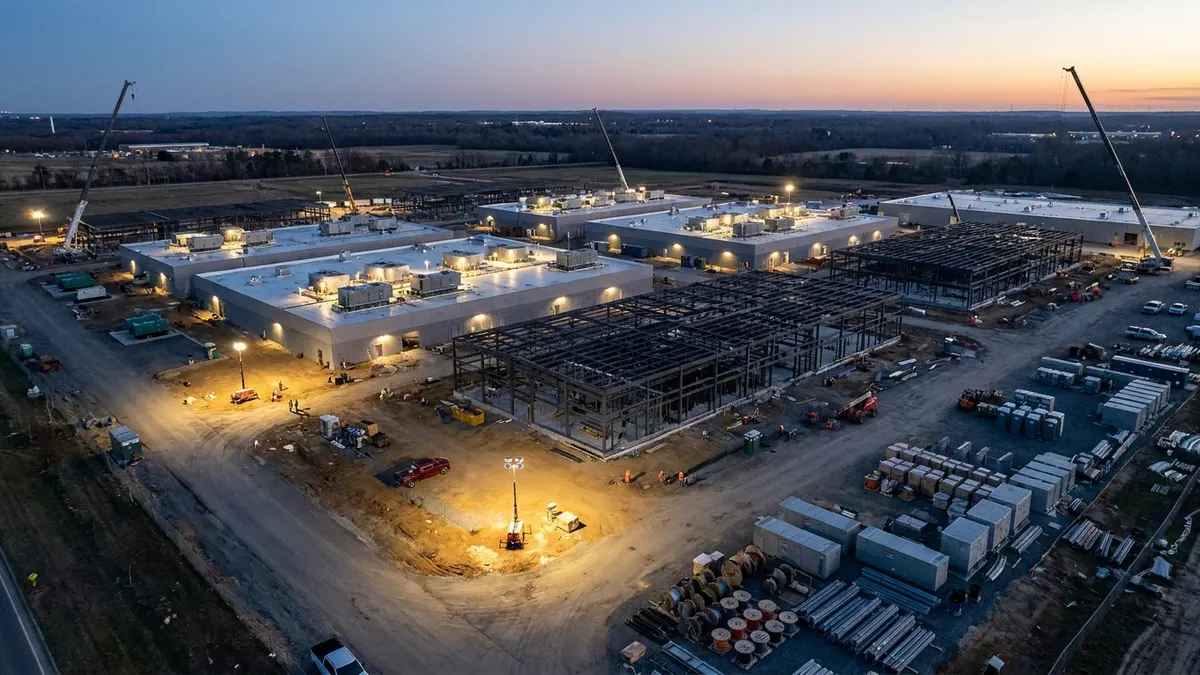
The report covers risk exposure across design, construction, and phased handovers, which is a particularly critical window. Phased handovers, where portions of a facility go live while construction continues elsewhere on the same site, create overlapping exposures that don’t exist on a conventional project.
“What makes data centers uniquely challenging is not any single risk, but how quickly risks intersect and compound across design, construction and early operation,” said Arooran Sivasubramaniam, U.S. Head of Zurich Resilience Solutions. “Zurich risk engineers bring a broad, integrated perspective, connecting what we see in design decisions, on active sites and in loss experience, to help customers anticipate how decisions made today can shape resilience tomorrow.”
Three Loss Drivers Subcontractors Need to Understand
The data center market is pulling in contractors and subcontractors at a pace that is outrunning their familiarity with the risk environment. These are not standard commercial projects. The density of critical mechanical and electrical systems, the value of equipment on site, the sensitivity of partially commissioned infrastructure, and the compressed schedules being demanded by hyperscale clients all create a loss environment unlike most subcontractors have encountered.
The three loss drivers Zurich identifies, severe weather, hot works fires, and equipment failures, are worth examining individually from a field operations perspective.
Severe weather exposure is a site selection and design issue at one level, but for subcontractors it becomes a site safety and work continuity issue. Data centers are being built at scale in tornado-prone regions of the US, including Texas and the broader Southeast, partly because land and power are available there. That geography brings real weather risk to active construction sites.
Hot works fires are a contractor-controlled exposure. Welding, cutting, and grinding near combustible materials or in environments with poor fire suppression coverage are a perennial source of loss on any major construction project. On a data center site, the consequences of a fire event are compounded by the value density of what’s being built and the schedule pressure of delivering live infrastructure. A fire that might cost a few hundred thousand dollars on a warehouse job can cost multiples of that in a data center where expensive equipment is already staged or partially installed.
Equipment failures during construction and early commissioning are partly a coordination problem. When mechanical and electrical systems are energized for testing while trades are still working around them, the margin for error shrinks. The Zurich report frames this as a design and handover management issue, but subcontractors working in those transition zones carry real exposure if something goes wrong.
The compounding nature of these risks is the central insight from Zurich’s analysis. A hot works fire that damages partially commissioned electrical gear, during a period of phased handover, while weather delays are compressing the schedule, is not a far-fetched scenario. It’s the kind of event that produces the large claims that end up in a report like this one.
What It Means for Subcontractors
-
Review your Builders Risk coverage carefully on data center jobs. Phased handovers create gaps in coverage that may not be obvious. Confirm with your insurance broker how your policy responds when portions of the facility go live while you’re still working.
-
Hot works permits and fire watch protocols are not optional. Zurich’s loss data calls out hot works fires as a leading loss driver. If the GC’s hot works program is weak, push back or document your own compliance separately.
-
Understand the weather exposure at the site. Projects in Texas, the Southeast, and other tornado-prone markets carry meaningful severe weather risk during construction. Know your project’s storm preparedness plan before you’re caught in a weather event on an active site.
-
Be deliberate about phased handover zones. Working adjacent to energized, partially commissioned systems introduces equipment damage and liability exposure that doesn’t exist on a greenfield site. Clarify scope boundaries and get them in writing.
-
Claims experience from 500+ projects is a useful benchmark. The Zurich Data Center Risks Right Now report represents real loss history, not theoretical risk modeling. If your company is new to data center work, this kind of industry data is worth incorporating into your pre-bid risk assessment.