California Court Blocks Sable Offshore Pipeline Restart Despite Federal Order
According to Pipeline Technology Journal, a California judge ruled Friday that Sable Offshore Corp. cannot bypass state restrictions to restart its coastal pipeline operations, even after President Trump issued a federal executive order directing it to do so.
Market Impact
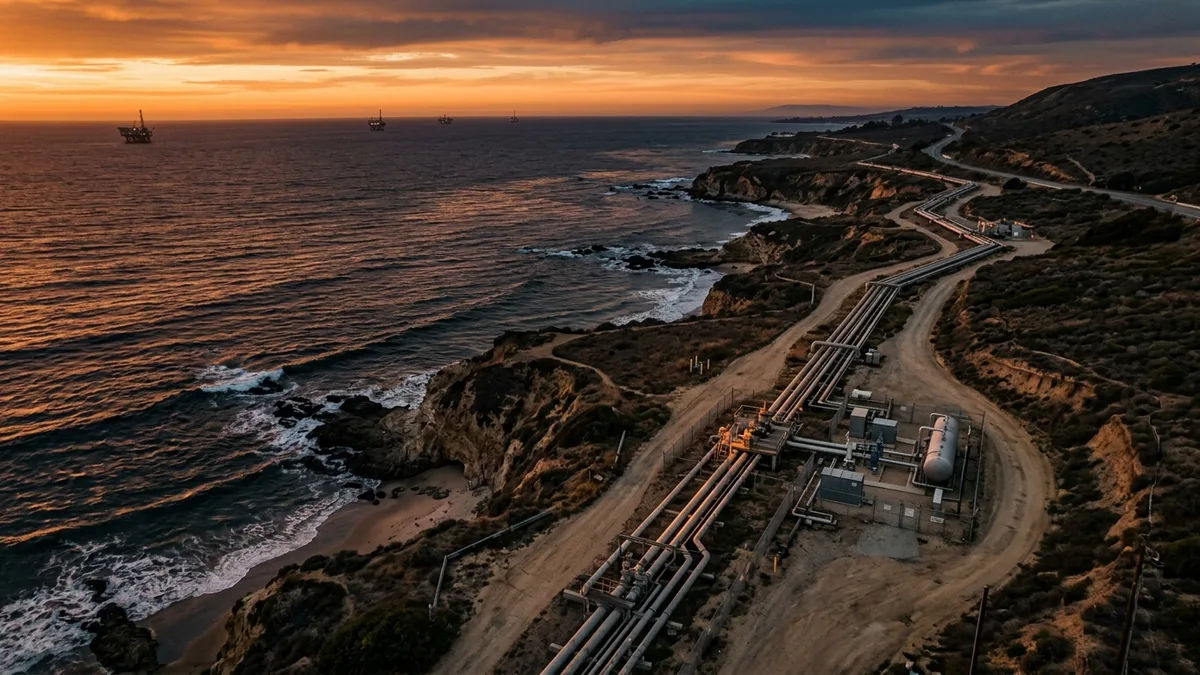
Santa Barbara Superior Court Judge Donna Geck upheld an existing state injunction against Sable Offshore, blocking the company’s attempt to resume oil transport near the Southern California coast. The pipeline has been offline since 2015, when a major leak released thousands of barrels of crude oil into the Pacific Ocean.
The stakes are significant. The Department of Energy had noted that restarting the Santa Ynez Unit would boost California’s in-state oil production by 15%, displacing roughly 1.5 million barrels of foreign crude per month. In March, President Trump invoked the Defense Production Act, citing national security concerns related to the ongoing U.S. conflict with Iran, and ordered immediate resumption of drilling and transport operations. Sable Offshore resumed operations after that order, arguing federal authority superseded the state’s 2024 preliminary injunction. Judge Geck disagreed.
Governor Gavin Newsom welcomed the ruling. “A California court just confirmed what we have said all along: Trump and his Big Oil donors are not above the law,” he said in a statement Friday. A contempt hearing is scheduled for May 22, which could expose Sable Offshore to heavy financial penalties.
What It Means for Subcontractors
- Federal support does not guarantee project continuity. Even a presidential executive order backed by the Defense Production Act was insufficient to override a state court injunction. Subcontractors on standby contracts tied to this restart should treat that work as legally uncertain until the May 22 hearing resolves.
- Contempt proceedings raise financial risk for the operator. If Sable Offshore faces court-imposed penalties at the May 22 hearing, budget pressures on the operator could ripple down to vendors and service contractors awaiting payment or contract activation.
- State permitting risk is real and material in California. Companies bidding on pipeline work along the California coast should build state regulatory risk explicitly into their contracts, including suspension clauses and mobilization cost protections, rather than assuming federal backing clears the path.
- Monitor the May 22 hearing closely. The outcome could set a precedent for how aggressively courts enforce state injunctions against federally directed energy projects, with implications well beyond this single pipeline.