Alberta Construction Set for Decade-Long Growth Through 2035, BuildForce Finds
Alberta’s construction sector is headed for a decade of sustained non-residential growth, with pipelines, transit megaprojects, and institutional builds driving activity through 2035, according to a new forecast covered by the Daily Commercial News. The report from BuildForce Canada projects non-residential construction employment will rise 15% above 2025 levels by the end of the forecast window, even as residential construction cools from a 2026 peak.
Background
BuildForce Canada’s annual Construction and Maintenance Looking Forward report, as reported by the Daily Commercial News, splits Alberta’s outlook into two diverging tracks. Residential construction is expected to peak in 2026 before contracting through the early 2030s as population growth slows and demand for new housing softens. Employment tied to new-housing construction is projected to fall, with overall residential sector employment down 16% from 2025 levels by 2035.
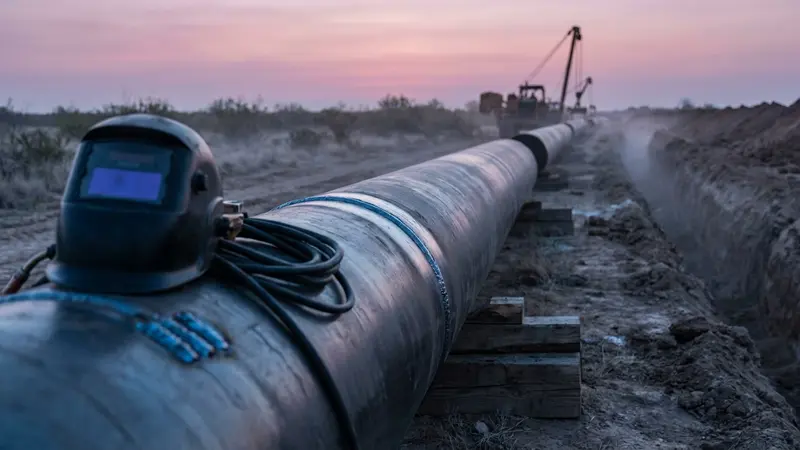
Non-residential construction tells a different story. Engineering construction, covering oil and gas, utilities, and transportation infrastructure, stays elevated through the medium term. The Daily Commercial News cites specific projects sustaining that investment into 2029, including light rail transit builds in Calgary and Edmonton and the Yellowhead Mainline Natural Gas Pipeline. Activity moderates in 2031 as those projects wrap up, then picks back up again before 2035.
ICI (institutional, commercial, industrial) buildings construction is also climbing steadily, according to the report. Commercial growth centers on projects like the Scotia Place Calgary Arena and Calgary Arts Commons. On the institutional side, the Red Deer Regional Hospital expansion and the School Construction Accelerator Program are named as key drivers. Industrial construction will move with the timing of major manufacturing projects, per BuildForce.
Irwin Bess, executive director of BuildForce Canada, frames the residential pullback as a soft landing rather than a crisis. “The decline in residential activity should be viewed in context: this is a moderation from peak levels rather than a significant contraction,” Bess said in a statement carried by the Daily Commercial News.
Analysis
The headline number for subcontractors is the labor gap. BuildForce projects Alberta will need to add 48,800 workers by 2035, driven mainly by 43,700 projected retirements, 21% of the 2025 construction workforce. Even with 43,500 new entrants expected from the local population, the province could still come up 5,300 workers short by the end of the decade.
That shortfall matters more than the topline growth numbers. A 15% rise in non-residential employment sounds manageable until you layer it onto a workforce that’s already losing a fifth of its people to retirement. The projects named in the report, LRT lines in two major cities, a mainline gas pipeline, a regional hospital expansion, and a province-wide school construction program, all compete for the same pool of skilled trades at the same time. Engineering construction employment alone is projected to rise 10% by 2035, while ICI buildings employment jumps 31%. Those aren’t sequential draws on labor. They overlap.
The 2031 moderation window BuildForce flags is worth watching closely. It’s not a downturn, it’s a gap between project waves, the kind of period where firms that overstaffed for the 2026-2029 pipeline push could find themselves carrying excess capacity for a year or two before the next growth cycle kicks in. Subcontractors who size crews for the peak without planning for that dip risk a costly correction.
Terry Parker of the Building Trades of Alberta offers a more optimistic read on the demographic side, noting that new entrants are nearly matching retirements, an encouraging trend for a province BuildForce describes as having one of the youngest construction demographics in Canada. But “nearly matching” still leaves a gap when demand is climbing at the same time, which is exactly what the 5,300-worker shortfall reflects.
What It Means for Subcontractors
- Pipefitting, welding, and E&I trades tied to the Yellowhead Mainline Natural Gas Pipeline should plan crew commitments through 2029, when BuildForce expects engineering construction activity to stay elevated before moderating in 2031.
- Civil and mechanical subcontractors bidding LRT packages in Calgary and Edmonton should treat 2026-2029 as the peak window and build in contingency plans for the 2031 activity moderation BuildForce flags.
- Firms serving institutional work should track subcontract packages tied to the Red Deer Regional Hospital expansion and the School Construction Accelerator Program, both named by BuildForce as steady demand drivers through the decade.
- Commercial trades, especially finishing, structural, and specialty subcontractors, should watch for bid packages tied to Scotia Place Calgary Arena and Calgary Arts Commons as anchor projects for the ICI buildings growth BuildForce projects at 31% employment growth by 2035.
- With 43,700 retirements expected by 2035 against 43,500 new entrants, subcontractors should start apprenticeship and recruitment pipelines now rather than waiting for the labor shortfall to hit mid-decade, particularly in trades tied to engineering construction where 10% employment growth is forecast.
- Homebuilding subcontractors should plan for contraction, not just softening. With residential employment down 16% by 2035 and new-housing starts declining into the early 2030s, firms reliant on new construction should diversify into renovation work, which BuildForce notes continues to rise even as new-build activity falls.