Alaska Crude Output Forecast to Hit 505,000 b/d in 2027 on Pikka, Nuna
Alaskan crude production is forecast to reach 505,000 b/d in 2027, up 13% and the highest level since 2014, according to the U.S. Energy Information Administration’s November Short-Term Energy Outlook, published in EIA Today in Energy.
Market Impact
EIA expects Alaska to add 23,000 b/d (6%) in 2026, followed by a 60,000 b/d jump in 2027. If those numbers hold, they would be the largest annual increases since the 1980s, when Alaskan output peaked at 2.0 million b/d. The state has been in decline for decades.
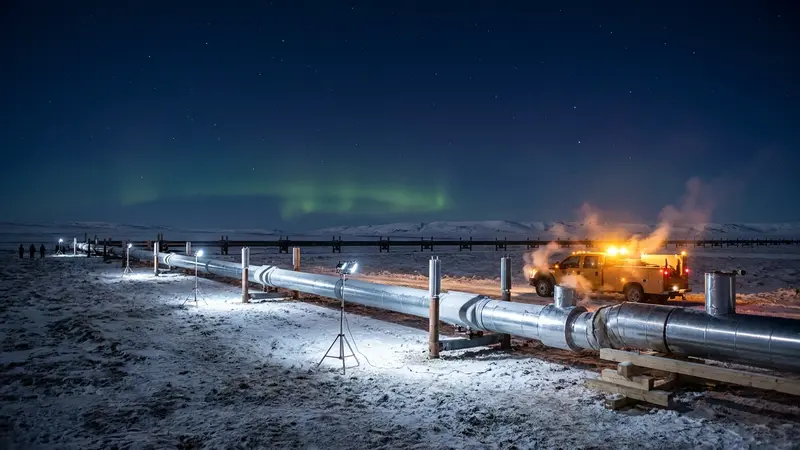
Two North Slope projects explain the turnaround. ConocoPhillips’ Nuna project started producing in December 2024 and is expected to peak at 20,000 b/d. It has averaged 10,000 b/d so far this year, which only partly offsets declines at existing fields. Pikka Phase 1, owned jointly by Santos and Repsol, began production in May 2026 at an initial monthly average of 2,000 b/d. It reached 38,000 b/d by September 2026, per data from the Alaska Oil & Gas Conservation Commission. EIA expects Pikka to peak at 80,000 b/d by winter 2026-27, nearly 20% of Alaska’s total 2025 output.
The ramp is already showing in the data. Third-quarter 2026 production rose 4%, the first third-quarter increase in more than 40 years. Alaskan output usually dips in late summer for annual maintenance, running an average of 7% below first-quarter levels over 2021 through 2025.
What It Means for Subcontractors
The EIA brief names no contractors, contract values or facility in-service dates. The only dates it gives are production milestones, so the points below are inferences from those figures.
- Pikka operations support: Pikka still has 42,000 b/d to add between its September 2026 rate of 38,000 b/d and the 80,000 b/d peak EIA expects by winter 2026-27. Santos and Repsol are the owners to approach for work tied to a ramping facility. Alaska-capable subs should confirm which operator handles procurement.
- Nuna and legacy fields: Nuna has averaged 10,000 b/d against a 20,000 b/d peak, and it is offsetting declines elsewhere on the slope. ConocoPhillips remains the buyer for mechanical, electrical and maintenance work at its North Slope assets.
- Third-quarter 2027 maintenance window: Late-summer maintenance has cut output about 7% below first-quarter levels in recent years. Summer 2027 will be Pikka’s first maintenance season at or near peak rates, so crews and equipment for turnaround-type work should be lined up before that quarter. Whether Pikka joins the standard maintenance cycle is our inference, not an EIA statement.
- Verification source: AOGCC publishes the production data EIA cited for Pikka. Pikka’s monthly numbers will show whether it reaches 80,000 b/d this winter, and a miss or delay would affect the 2027 work outlook.