500+ Daily Dig-Ins Highlight Why April's Safe Digging Month Matters for Excavation Crews
According to AGC News, April is recognized as National Safe Digging Month, an annual awareness campaign focused on reducing excavation-related utility strikes, commonly called “dig-ins,” which occur at a rate of more than 500 per day across the United States.
Why Dig-Ins Are a Persistent Problem
More than 500 utility strikes happen every single day on job sites nationwide, making buried utility contact one of the most frequent and preventable hazards in construction and field service work. The damage spans gas lines, fiber optic cables, water mains, and electrical conduit, creating risks that range from costly project delays to fatalities.
Spring is the highest-risk period. As ground thaws across Texas, the Permian Basin, the Rockies, and the northern plains, excavation activity accelerates sharply, and crews that skipped locate requests or relied on outdated utility maps during slower months carry those bad habits into a much busier season.
What It Means for Subcontractors
AGC’s guidance centers on six core practices for avoiding dig-ins. While the full list sits behind a member login, the fundamentals are well established under federal and state one-call requirements:
- Call 811 before every dig, without exception. Federal law requires it, and OSHA enforcement is active. A single unmarked line strike can trigger fines, project shutdowns, and liability claims that far exceed the cost of the locate request.
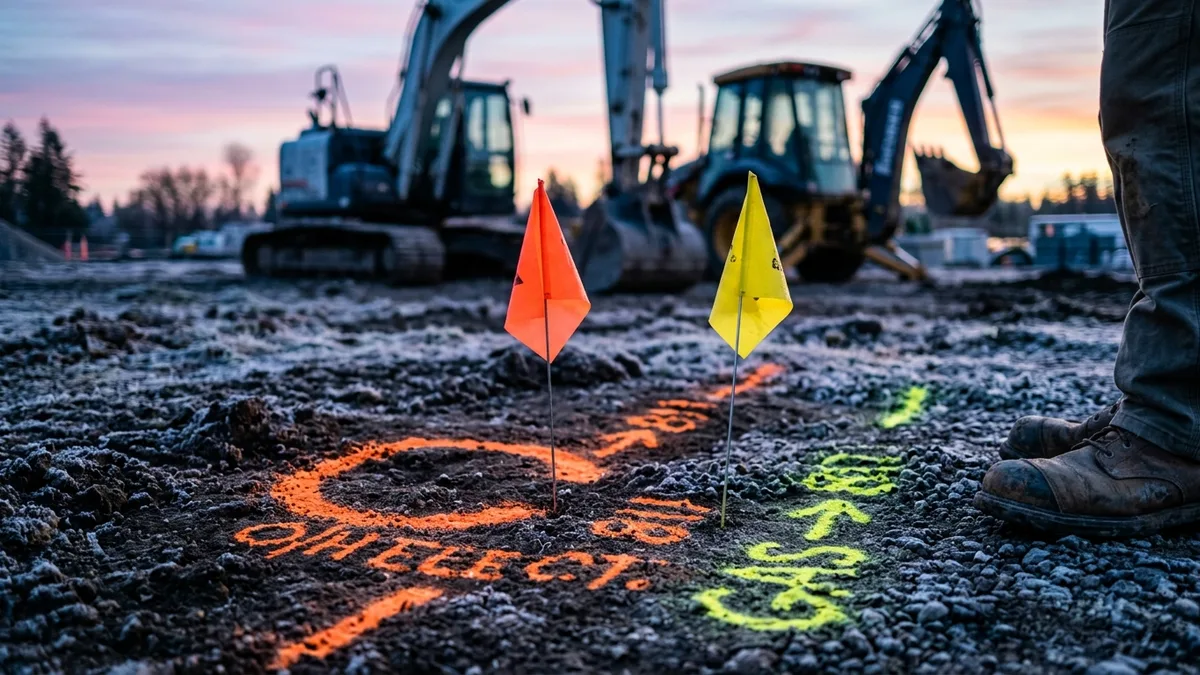
- Verify locate marks are still valid before breaking ground. Marks fade, stakes get moved, and locate tickets expire. Crews should re-confirm if work has paused more than a few days.
- Treat every unmarked area as a live hazard. The absence of a locate flag does not mean the area is clear. Hand-dig or use vacuum excavation within the tolerance zone around any marked utility.
- Document your pre-dig process. Keep records of 811 call confirmations, locate ticket numbers, and site photos. This documentation is your primary defense in a damage claim or OSHA inspection.
- Brief your crew, not just your foreman. Operators running equipment need to understand locate markings and tolerance zones directly, not through a chain of communication that can break down.
- Review your contract language on utility damage liability. Many GC agreements push full financial responsibility to the sub if a dig-in occurs during their scope of work, regardless of who requested the locate.
Subcontractors working in pipeline-dense areas like the Permian Basin, Gulf Coast, or Alberta’s heavy oil region face compounded risk given the density of buried infrastructure. The cost of getting this wrong, in downtime, repairs, regulatory penalties, and potential injury, makes 811 compliance one of the lowest-cost, highest-return habits a field crew can maintain.