$16B Saline Barn Data Center Breaks Ground in Michigan, Largest in North America
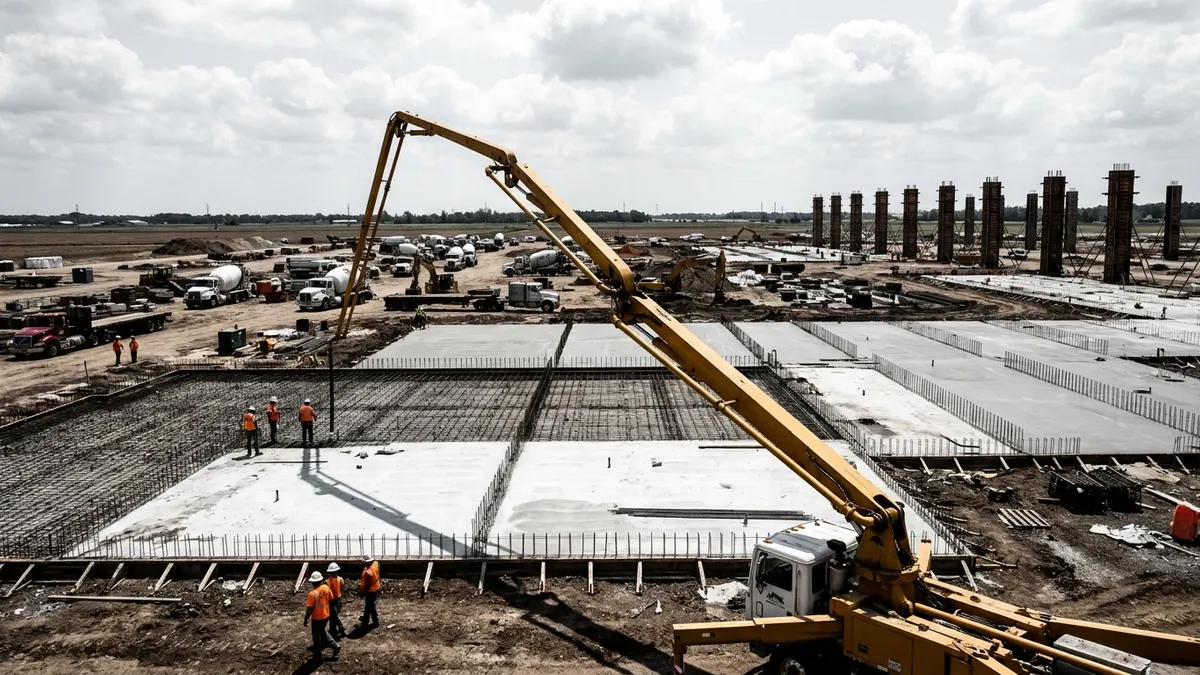
According to Engineering News-Record, a formal groundbreaking was held June 1 for the $16 billion Saline Barn data center in Saline Township, Michigan, a project already under construction and cited as the largest economic investment in Michigan state history.
Market Impact
The 250-acre campus, located roughly 10 miles southwest of Ann Arbor, is being developed by Related Digital for Oracle and OpenAI. The project calls for three 550,000-square-foot single-story buildings at a planned scale of 1.4 GW. Detroit-based general contractor Walbridge is leading construction and describes Saline Barn as the single largest project in the company’s 110-year history.
OpenAI CEO Sam Altman attended the groundbreaking alongside Michigan Gov. Gretchen Whitmer and said the project is intended to serve as a model for data center development. “It’s very important to us that this becomes a model for how data centers and communities can mutually benefit each other,” Altman said, according to ENR. He added that the facility will not increase energy prices, will use less water than a typical office building, and will generate 2,500 union construction jobs along with 450 permanent operations positions.
More than 200,000 union trade hours have already been logged since construction started on February 6, with hundreds of Michigan tradespeople on site daily.
What It Means for Subcontractors
- Union labor demand is real and immediate. Named trade partners already on the project include Motor City Electric, Progressive Mechanical, John E. Green, Saw/E-J Electric, Superior Electric Great Lakes, Triangle Electric, and Universal Partner Industries. If you operate in Michigan or the broader Midwest, knowing who holds packages on projects like this matters.
- Hyperscale work is moving into new regions. This project signals that the data center boom is no longer concentrated in Texas and Virginia. Michigan’s available land, power grid access, and established union labor base are drawing major hyperscale investment. Subcontractors in Midwest markets should be actively positioning for similar opportunities as developers follow infrastructure and power access.
- Scale requires capacity planning. At $16 billion across a 250-acre campus, trade contractors will need to staff up significantly. Firms that can demonstrate workforce depth, union agreements, and large-project experience will have an advantage when future packages are bid. Michigan’s MIOSHA requirements and federal OSHA standards will apply across all trades at this scale, so having compliance programs in order is a baseline expectation.
- Early entry matters. Construction began February 6, well before the June 1 groundbreaking ceremony. On projects of this scale, subcontractor relationships and pre-construction involvement often start months before public announcements.