$15M Federal Investment Launches 100 MW Solar Project Near Estevan, Saskatchewan
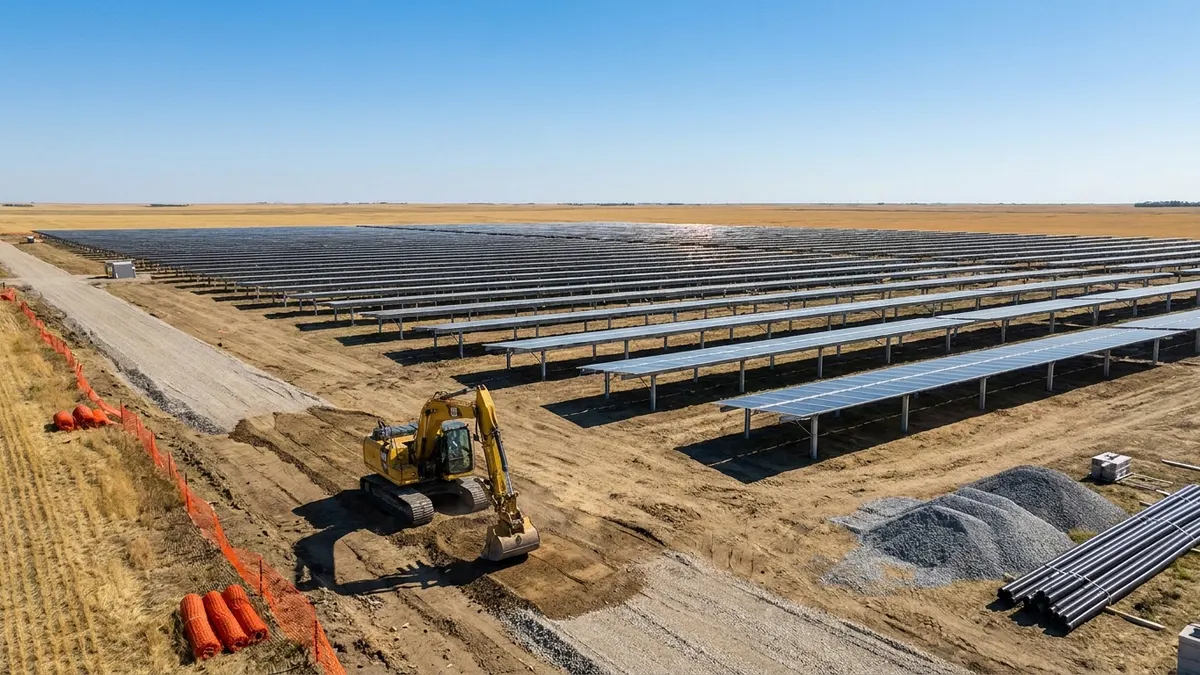
According to On-Site Magazine, construction has officially begun on the Turning Sun Solar Project near Estevan, Saskatchewan, following a $15-million federal investment through the Smart Renewables and Electrification Pathways Program.
Project Scope and Market Context
The Turning Sun Solar Project is a 100-megawatt utility-scale solar facility located on the traditional territory of Ocean Man Nakoda Nation, which holds a 10% Indigenous ownership stake in the development. Once operational, the project is expected to generate enough electricity to power approximately 25,000 homes.
The investment aligns with Canada’s newly launched National Electricity Strategy, which targets doubling the country’s electrical grid capacity by 2050. For construction contractors, the project signals a growing federal commitment to large-scale energy infrastructure that extends well beyond the power generation sector itself.
What It Means for Subcontractors
The Turning Sun project requires extensive ground-level construction work before a single panel starts producing power. According to On-Site Magazine, the scope includes site preparation, earthmoving, grading, access road construction, drainage systems, underground electrical infrastructure, and foundation installation for solar equipment. That’s a broad package of civil and utility work that directly touches multiple subcontractor trades.
- Heavy civil and excavation contractors should be tracking this project actively. Site prep, grading, and earthmoving at utility-scale solar developments represent significant contract volume.
- Utility and underground electrical subs will find opportunities in the underground electrical infrastructure component, a specialized scope that isn’t limited to traditional energy sector contractors.
- Aggregate suppliers and haul contractors are typically engaged early on projects of this scale, given the road construction and drainage requirements.
- Indigenous-owned and partnered firms may have a competitive advantage given the project’s 10% Indigenous ownership structure and its location on Ocean Man Nakoda Nation territory.
- Prairie-based contractors should watch for similar projects in the pipeline. As federal and provincial governments continue pursuing the 2050 grid capacity target, Saskatchewan and neighboring provinces are likely to see additional utility-scale energy infrastructure investment.