Yellowhead Gas Pipeline Starts Construction: $2.9B, 235 km
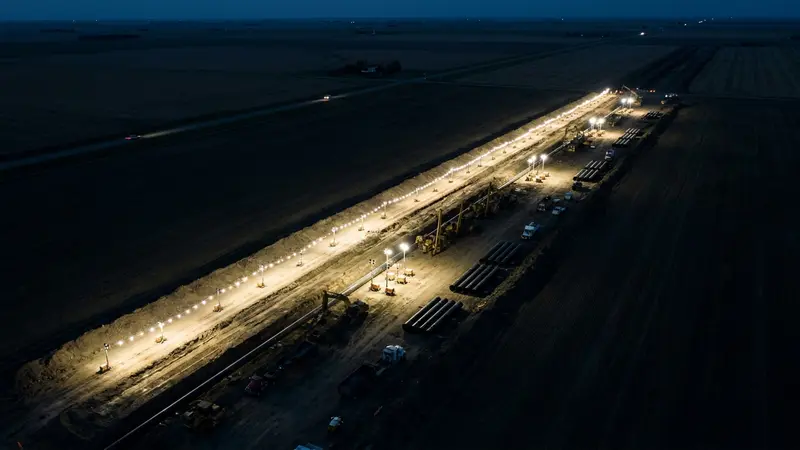
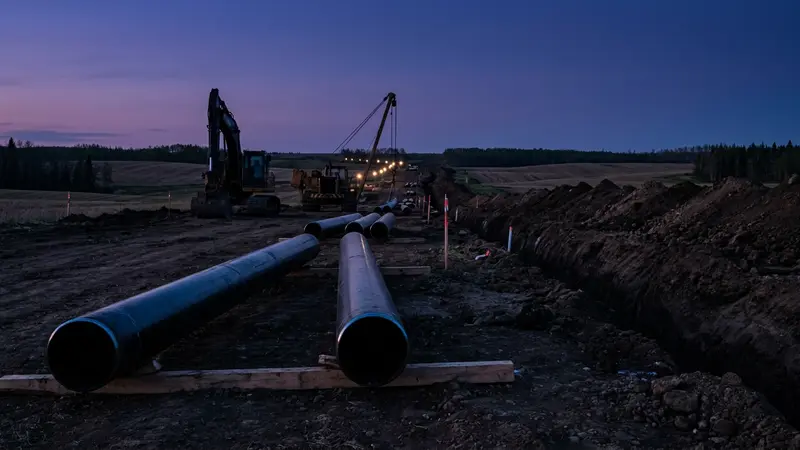
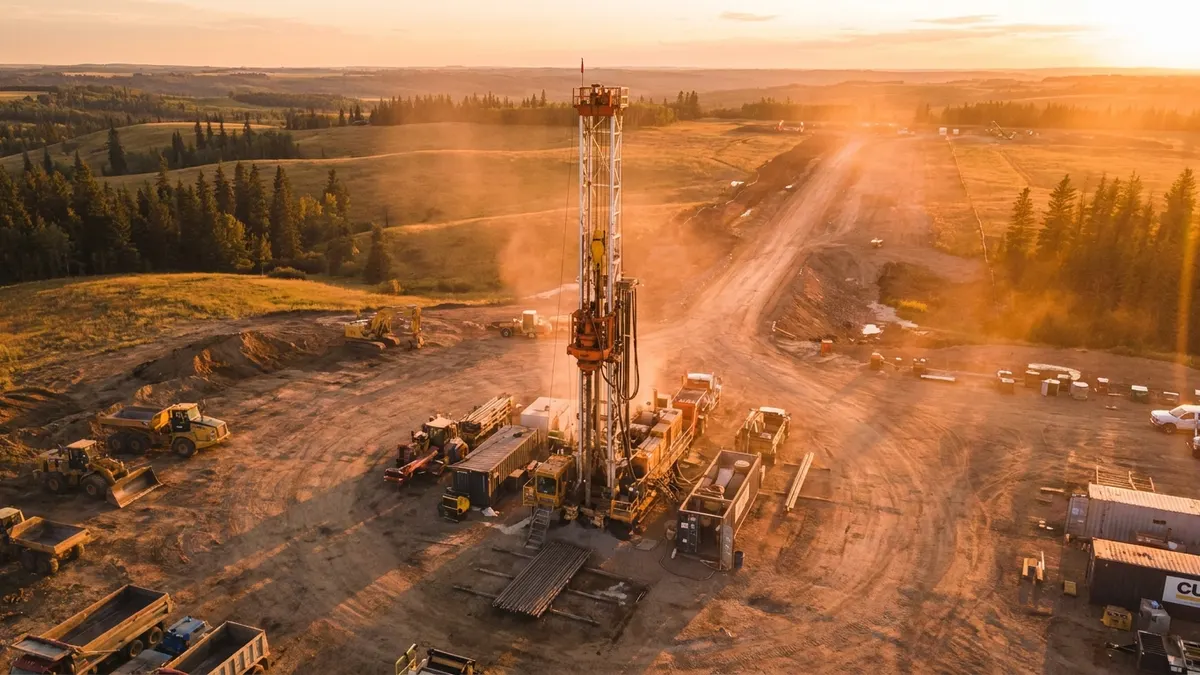
Canadian Utilities has broken ground on a $2.9 billion, 235-kilometer natural gas pipeline from Peers to Fort Saskatchewan, Alta., with service targeted for late 2027. The company’s news release, distributed by CNW and carried by BOE Report, calls Yellowhead the largest project in its history. It also names no EPC firm, no lead contractor and no construction packages.
Background
According to the release, the pipeline will deliver 1.1 billion cubic feet of natural gas per day to Alberta’s industrial heartland. The Alberta Utilities Commission (AUC) approved the project, with the approval announced in July, and pre-construction activities have been underway since then. The release says capacity was fully subscribed before the regulatory approval process finished.
Canadian Utilities projects about 2,000 direct construction jobs on the pipeline itself. It also cites an estimated 12,000 additional construction jobs and 20,000 permanent jobs annually once associated downstream investments are operational. The company projects those downstream investments will add $3.9 billion a year to Alberta’s GDP. The release frames the line as added capacity for a constrained system, driven by population growth, industrial activity and power generation demand.
Jason Sharpe, COO of ATCO Energy Systems, thanked “industry partners, suppliers, contractors, Indigenous partners and community leaders.” No firms were named.
What Is and Isn’t Awarded
The release is a groundbreaking announcement, not a procurement update. Here is what it does and does not say:
- Pipe diameter: source does not say.
- EPC or lead contractor: source does not say.
- Construction spreads or packages: source does not say.
- Clearing, hauling, welding, coating, restoration awards: source does not say.
- Indigenous contracting or participation commitments: source does not say. The release mentions Indigenous leaders at the event and Indigenous partners in Sharpe’s quote, but gives no scope or value.
- Whether ATCO crews will self-perform any work: source does not say.
Analysis
The schedule is the real signal. AUC approval was announced in July, pre-construction is already running, and in-service is late 2027. Our inference: the main construction packages are either already awarded and unannounced, or close to it. Nothing in the release says either way. A company that starts pre-construction within months of approval on a project this size usually has major contractor arrangements settled well before a ceremony. That is our reading, not a claim from the source.
The cost per kilometer is high, and the scope is unclear. Our arithmetic puts $2.9 billion over 235 km at roughly $12 million per kilometer. The release does not say what the $2.9 billion includes, so that figure should not be read as a pipe-in-the-ground unit rate. Compressor or meter facilities, interconnects, Indigenous agreements and financing costs could all sit inside the number, and the source does not break it out. Still, a budget this large relative to length suggests substantial non-linear work, which tends to favor mechanical, electrical and instrumentation trades alongside the pipeline spreads.
Full subscription lowers the commercial risk. Capacity was fully subscribed before approval finished. Our inference: this reduces the odds of a stall for lack of shippers, though the release’s own risk language still lists project delays, budget overruns and labor and materials availability. That language matters for subs. It says the company itself flags the cost and supply of labor, materials and services as a factor that could push the project off its current schedule or budget.
The 12,000 downstream jobs are a separate market. The 2,000 direct jobs are the pipeline. The 12,000 additional construction jobs depend on downstream investments that the release does not identify by project, owner or location beyond the “industrial heartland.” Subs should not count those jobs as part of Yellowhead’s own work.
Expect crowding in Alberta’s industrial corridor. Our inference: a $2.9 billion line ending at Fort Saskatchewan will pull on the same welders, equipment operators and inspectors that other regional work needs. The release’s mention of labor availability and cost as a project risk supports that concern, though it gives no numbers.
What It Means for Subcontractors
- Welding and pipefitting contractors: The 2,000 direct construction jobs are the headcount to size against. The release does not name a mainline contractor, so the practical route is the prime, once identified. Confirm your welder qualifications and crew availability now, because the in-service target is late 2027.
- Clearing, hauling and restoration firms: Pre-construction has been active since the July AUC approval, so early right-of-way work may already be placed. The release gives no package sizes or award status. Spreads covering 235 km between Peers and Fort Saskatchewan are the likely entry points, but that is our inference.
- Coating and inspection firms: The release says nothing on pipe supply, coating scope or inspection contracts. If you work in that space, position with the eventual EPC or mainline contractor rather than waiting for an owner-issued bid.
- E&I, civil and mechanical trades: With the budget high relative to length, facilities work at the Peers and Fort Saskatchewan ends is worth pursuing. The release does not describe those facilities, so treat this as a lead to confirm, not a confirmed scope.
- Indigenous-owned and local firms: The company credits Indigenous partners and community leaders. The release does not detail participation agreements, so check yellowhead.atco.com/news, the project page named in the release, for procurement and community updates.
- Everyone: Use the stated dates as your planning anchors: AUC approval announced in July 2026, groundbreaking, and in-service by late 2027. Any contractor you work through will be building to that last date.