U.S. Adds 500 Miles of High-Voltage Line a Year, Needs 5,000
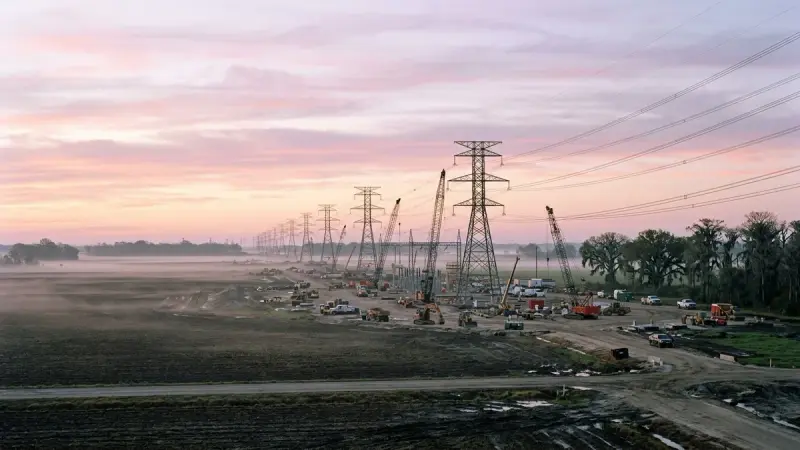
Oilprice.com’s coverage of a new Science policy paper puts U.S. high-voltage line construction at about 500 miles per year, one-tenth of the 5,000 miles researchers say the country needs.
Market Impact
The paper, “Fixing the power transmission crisis,” comes from Carnegie Mellon University’s Madeline Yozwiak and M. Granger Morgan and UC San Diego’s David G. Victor. It says the continental U.S. has averaged roughly 500 miles of high-voltage line per year over the past five years. The authors put the need at 5,000 miles per year to triple the interregional grid by 2050. Our arithmetic, not the paper’s: that is a shortfall of about 4,500 miles every year.
The authors argue the main bottleneck is jurisdictional, not technical. “Authority is divided among federal, state, and private entities, each with distinct priorities,” they wrote. Victor said utilities are generally rewarded for investments inside their own service territories. Once a line crosses utility or state boundaries, “approvals become more complicated, and fights break out over who pays and who benefits.” The paper proposes three fixes: use existing regulatory and technology options more fully, learn from experiments and international precedents, and create a Presidential-Congressional commission to set a new framework and stronger incentives.
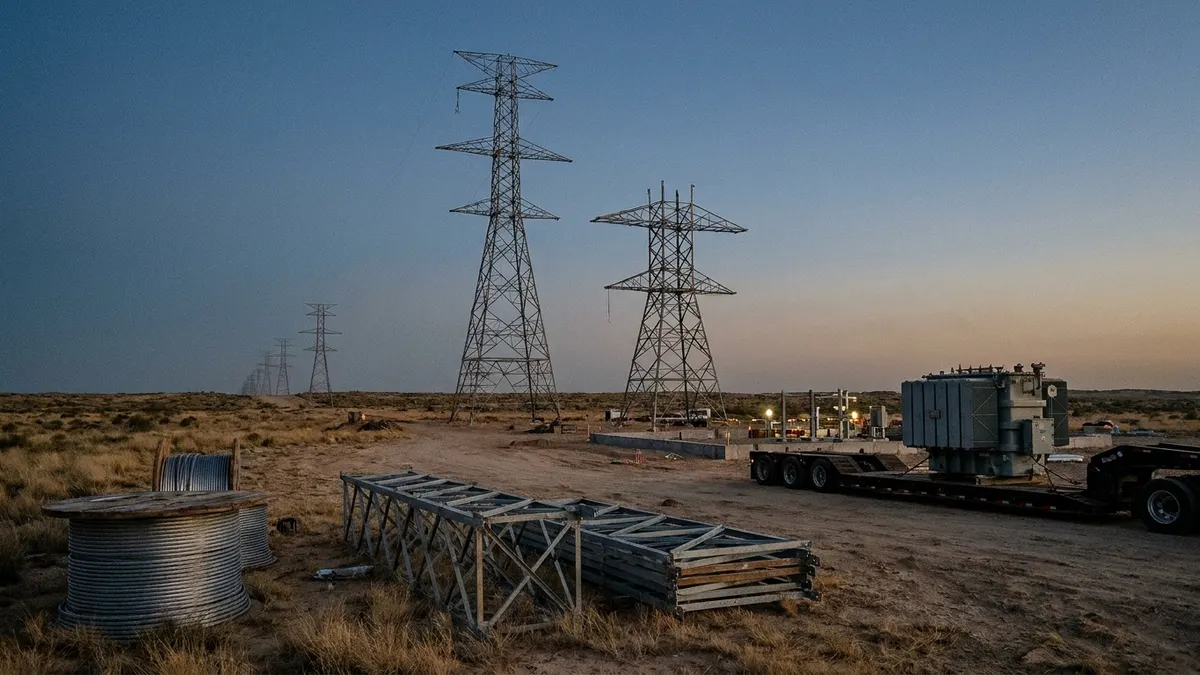
Equipment is a second constraint. Johns Hopkins researchers say the U.S. could run short of transformers and converters as early as next year, with acute shortages by 2030. Their study warns of running short of copper, steel, nickel, aluminum and manganese over the next four years. Separately, Goldman Sachs Research expects global data center power demand to rise 170% between 2025 and 2030, with more than 60% of that growth in the U.S.
What It Means for Subcontractors
- Schedule risk sits in approvals, not crews. The paper says permitting and multi-jurisdiction fights are the main brake. Civil, foundation and line contractors bidding transmission work should price for long gaps between award and notice to proceed. Lines that cross utility or state boundaries carry the most exposure.
- Our read: in-territory work is likelier to move first. Victor says utilities are rewarded for building inside their own service areas. Substation and line-upgrade packages within a single utility’s footprint probably face fewer approval hurdles than interregional corridors. The source names no specific projects, owners or bid dates.
- Equipment lead times are a 2027 problem. Johns Hopkins flags possible transformer and converter shortages as early as next year. Electrical and mechanical subs should push for clear language on owner-furnished equipment, delay relief and material escalation in 2027 contracts. Do this before signing, not after a delivery slips.
- Materials exposure is broad. The study lists copper, steel, nickel, aluminum and manganese. Contractors who self-perform procurement of conductor, steel structures or grounding materials should lock supplier quotes with short validity windows. They should also avoid fixed-price commitments that run past 2027.
- Demand is the long-term driver. With more than 60% of Goldman’s projected data center power growth in the U.S., the pressure to build is not easing. The 5,000-mile annual target runs through 2050. Any federal reform, such as the proposed commission, is only a proposal in the paper, with no timeline given.