Shale Executives Say $100 Oil Won't Trigger a Drilling Surge Without Sustained Prices
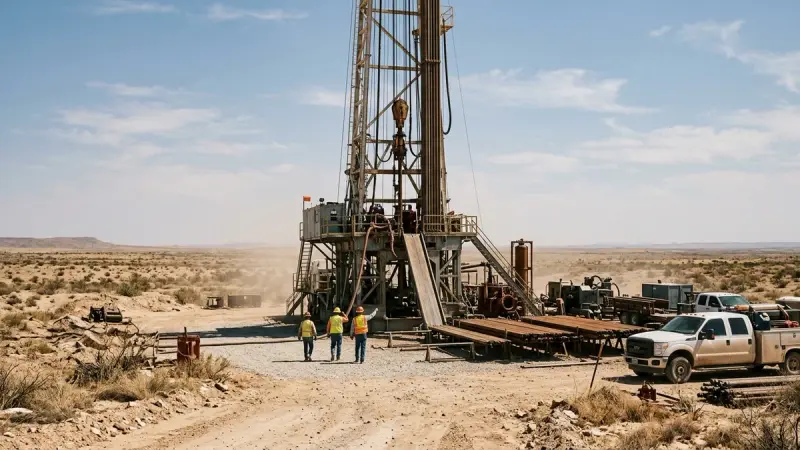
According to Reuters, US shale executives speaking at the CERAWeek energy conference in Houston said oil prices above $100 a barrel would not trigger significant new drilling activity unless those prices hold for more than one quarter, a signal that any field service work surge could be months away at best.
Market Context: High Prices, Frozen Plans
Iran’s effective closure of the Strait of Hormuz has cut off roughly 20% of global oil supply, pushing prices up approximately 50%. Yet operators are not rushing to pick up rigs. ConocoPhillips executive vice president Nick Olds said his company is not currently considering a production increase and would need to see sustained higher prices before changing course.
The hesitation stems from a structural shift in how shale companies operate. Returning capital to shareholders now outranks volume growth, and many operators have already locked in budgets for 2026. Future-month oil prices, currently around $77 per barrel for October delivery versus roughly $88 spot, would need to climb considerably before companies revise those plans.
The timeline for any ramp-up is also long. Steve Gassen, SLB’s executive vice president of geographies, put it plainly at CERAWeek: “The cycle from the time you begin to when you make a decision that you’re going to add rigs to then ultimately drilling and producing and getting to market, that can be a year-long process, even in the U.S., which is a short-cycle market. Nine months would be the very best-case scenario.”
Linhua Guan, CEO of Surge Energy America, one of the larger private producers in the Midland Basin, said companies would consider accelerating programs if prices stay elevated for at least two quarters, with an initial focus on completing already-drilled wells rather than spudding new ones.
What It Means for Subcontractors
- Don’t count on a 2026 work surge. Even if prices hold, executives say meaningful new barrels are nine months to a year out. Subcontractors in drilling, completions, and wellsite services should not budget for a significant volume increase this year.
- Well completions are the near-term opportunity. Operators will prioritize completing drilled-but-uncompleted wells to capture current prices quickly. Completions crews, frac crews, and flowback service companies in the Permian and Midland Basin are better positioned than drilling contractors in the short run.
- Private operators may move first. Large publicly traded companies like ConocoPhillips are locked into shareholder return commitments. Private producers such as Surge Energy America have more flexibility to respond to price signals. Subcontractors should focus relationship-building on private operators.
- Hedge activity could signal future work. Operators using high prices to strengthen hedge books are quietly preparing for a potential ramp-up. Watch hedge disclosures in Q1 earnings as an early indicator of which operators may add activity in late 2026.
- Price volatility cuts both ways. The concern Gassen flagged, that prices normalize back to $60 or $65, is also a risk for subcontractors who hire up or take on equipment debt based on current conditions. Maintain cost discipline until operator capital budgets are formally revised.