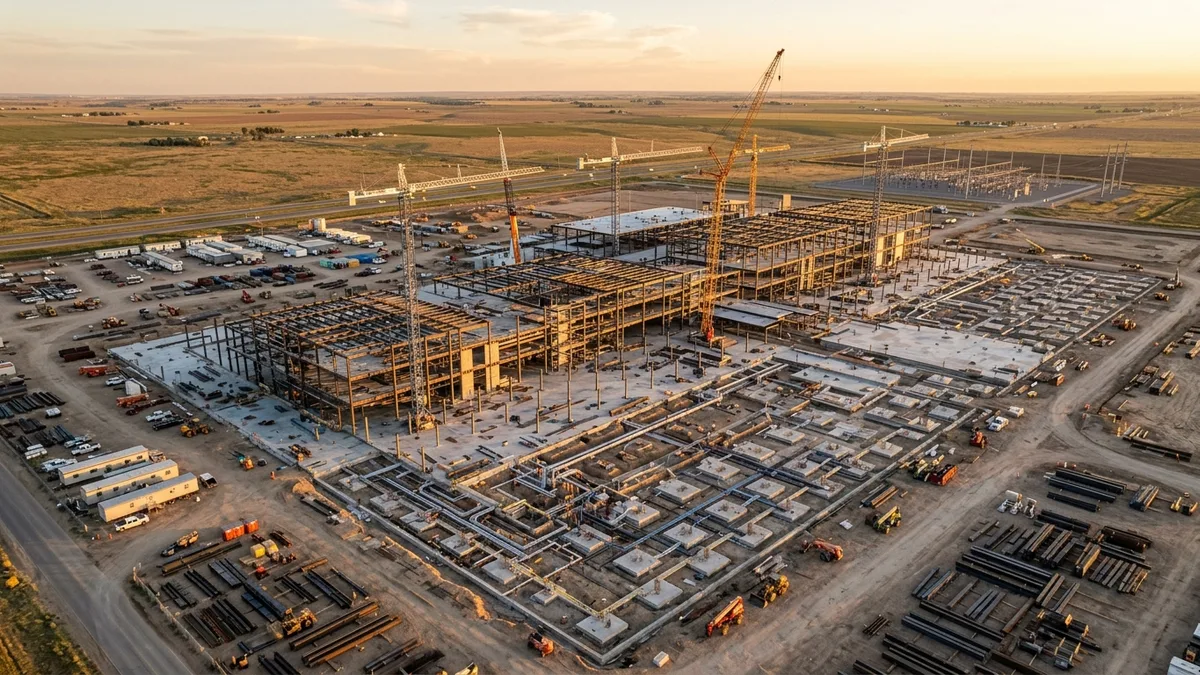
Nonresidential Specialty Contractors Added 12,600 Jobs in April, Led by Data Center Boom
According to Engineering News-Record, the Bureau of Labor Statistics reported that nonresidential construction contractors added an estimated 18,200 jobs in April 2026, even as overall construction industry hiring came in at a modest 9,000 positions for the month.
Market Impact
The nonresidential sector carried the entire industry’s gains in April. Nonresidential specialty contractors led the way with an estimated 12,600 new positions, while nonresidential building contractors added an estimated 5,600 workers. The gains offset steep losses on the residential side, where builders and specialty trade contractors collectively shed an estimated 10,400 positions, including an estimated 8,900 cuts among residential specialty firms. Heavy and civil engineering contractors added an estimated 800 jobs.
Anirban Basu, chief economist with Associated Builders and Contractors of America, pointed directly at data center construction as the engine behind nonresidential strength. “This strength can be traced to surging data center construction spending, which is up 34% over the past year,” Basu said, adding that ABC member expectations for hiring remain elevated according to ABC’s Construction Confidence Index, despite tepid industrywide job growth. Macrina Wilkins, director of market insights with Associated General Contractors of America, noted that “construction firms are paying a growing premium to attract enough people to be able to complete data centers and other projects.”
What It Means for Subcontractors
- Data center project pipelines are driving real hiring demand right now, not just speculation. If your crews have electrical, mechanical, or structural skills, nonresidential GCs are actively competing for that labor.
- Residential specialty contractors lost an estimated 8,900 jobs in April. If your work straddles both sectors, diversifying toward nonresidential and commercial clients is a near-term hedge against continued residential softness.
- Wage pressure is real and rising. With GCs paying a “growing premium” to staff data center and other nonresidential projects, subcontractors need to review their own compensation benchmarks to avoid losing skilled workers to larger prime contractors.
- Heavy and civil engineering contractors added only 800 jobs, suggesting infrastructure hiring has plateaued for now. Field service companies targeting that segment may face a more competitive bidding environment with fewer new positions being created.