Investment Climate Brightens for Canadian Oil and Gas, But Cost Pressures Remain a Real Concern
According to a Reuters report via BOE Report, Canada’s oil and gas investment climate is improving under Prime Minister Mark Carney, with industry executives offering measured praise for a new federal-provincial energy deal. But the same executives are warning that the cost of doing business in Canada remains a serious challenge, one that could limit long-term sector growth and, by extension, the pipeline of work flowing to Western Canadian subcontractors.
Background
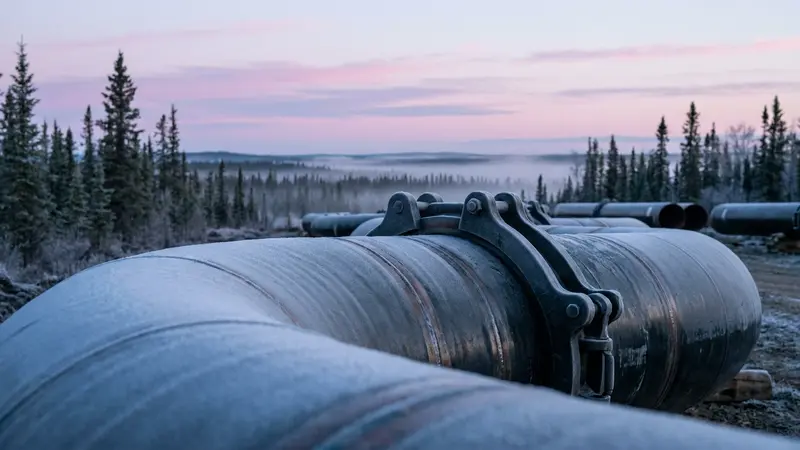
The federal government and Alberta recently struck an energy deal that eliminates certain environmental rules, establishes a new industrial carbon pricing framework for Alberta’s oil sands sector, and commits to faster regulatory approvals. Carney and the Alberta government have said the deal paves the way for construction of a 1-million-barrel-per-day crude oil export pipeline to British Columbia’s coast.
ConocoPhillips Canada President Nick McKenna, speaking at an industry event in Calgary, said the agreement significantly improves the risk profile of oil and gas investments in Canada. He also flagged the competitive pressure Canada faces from the U.S., where the Trump administration has been actively pushing to increase domestic oil and gas output. “The cost to do business in a jurisdiction matters,” McKenna said. “It is a very, very competitive landscape.”
Alberta has said it plans to submit a proposal for the second West Coast oil export pipeline to the federal government before July 1, with a target construction start date of September 2027. However, no private company has yet committed to build the pipeline. Enbridge, Canada’s largest pipeline operator, said through a spokeswoman that it would consider participating only when the conditions and policy framework were right.
Filling a new 1-million-bpd pipeline by the mid-2030s would require oil sands companies to fund new production projects, a significant shift from the industry’s recent focus on efficiency and shareholder returns. Kendall Dilling, president of the Oil Sands Alliance, said that new production buildout could require up to C$100 billion ($72.5 billion) in investment. The Carney government has also made pipeline approval conditional on oil sands companies committing to a proposed carbon capture and storage project, though the deal allows that project to be phased in over time.
Analysis
The executive tone coming out of Calgary is cautiously optimistic, and for good reason. The federal-provincial deal represents a genuine shift in how Ottawa is approaching the energy sector. Faster regulatory approvals and a negotiated carbon pricing framework remove two of the biggest friction points that have kept foreign capital on the sidelines. For an industry that spent years watching major projects stall or die in regulatory limbo, that matters.
But the gap between improved sentiment and actual capital commitment is wide, and that gap is what field operators should be watching. Enbridge’s non-committal response to the proposed pipeline is telling. Canada’s largest pipeline company, which has the balance sheet and expertise to lead a project of this scale, is still waiting to see whether the policy environment is durable enough to justify the risk. Until anchor investors like Enbridge sign on, the pipeline remains a political project, not a construction one.
The C$100 billion investment figure cited by the Oil Sands Alliance underscores the scale of what would need to happen. That kind of capital deployment doesn’t move in a straight line. It gets unlocked in stages, dependent on commodity prices, financing conditions, regulatory certainty, and corporate board approvals. The mid-2030s timeline for filling a new pipeline gives a sense of how long the ramp could take, which means the near-term work picture for subcontractors is more modest than the headline numbers suggest.
The carbon pricing piece adds another layer of complexity. The deal ensures Alberta raises its carbon price over time, which satisfies a federal condition but also sustains the competitive cost disadvantage that oil sands producers have been complaining about relative to U.S. operators. McKenna’s comment about competition for investment capital wasn’t just diplomatic hedging. It reflects a real dynamic: U.S. regulatory rollbacks under the current administration make American basins comparatively cheaper and faster to operate in. Canadian operators competing for the same pool of international capital have to work harder to make their projects pencil out.
The carbon capture and storage condition attached to pipeline approval adds a further cost dimension. Even with phased implementation, CCS commitments represent capital and operational overhead that reduces the net return on new oil sands projects. That’s not a dealbreaker, but it is a factor that shapes how aggressively producers will pursue new development.
What It Means for Subcontractors
- The improved investment sentiment is real, but subcontractors should track actual capital commitments, not policy announcements. The pipeline project needs a private-sector builder before it generates construction work.
- The September 2027 construction start target for the proposed pipeline is the nearest concrete date on the horizon. Field service companies in BC and Alberta should monitor whether that date holds as Alberta submits its proposal ahead of the July 1 deadline.
- Cost competitiveness is the central issue. If your pricing structure reflects Canada’s higher operating costs, be prepared to defend your value against operators who are under pressure to close the gap with U.S. basin economics.
- The C$100 billion production investment figure represents a long-term opportunity, but it will be distributed over years and conditional on commodity prices and financing. Build your business plan around confirmed work, not projected spend.
- Carbon capture and storage infrastructure, if it moves forward, could create a separate and distinct category of field work in Alberta’s oil sands region. Watch for early-stage procurement activity as CCS commitments take shape.
- Regulatory approval timelines are reportedly improving under the new deal. If that plays out, project schedules could tighten, and subcontractors who can mobilize quickly will have an edge over those with longer lead times.