Federal Judge Blocks Nebraska's Sand Hills Transmission Line Over Emergency Fast-Track Violations
According to Oklahoma Energy Today, a federal judge has blocked the Nebraska R-Project — a 226-mile electric transmission line through the Sand Hills — after ruling that the U.S. Fish and Wildlife Service improperly used President Trump’s energy emergency executive order to shortcut required environmental review.
U.S. District Judge Nina Wang found FWS’s approval “arbitrary or capricious” under the Administrative Procedure Act. The approval failed, Wang wrote, because the agency never analyzed whether the R-Project actually met the threshold requirement: that it represent “an essential and immediate response” to the declared national energy emergency. “A review of the approval letter reveals that there was no such discussion at all,” she wrote in a 30-page opinion.
Background
Nebraska Public Power District, the project developer, had sought an expedited approval from FWS in January 2025 — weeks after Trump signed an executive order directing federal agencies to use emergency powers to fast-track domestic energy projects. FWS granted that request, bypassing the standard National Historic Preservation Act review process.
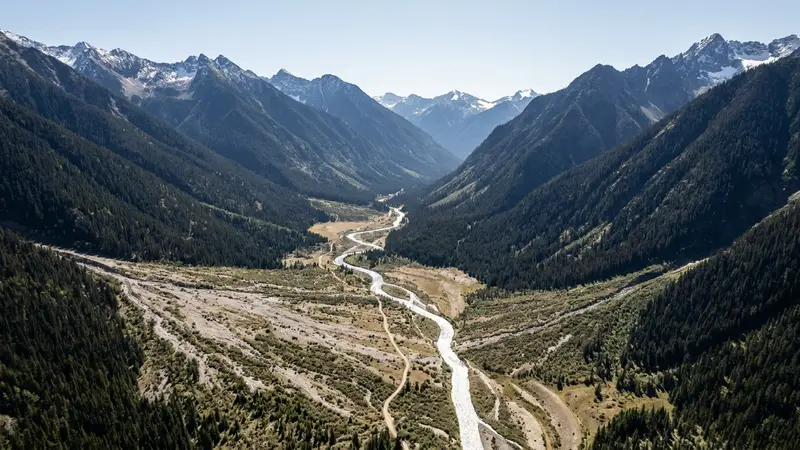
A coalition of landowner, tribal, and conservation groups sued, arguing the fast-track approval was unlawful. Plaintiffs included the Rosebud Sioux Tribe, the Oregon-California Trails Association, the Western Nebraska Resources Council, and several ranching entities. The groups argued the R-Project “will slice through the fragile Nebraska Sandhills and irreversibly destroy many iconic tribal, historic and cultural landscapes.”
Wang upheld the validity of Trump’s emergency order itself, ruling that courts lack the authority to terminate a presidential executive order — that power rests with Congress. But the order’s validity didn’t save the approval: FWS still had to demonstrate the project qualified as an emergency response, and it didn’t do that.
What It Means for Subcontractors
- Courts can halt infrastructure projects at any stage — including after federal emergency approvals — leaving contractors with mobilization costs and no clear recovery path. Contract language around regulatory suspension and termination risk is essential on any federally permitted corridor project.
- Transmission contractors working on utility-owned lines in the Great Plains and Mountain West should treat any project that relies on Trump’s energy emergency order as carrying elevated litigation risk, at least until courts clarify the standard for emergency fast-tracks.
- Nebraska Public Power District will likely re-engage the administrative process; the project is delayed but not necessarily dead. Contractors who have bid on or committed to the R-Project should monitor case developments closely before allocating crews or equipment.