Data Centers Prop Up Construction as Tariffs, Rates Squeeze Other Sectors
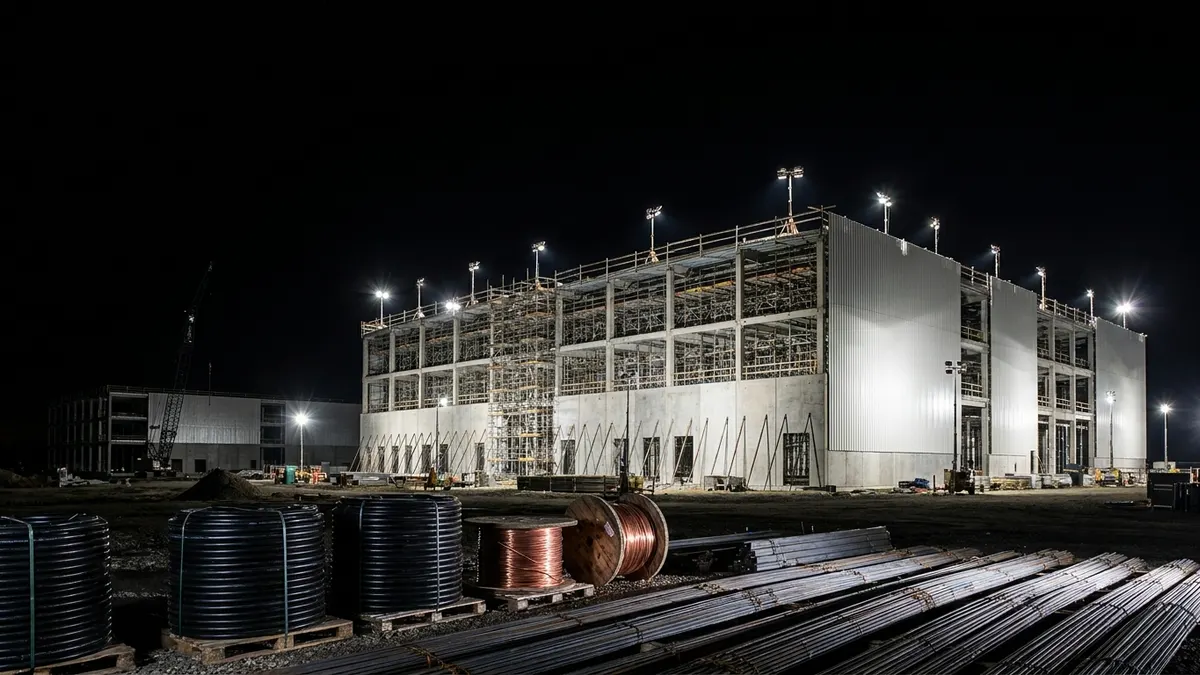
Engineering News-Record reports that data center construction is now the primary driver of growth in an otherwise uneven construction market, with contractors telling ABC chief economist Anirban Basu that such projects make up 35% of their work, up from just 5% a few years ago. Basu shared the figures during a midyear economic update webinar on July 8, warning that rising interest rates, tariffs, and immigration policy pose “real risk” to the sector through the rest of 2026.
Construction employment rose 1.6% between June 2024 and June 2026, but the gains were lopsided: non-residential employment climbed 4.5% while residential employment fell 2.5%. Overall construction spending dropped 3.8% year-over-year as of May 2026, dragged down by a 21.9% manufacturing decline tied to the sunsetting CHIPS and Science Act, and a 10.7% drop in hotel construction despite rising hotel occupancy. Material costs have jumped 55.5% since February 2020, with crude petroleum and energy materials up over 100% and tariff-affected goods like nonferrous wire and cable (91.4%) and steel mill products (86%) seeing sharp increases.
What It Means for Subcontractors
- Electrical, mechanical, and power-infrastructure subs should prioritize data center bids now, as this segment has grown sevenfold as a share of contractor workload in just a few years and remains the sector’s clear growth engine.
- Subs tied to manufacturing builds should reassess pipelines tied to CHIPS Act-funded projects, since that subsidy is expiring and manufacturing spending is already down 21.9% year-over-year.
- Steel and electrical trades should lock in material pricing or renegotiate contract escalation clauses given steel mill product costs up 86% and wire/cable up 91.4% since 2020, largely tariff-driven.