Canadian Construction Starts Down 40% in 2026, But Alberta, BC, and Quebec Are Growing
According to ConstructConnect, Canadian construction starts have dropped nearly 40% year-to-date through April 2026 compared with the same period last year, dragged down by weak nonresidential and civil activity. The full-year forecast offers little comfort at the national level, with total starts projected to fall 16.3% from 2025. But the headline number tells only part of the story. Several provincial markets are still on track to grow, and for subcontractors and field service companies willing to follow the work, the opportunity gap between Canada’s regions is significant.
Background
ConstructConnect associate economist Devin Bell points to a combination of factors driving the national weakness: U.S. tariffs, trade uncertainty, a shrinking population, and a global energy shock have all eroded economic momentum heading into 2026. The national drag is heavily concentrated in Ontario, which accounted for more than 40% of Canada’s total construction market in 2025. Its pullback is large enough to pull the entire country’s numbers down.
Strip Ontario out of the equation, and the picture changes considerably. According to ConstructConnect, the rest of the country is forecast to expand in 2026 in aggregate, though the combined dollar value of those markets remains materially smaller than Ontario alone.
The provincial breakdown tells the real story for contractors looking to allocate resources and bid pipelines:
- Alberta: Construction starts projected to grow 7.1%, supported by strong civil forecasts tied to roads, power infrastructure, and other heavy engineering work.
- British Columbia: The strongest performer among major provinces, with starts projected to grow 12.2%, also driven by civil infrastructure spending.
- Quebec: A more modest 6.9% gain, supported by growth in medical, commercial, and industrial construction.
- Saskatchewan: Projected to grow 130.7%, though ConstructConnect notes that smaller markets can produce more volatile spending swings.
- Manitoba: Projected to grow 22.2%, also flagged as a smaller market where percentage swings carry context.
Analysis
The divergence between Ontario and the rest of Canada is one of the most important operational signals for field service companies this year. When one province represents 40-plus percent of a national market and it contracts sharply, it creates a misleading picture of industry-wide conditions. Subcontractors who rely on national headlines to gauge workload are at risk of pulling back when there’s actually real volume available in specific regions.
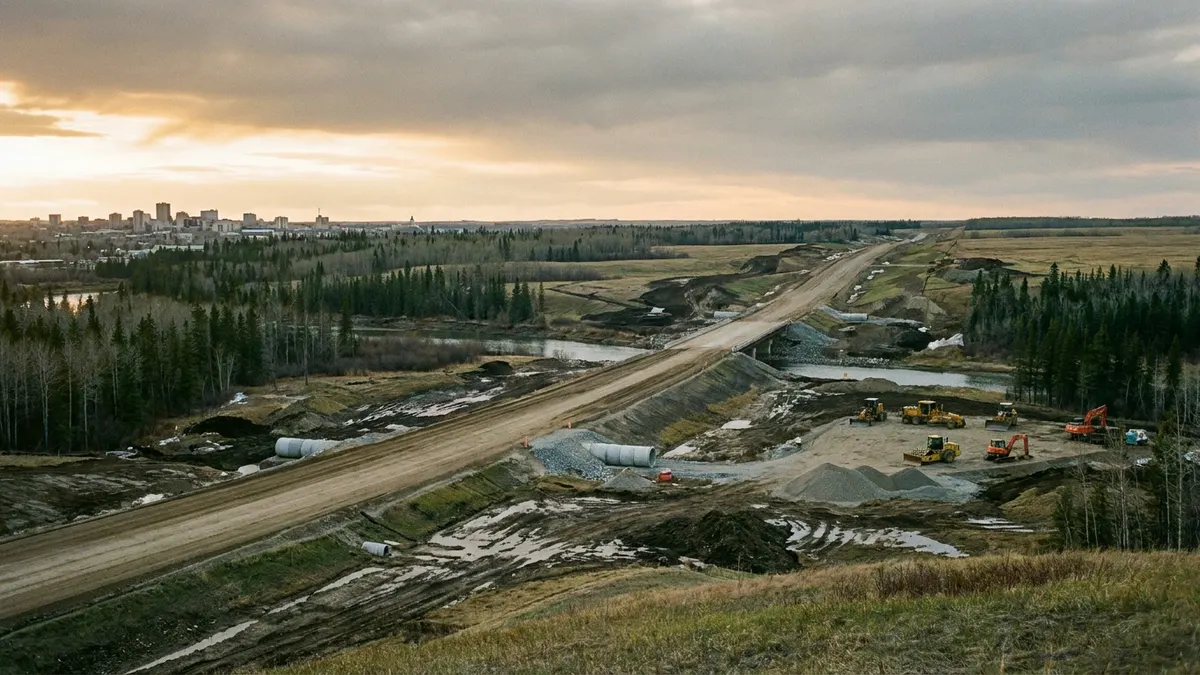
The civil infrastructure growth in Alberta and BC is particularly noteworthy for contractors in heavy construction, pipeline, electrical, and road work. Government-backed infrastructure programs tend to be more insulated from near-term macroeconomic volatility than private commercial or residential development. When governments commit to building roads and power infrastructure, that spending moves forward even in a softer economy, which is exactly what the Alberta and BC forecasts reflect.
Saskatchewan’s 130.7% projection is eye-catching, but Bell’s caution is well-placed. Smaller provincial markets can move dramatically on a single large project breaking ground, and that same project finishing can reverse the number just as quickly. Saskatchewan and Manitoba projections should be read as signals worth tracking, not guarantees of sustained pipeline depth.
Quebec’s 6.9% growth, by contrast, is spread across medical, commercial, and industrial sectors, which suggests broader-based activity rather than a single project driver. For multi-trade subcontractors or firms with diversified service offerings, Quebec may represent a more stable expansion target.
The underlying theme across all five growing provinces is that civil and infrastructure categories are doing the heavy lifting. This tracks with broader trends in public spending, where federal and provincial governments have committed to capital programs even as private investment slows in response to tariff uncertainty and tighter financing conditions. For field service companies, that means the work is there, but it’s concentrated in specific sectors and geographies rather than distributed evenly across the market.
What It Means for Subcontractors
- Don’t let national numbers dictate your bid strategy. A 40% drop in year-to-date starts is alarming at the headline level, but it reflects Ontario’s outsized weight in the data. If you’re not primarily Ontario-based, your regional market may look very different.
- Alberta and BC civil work should be a priority target. Both provinces are projecting infrastructure-led growth in roads, power, and heavy engineering. Contractors with civil, electrical, or heavy equipment capabilities should be actively building relationships with general contractors and government clients in both markets.
- Quebec offers diversified opportunity. Growth spread across medical, commercial, and industrial sectors means more entry points for multi-trade subs. It’s worth reviewing your pre-qualification packages for Quebec-based owners and GCs.
- Watch Saskatchewan closely but carefully. A 130.7% projection signals real activity, but smaller markets can be project-dependent. Track specific project announcements rather than relying on the headline percentage to plan resource deployment.
- Infrastructure-focused firms are better positioned than commercial-focused ones right now. The growth signals in 2026 are concentrated in government and civil work. If your book of business skews toward private commercial or residential, consider whether you have the certifications and relationships to pursue public-sector civil work in the provinces where growth is forecast.
- Firms sitting on the sidelines waiting for the national market to recover may miss a year of real regional volume. The opportunity isn’t coming back to Ontario; it’s already active in the west and in Quebec.