Canada's Critical Minerals Buildout Starts With Roads, Camps, and Power Lines
According to the Financial Post, Canada’s federal government is pushing to become a dominant global exporter of critical minerals, but a key industry voice is warning that the initiative will stall without serious investment in the trade-enabling infrastructure that makes mining projects viable in the first place.
Market Impact
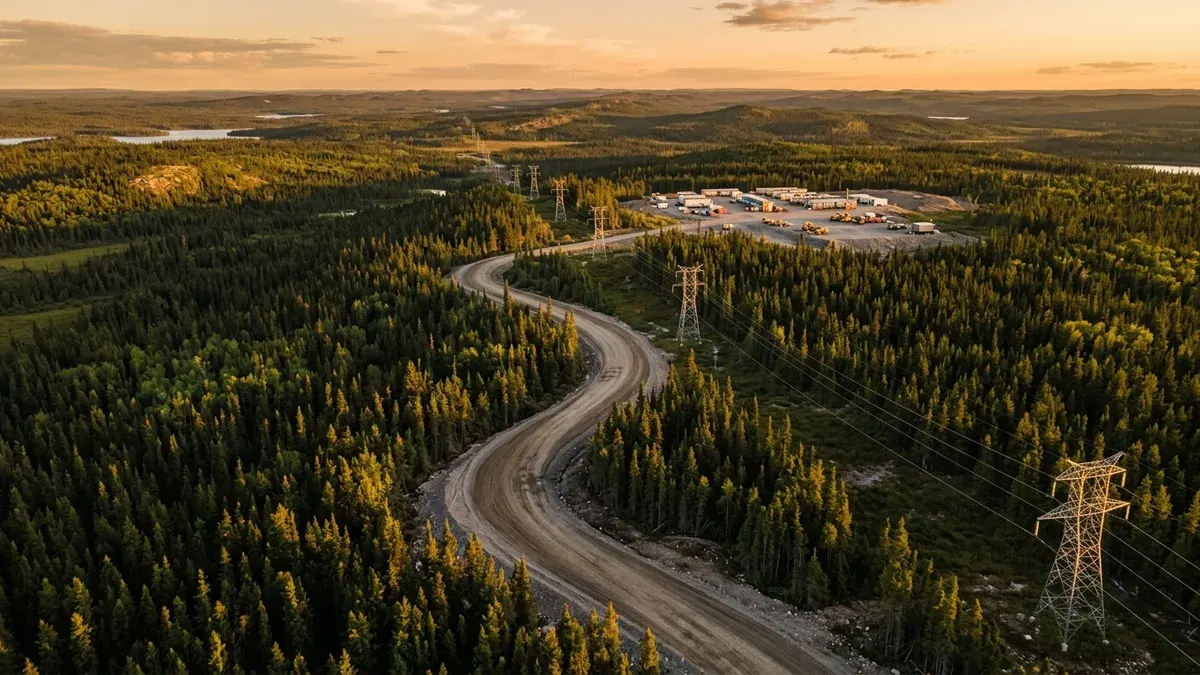
The argument, made by Kip Eideberg in a Financial Post opinion piece, centers on a straightforward problem: Ottawa is treating roads, power lines, remote camps, and logistics networks as afterthoughts rather than foundational requirements for critical mineral development. Government estimates suggest Canada could produce as much as 14% of global critical mineral supply by 2040 if planned projects proceed, a figure that would position the country as a major alternative to China for allied nations in North America and Europe. But reaching that number requires years of ground-level infrastructure work before a single drill turns.
Canada’s critical mineral deposits span British Columbia, the Northwest Territories, Ontario, and Quebec, with significant projects in various stages of planning across Western Canada. The federal government has flagged critical minerals as an economic security priority, particularly as trade tensions push allies to diversify supply chains away from Chinese-controlled production.
What It Means for Subcontractors
- Remote access infrastructure, including resource roads, gravel pads, and temporary bridges, typically gets contracted 12 to 24 months before mine construction begins. Field service companies in BC, Alberta, and Saskatchewan should be tracking project permitting timelines now.
- Camp construction and facilities management are early-phase requirements on any remote mining project. Companies with modular camp experience or remote catering operations are positioned for near-term work as feasibility studies advance.
- Power and water infrastructure at remote sites is increasingly being contracted to smaller specialized firms rather than large EPC players. Subcontractors with diesel generation, water treatment, or microgrid experience have a clear opening.
- Monitor Indigenous partnership agreements and federal permitting approvals as leading indicators. Projects that clear environmental and consultation hurdles first will move to infrastructure tendering fastest.