Budget 2026 Capital Spending: $18.5B First Nations Program Leads
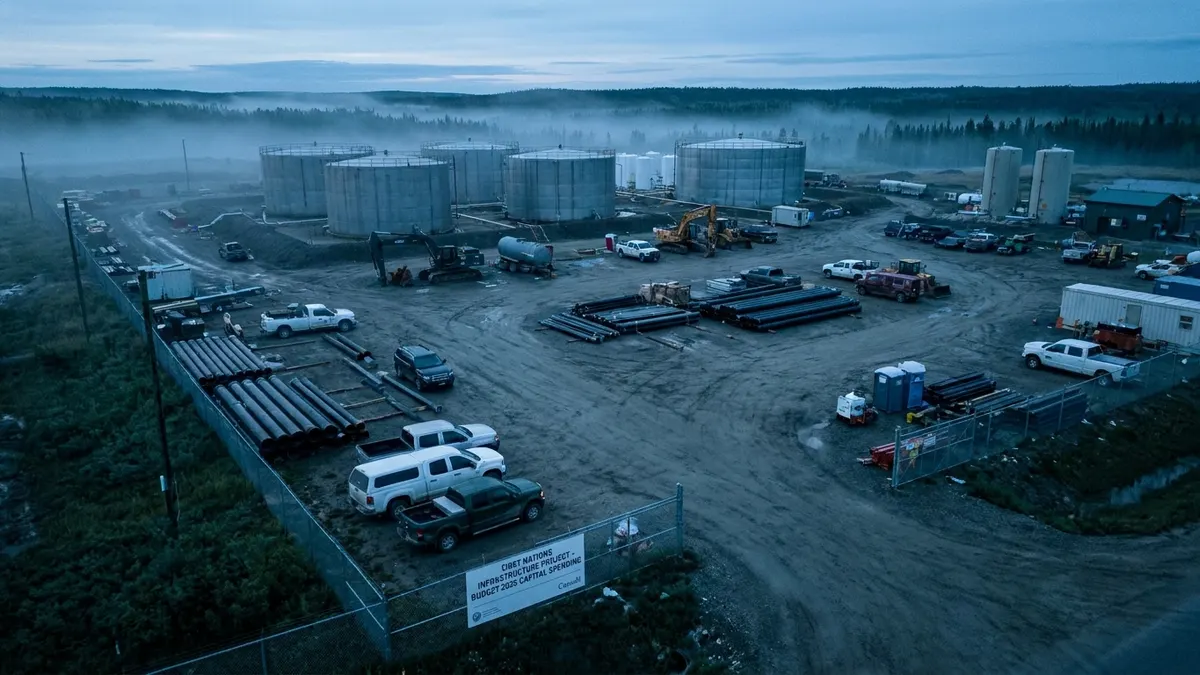
A new $18.5 billion, 10-year First Nations On-Reserve Infrastructure Program tops the capital commitments in Canada’s Budget 2026, the Journal of Commerce reports. Funding starts in 2027-28 for roads, bridges, schools, health facilities and water systems.
Market Impact
Finance Minister François-Philippe Champagne tabled the budget Nov. 5. It builds on the Carney government’s “Investment Supercycle” framework, which encourages private investment in nation-building projects while raising federal capital spending. Signature items include $8.7 billion to expand the electrical grid and $3.1 billion for the Mackenzie Valley Highway in the Northwest Territories.
Canadian Construction Association president Rodrigue Gilbert called it “all good news” but said the industry now needs “to move from announcement and money” to project starts, with federal, provincial and municipal governments aligned. Ken Lancastle, COO of the Mechanical Contractors Association of Canada, noted capital projects are “sprinkled throughout the budget.” The Journal of Commerce article gives no tender dates or procurement portals for any program. Where a start year is stated, it is mostly 2027-28.
What It Means for Subcontractors
- Civil, bridge and water trades: The $18.5 billion on-reserve program averages about $1.85 billion a year over 10 years. It starts in 2027-28 and extends existing water and wastewater spending. That year is the earliest window for related work.
- Site servicing and underground utilities: The budget sets aside $1.5 billion over four years from 2027-28, plus $387.4 million in later years, to prepare federal lands for housing with water, wastewater and roads. Expect enabling-infrastructure packages ahead of vertical construction.
- Residential and renovation trades: First Nations housing gets $11 billion over 10 years for maintenance of 119,000 homes, more than 6,900 new builds and more than 10,900 renovations. A separate $1.7 billion over five years targets shovel-ready projects, so that is the nearest-term pool.
- Electrical and heavy civil: The $8.7 billion grid expansion and $3.1 billion Mackenzie Valley Highway are the largest single lines. Neither comes with a delivery schedule in the article.
- Mechanical and building trades: Community recreation gets $1.5 billion over nine years, split $750 million for rinks and $750 million for other facilities (about $167 million a year). Parks Canada gets $3.6 billion over 10 years (about $360 million a year) to upgrade assets at national parks, historic sites and marine conservation areas.
- Bonding and partnerships: A $7.5 million Surety-Bonding Pilot starts in 2027-28 to help First Nations contractors bid on large contracts, and a $500 million Monetization Pilot will test First Nations-led infrastructure financing. Firms seeking on-reserve work should line up First Nations contractor partners now.
- Labor costs: The Build Canada Apprenticeship Service, launching next year, offers up to $10,000 for employers hiring first-year apprentices in eligible Red Seal trades. A $400 weekly Apprenticeship Training Grant for apprentices in technical training also launches next year.