Baker Hughes, Kodiak Ink Deal for 1.8 GW of Data Center Power Gear
Kodiak Gas Services and Baker Hughes have signed a multi-year agreement to deploy gas turbines and generators for behind-the-meter data center power, with an initial award covering about 1 GW by 2030 and a framework scaling to 1.8 GW over time, Power Engineering reports.
Market Impact
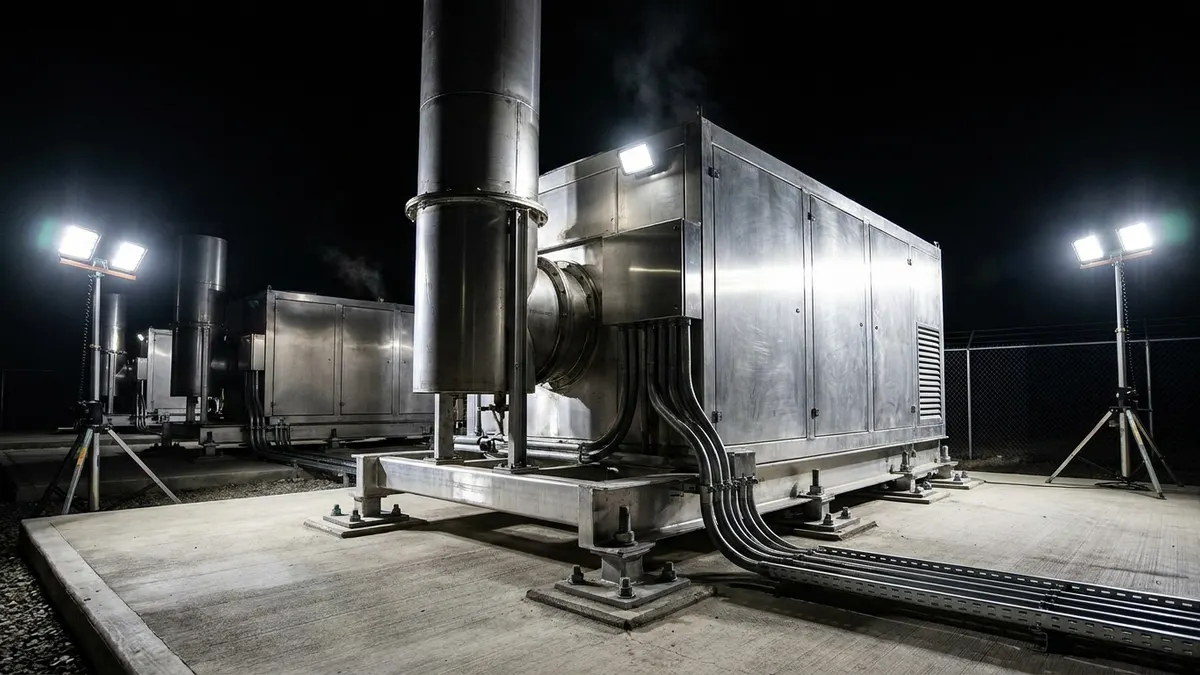
The initial equipment order includes Baker Hughes’ NovaLT16 gas turbines, Frame 5 gas turbines and BRUSH Power Generation generators, according to the companies. Kodiak President and CEO Mickey McKee said the deal gives Kodiak access to “industry-leading technology, training and support” to meet customer demand for “dependable, efficient and rapidly deployable power solutions.” Baker Hughes Chairman and CEO Lorenzo Simonelli said the agreement will help customers “bring new capacity online faster” as digital infrastructure demand accelerates.
The deal reflects a broader shift in the data center market toward onsite power as a primary electricity source rather than backup, Power Engineering notes. The research firm Cleanview identified 46 U.S. data center projects representing 56 GW of planned behind-the-meter capacity, or roughly 30% of planned U.S. data center capacity, and said 90% of those projects were announced in 2025. Cleanview said many are already under construction, and developers are increasingly turning to mobile gas generators, aeroderivative turbines, fast-ramping reciprocating engines and refurbished industrial turbines rather than waiting on traditional combined-cycle builds.
What It Means for Subcontractors
- Mechanical and E&I contractors should watch for Kodiak subcontract packages tied to the 1 GW initial rollout targeted for completion by 2030, as turbine and generator installs will require site prep, foundations, electrical hookup and commissioning crews.
- Field service firms with turbine maintenance, spare parts logistics or technical training capability have an opening, since the agreement explicitly includes commitments to technical training, spare parts provisioning and a potential long-term services arrangement.
- Companies serving Gulf Coast, Permian and Rockies data center buildouts should track Kodiak’s phased project schedules, since the “multi-year rolling agreement” structure means capacity commitments (and subcontract needs) will shift with data center demand rather than following a fixed timeline.
- Crews experienced with fast-track, non-traditional power installs (mobile generators, aeroderivative turbines, reciprocating engines) may find more near-term work than those geared toward conventional combined-cycle plant construction, given Cleanview’s finding that developers are prioritizing available equipment over large combined-cycle builds.