Amtrak's $1.6B East River Tunnel Rehab Stays on Track for 2027 Despite Minor Delay
According to Construction Dive, Amtrak’s $1.6 billion East River Tunnel rehabilitation project in New York City remains on pace for a late 2027 completion, though the reopening of Line 2 has slipped by one month to August following unexpected findings during construction.
Market Impact
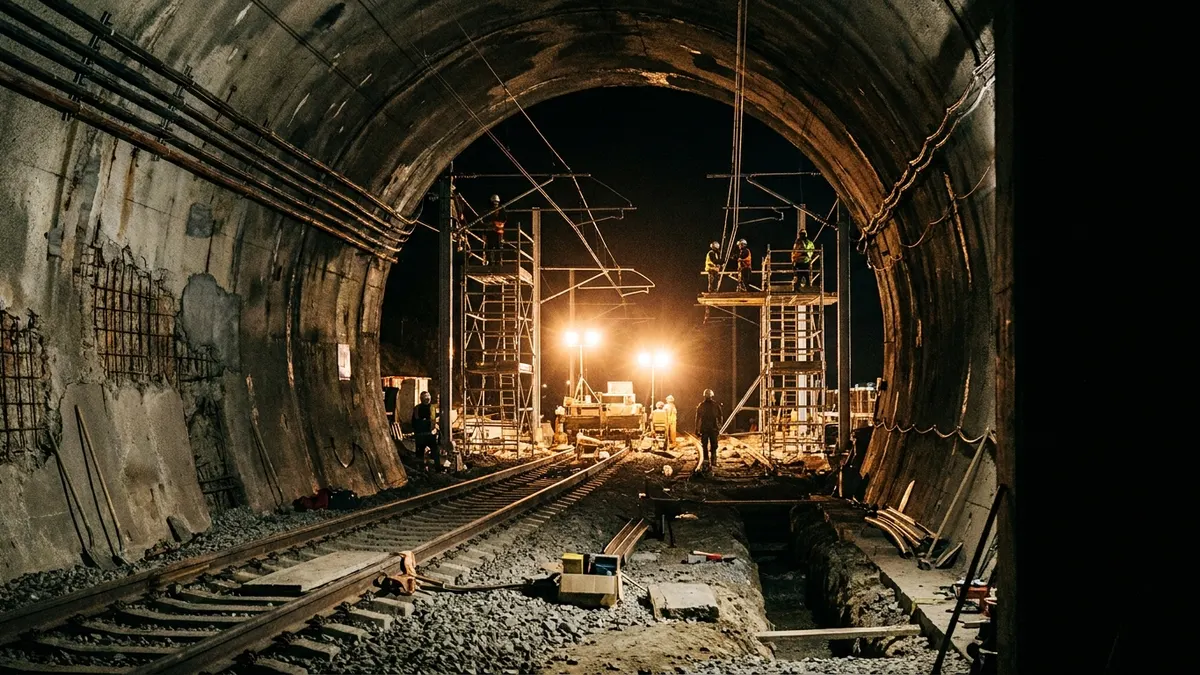
Laura Mason, executive vice president at Amtrak, shared the update during a June 17 progress meeting. During catenary installation, crews discovered voids in more than half of the 203 ceiling locations, requiring engineering changes before support hardware could be mounted. Mason said the tunnel remains structurally safe, and the overall program timeline is unchanged.
Construction on the $1.6 billion project kicked off last year. The effort targets two of the four tunnel tubes on the Northeast Corridor, the country’s busiest passenger rail line, repairing damage from Hurricane Sandy and modernizing infrastructure that is roughly 100 years old. With Line 2 reopening in August, Line 1 is set to close this fall for its own reconstruction, with a planned 13-month outage. Mason said the team will apply lessons from Line 2 to see whether the Line 1 schedule can be tightened.
One of the most significant operational decisions from the Line 2 work was the shift to a continuous, contractor-controlled outage rather than night and weekend construction windows. Mason said that approach proved to be “the most cost-effective, efficient and safest method,” allowing crews uninterrupted access to rebuild drainage systems and repair the tunnel liner without repeatedly setting up and tearing down temporary rail systems.
What It Means for Subcontractors
- Continuous outage models are gaining traction on major rail projects. Field crews and subcontractors working on similar infrastructure should be prepared to staff for sustained, around-the-clock access windows rather than fragmented night or weekend shifts.
- The Line 1 outage is scheduled to begin this fall, meaning subcontractors with tunnel repair, drainage, or catenary capabilities should be monitoring procurement activity now if they want to compete for that work.
- Unexpected site conditions, like the ceiling voids found at more than half of 203 ceiling locations, drove schedule changes and engineering reviews. Subcontractors should build contingency planning into bids for aging infrastructure projects where hidden defects are a real risk.
- The overall 2027 completion target remains intact, signaling continued spending momentum on Northeast Corridor infrastructure despite broader federal funding uncertainty in the construction market.