Alberta Lets Carbon Capture Grants Flow During Construction
Alberta now lets some carbon capture incentive money flow during construction, not only after start-up, according to a Canadian Press report via Journal of Commerce.
Market Impact
Under the Alberta Carbon Capture Incentive Program, companies can receive grants covering 12% of eligible capital costs for certain projects in the oil and gas, petrochemical and power industries. The tweak changes when some of that money arrives. The province says it is meant to better align the program with the federal Carbon Capture, Utilization and Storage Tax Credit.
The source does not say how much of the grant can be paid during construction, when the change takes effect, or which projects qualify. As an illustration only, 12% of $100 million in eligible capital costs is $12 million. Getting even part of that during the build, rather than after start-up, would reduce what a developer has to carry on its own financing.
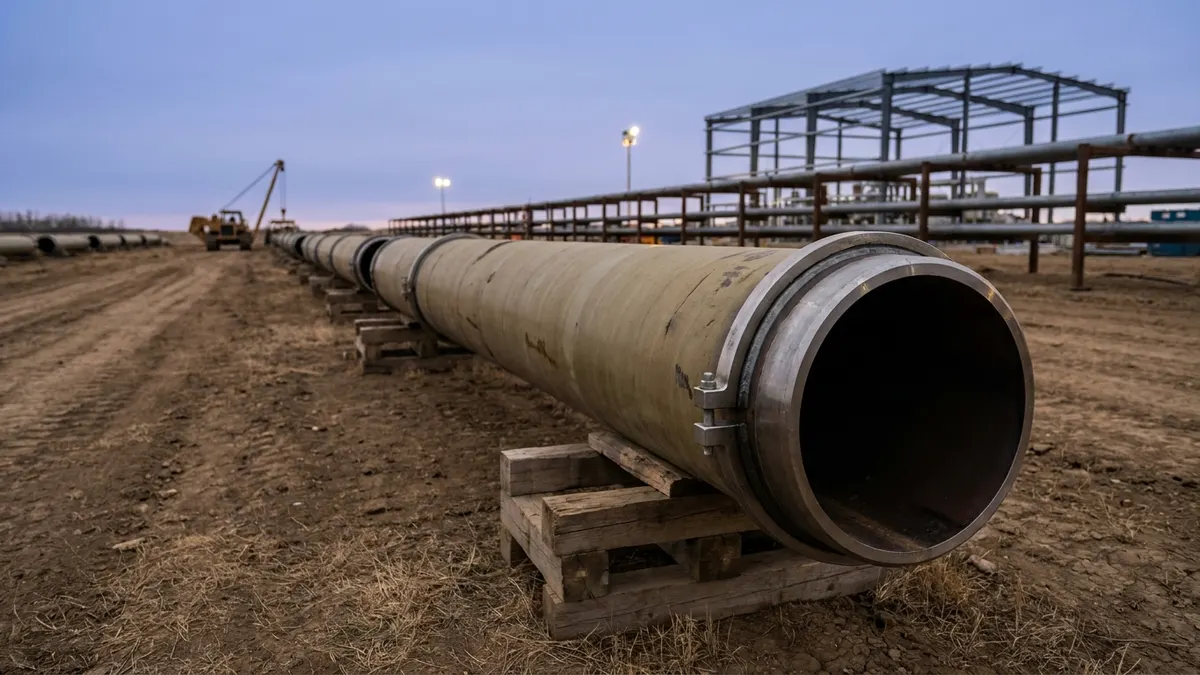
The announcement comes as Alberta, Ottawa and the five biggest oilsands producers work on final agreements to advance the Pathways project while enabling oilsands production growth. Pathways would move captured CO2 by pipeline from various oilsands sites to an underground storage hub near Cold Lake. The parties had aimed to announce definitive agreements around Nov. 15. Company executives have since signaled they will take the time needed to get the right deal.
What It Means for Subcontractors
This quarter
- Ask owners about payment terms. If you hold or are pricing a contract on an Alberta CCS, petrochemical or power-sector capture project, ask the owner’s project controls or finance contact whether earlier grant funding changes milestone billing or holdback terms. The source does not say it will, so get the answer in writing before assuming faster payment.
- Ask which scopes are still open. For projects already in construction, the grant change mainly affects the owner’s cash flow. Ask which civil, mechanical, electrical and piping packages remain unawarded. Where everything is already let, there is little left to bid.
- Get the program rules from the owner. The source gives no effective date or eligibility detail. Ask owners whether their project qualifies and what the new timing means for their schedule.
Position for later
- Treat Pathways as a future opportunity. Definitive agreements missed the Nov. 15 target, and the source names no EPC, bid date or contact. There is nothing to bid today. If you do pipeline, HDD, civil or site work in the Cold Lake area, our read is that packages would follow a final agreement and investment decision, not precede them.
- Expect earlier FIDs to be possible, not guaranteed. Our inference, not the source’s: easier financing could pull some capture projects toward FID sooner. Until an owner announces one, keep CCS work out of your firm backlog forecasts.
- Line up with likely buyers. Pathways involves the five largest oilsands producers. Make sure your prequalification and safety documentation are current with those operators’ contractor portals so you are ready when scopes are released.