OSHA Proposes $1.59M Penalty After Crane Load Hits Power Line
OSHA has proposed $1,586,559 in penalties against South Dakota bridge contractor Grangaard Construction after a crane’s suspended load struck a 34.5-kV power line and hospitalized a worker, ENR reports. Grangaard is contesting the citations.
Market Impact
The March 17 incident happened at the $7.5 million Stone Church Bridge replacement over the James River in Yankton County. OSHA issued 18 serious and eight willful citation groups on Sept. 8. Willful items account for roughly $1.3 million of the total. Grangaard contested on Sept. 29, and the case remains open with no final order or reduction recorded. The company did not immediately respond to ENR’s request for comment. The National Safety Council’s Safety+Health magazine ranked the penalty third among OSHA’s largest proposed fines for fiscal 2026.
Three hazard areas stand out. On the crane side, OSHA alleges the crew never determined whether the crane or load could come within 20 ft of the line. It also alleges there was no dedicated spotter and no pre-lift planning meeting on the power-line hazard. Two operators allegedly lacked certification, and anti-two-block devices were missing. On one lift, 26,000-lb and 28,000-lb pier-cap segments were hung from a hoist-line setup with a 24,158-lb allowable load. Per the citation, that overload concerned the hoist line, not the crane’s overall rated capacity.
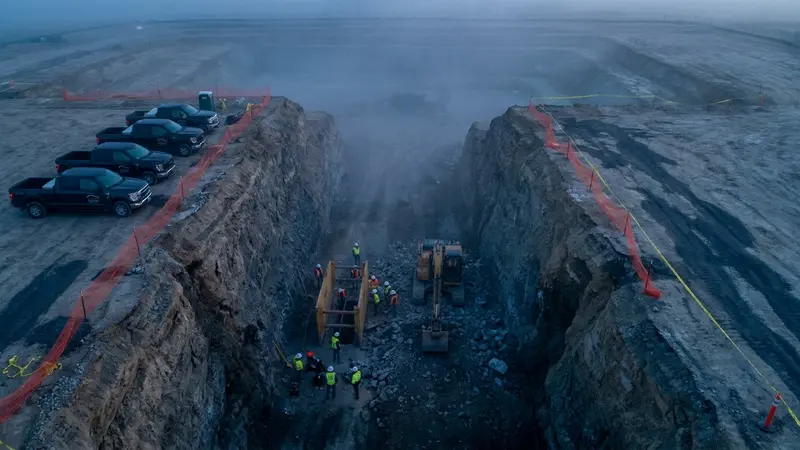
In the cofferdams, OSHA cites unguarded beams, ring beams and wooden ramps with potential falls of 6 ft to 26 ft, plus a wooden pallet used as a ladder. Crews worked over water at 35°F to 42°F without proper flotation, and the rescue skiff held ice and water, had no oars and had a hole in its side.
The willful fall-protection citations reference earlier final orders against Grangaard, including serious violations in 2017 and 2025, a repeat serious in 2021 and a willful scaffolding violation in 2020. A separate $141,871 proposal alleges a willful failure to report the hospitalization within 24 hours, citing a final order from May 2020.
What It Means for Subcontractors
- Lift plans: Check the hoist-line configuration, not just crane capacity. Subtract headache ball and rigging weight from line pull before every pick, and put the number in the lift plan.
- Overhead lines: Confirm the 20-ft clearance determination is documented before the crane sets up. Assign a dedicated spotter, hold a planning meeting with operators and riggers, and train crews on what to do if equipment contacts a line.
- Crane paperwork: Verify operator certification or evaluation, anti-two-block devices, and post-assembly, annual, monthly and shift inspection records for every rented or owned crane.
- Cofferdam work: Guard beams, ramps and access points, and do not improvise ladders. Where crews work over cold water, verify flotation gear and test the rescue boat for oars, hull integrity and readiness before each shift.
- Reporting: Hospitalizations must be reported to OSHA within 24 hours. The source ties a separate willful proposal to a missed report.
- Prior citations (our read, not the source’s): OSHA is pointing to old final orders in the willful items. Subs with past citations should assume similar hazards will be treated more severely.
- Status of the case: The penalties are proposed, not final. Treat them as a signal of enforcement focus, not a settled number.