MTA Awards $1 Billion Contract for Second Avenue Subway Phase II Station Work
According to Construction Today, the Metropolitan Transportation Authority has awarded a contract worth approximately $1 billion to a joint venture of Skanska, Traylor Bros., and Walsh Construction for a key portion of Phase II of the Second Avenue Subway in New York City.
Market Impact
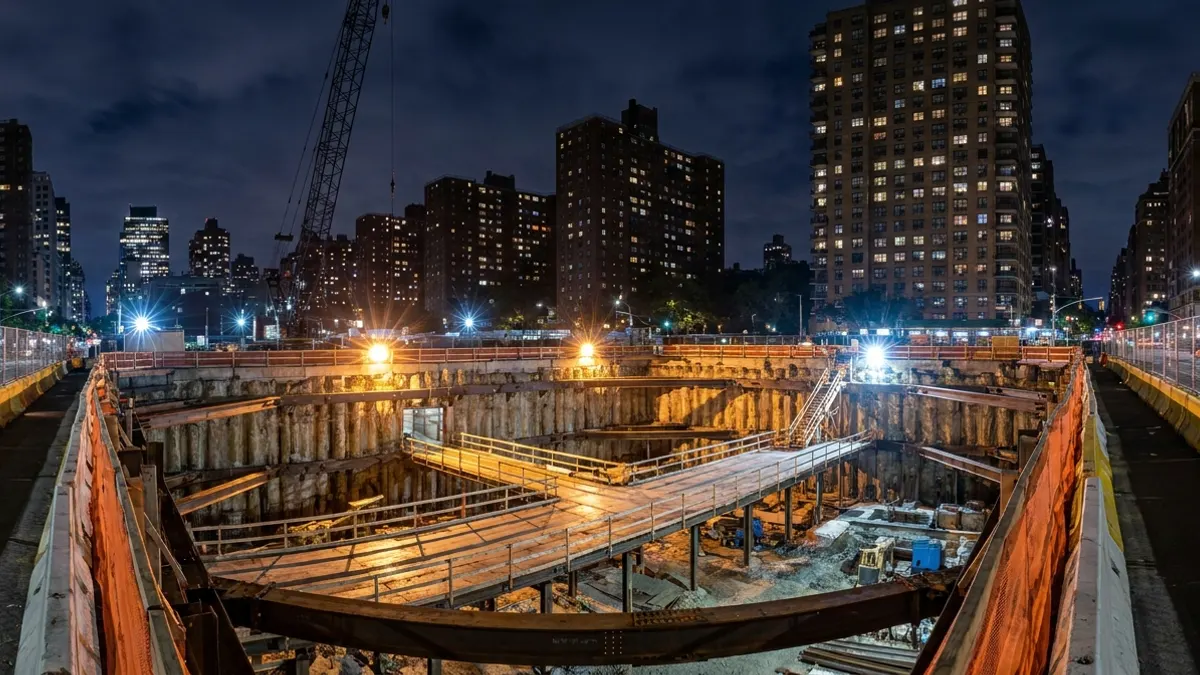
The contract covers construction of the future 106th Street Station and related infrastructure between 105th Street and 110th Street. Scope includes structural station shells, tunnel connections, excavation, roadway decking to maintain traffic flow, and major utility reconstruction. Skanska’s share is valued at approximately $498 million, with the remainder split among its joint venture partners.
Construction is scheduled to begin in 2026, with this package expected to reach completion in 2030. According to Construction Today, this is the third major contract issued under the Phase II program. Earlier packages addressed utility relocation and tunnel work, establishing the foundation for station construction now getting underway.
When complete, Phase II will extend the Q line north to 125th Street, adding stations at 106th Street, 116th Street, and 125th Street. The 125th Street terminal will connect to the 4, 5, and 6 lines as well as Metro-North services. Phase I opened in 2017, extending service from 63rd Street to 96th Street.
What It Means for Subcontractors
- Civil and underground specialists should move now. A project of this scale and duration will require extensive second- and third-tier subcontracting across excavation, concrete, waterproofing, electrical, mechanical, and utility work. With construction starting in 2026, the pre-qualification window is open.
- Phased delivery means ongoing opportunities. This is the third contract in a multi-package program. Additional awards covering the 116th Street and 125th Street stations are expected to follow, giving specialty contractors multiple entry points over several years.
- Dense urban underground work demands experienced crews. The scope includes excavation, roadway decking, and utility reconstruction in a live Manhattan corridor. Contractors with proven track records in confined-space and high-interference urban environments will have a competitive edge with the prime JV team.
- Long project timelines support workforce planning. A 2026 start with a 2030 target gives subcontractors meaningful runway to staff up and secure equipment, rather than scrambling for a compressed mobilization.